
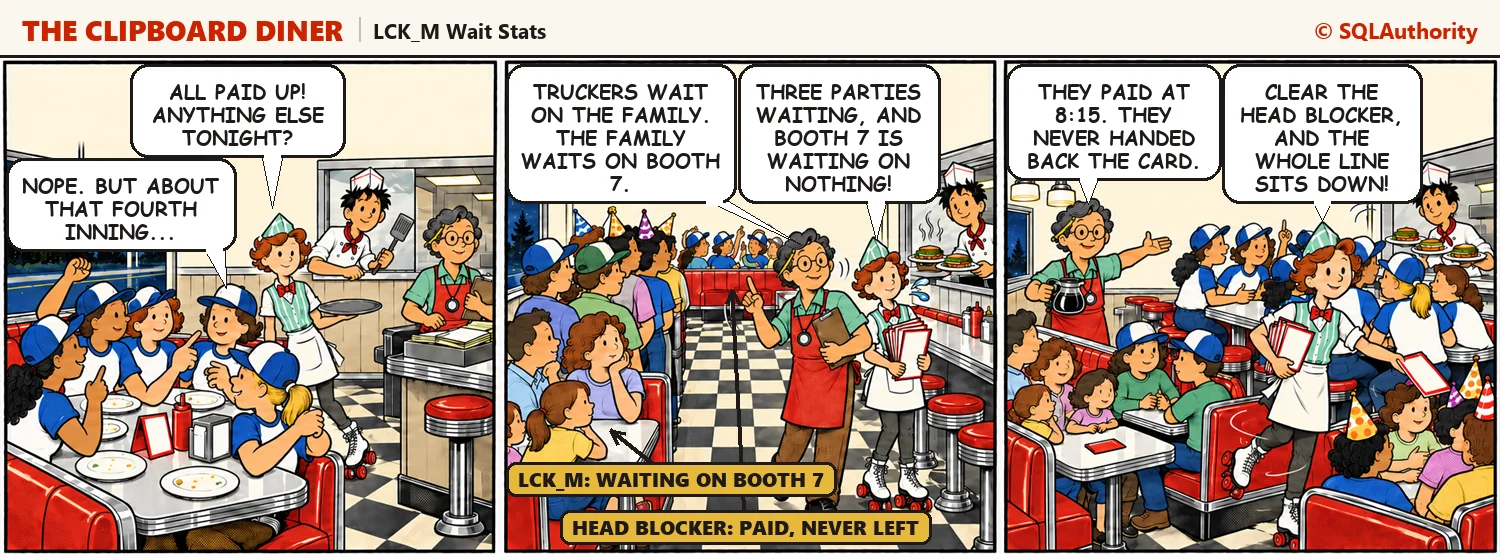
LCK_M wait stats show how long queries wait for a lock that another session holds. On Night 15 at the Clipboard Diner, a party in booth 7 pays and then won’t leave, and three parties wait behind it. Then two queries find the blocking chain and its head blocker on your own server.
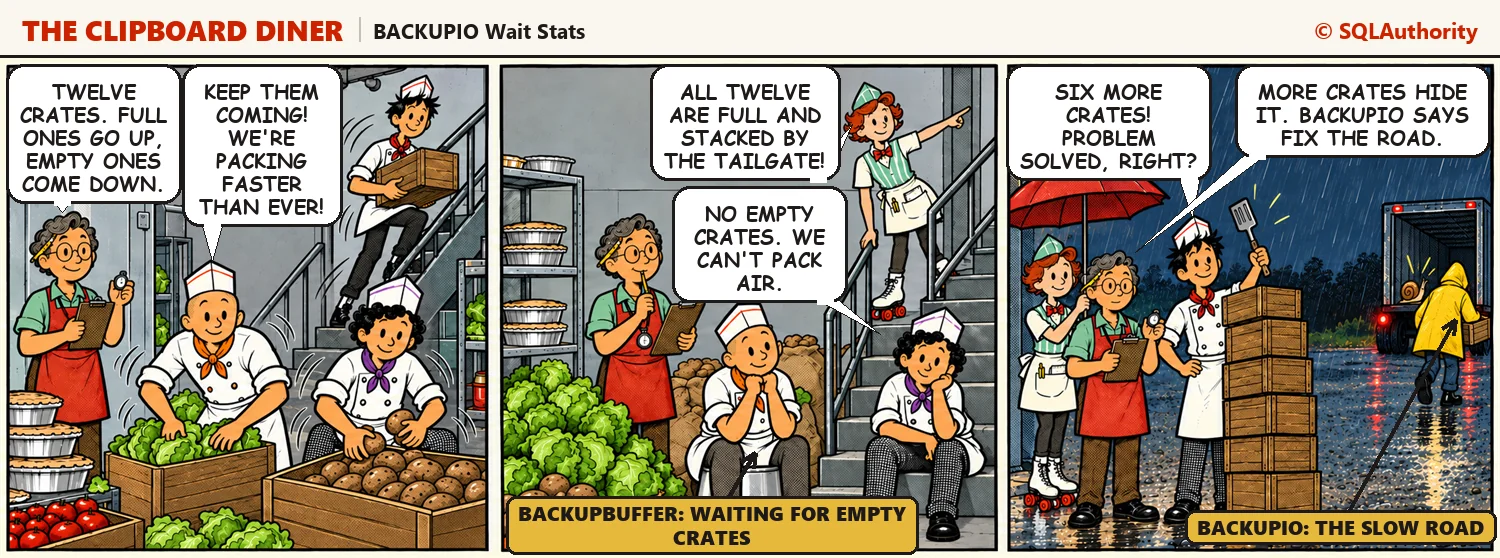
BACKUPIO Wait Stats: Why Backups Wait
BACKUPIO wait stats show a backup waiting on its own I/O, either reading the database or writing the backup file. On Night 14 at the Clipboard Diner, the night truck waits for empty crates and a slow gravel lot. You’ll see how BACKUPIO, BACKUPBUFFER and BACKUPTHREAD fit together, how to measure backup speed from msdb, and which fixes to try first, including ZSTD compression in SQL Server 2025.
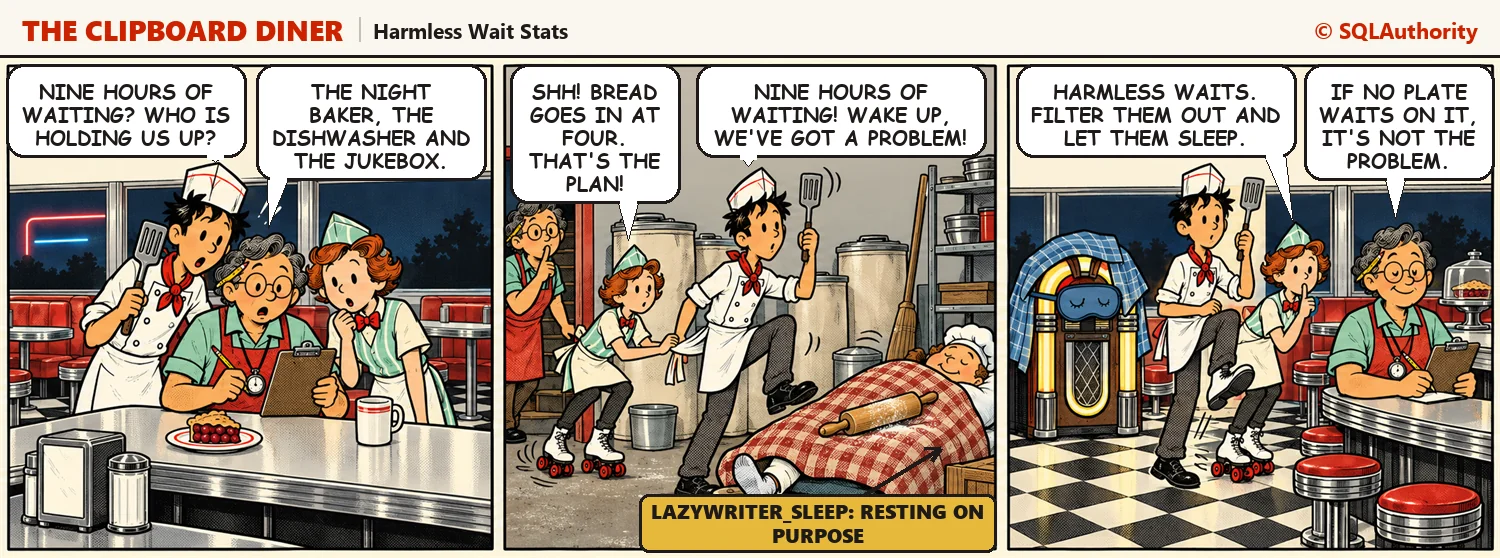
Harmless Wait Stats: Waits You Can Safely Ignore
Harmless wait stats come from background tasks that sleep on purpose, such as the lazy writer, the deadlock monitor and the full-text scheduler. On Night 13 at the Clipboard Diner, the biggest numbers on Casey’s clipboard belong to a sleeping baker and an idle dishwasher. Two queries show how much of your wait list they take up and how to judge an unknown wait yourself.
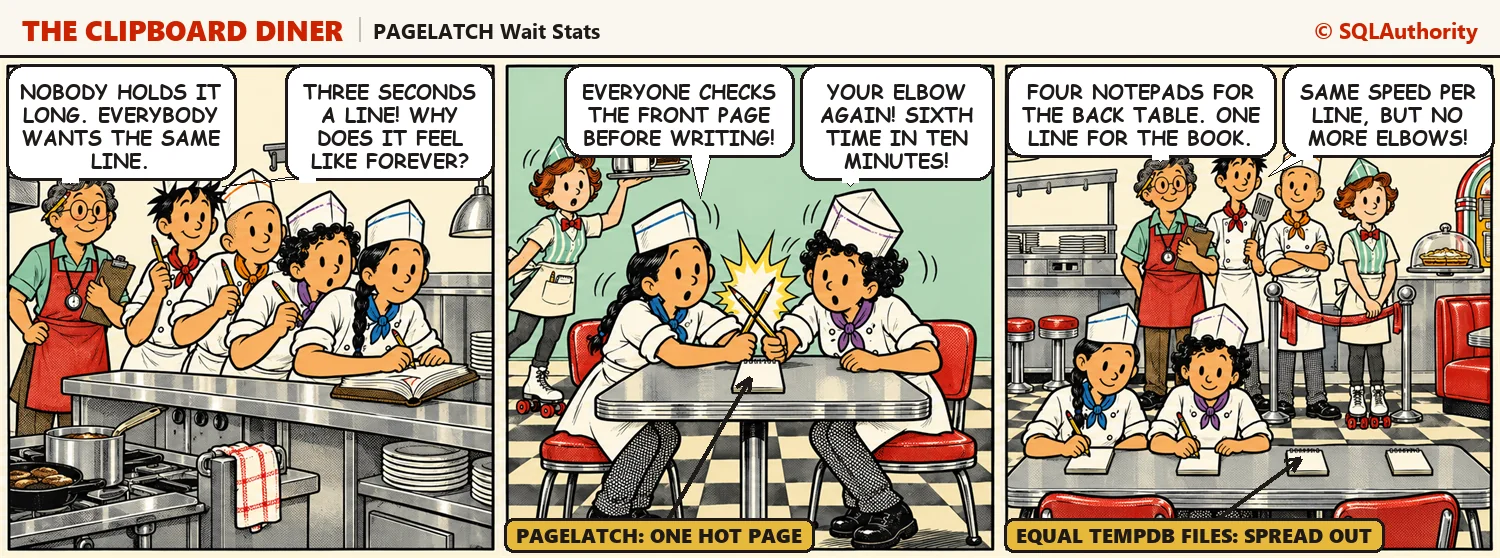
PAGELATCH Wait Stats: Hot Pages in Memory and tempdb
PAGELATCH wait stats show tasks queuing for a short grab on a page that is already in memory. On Night 12 at the Clipboard Diner, four cooks crowd one ticket book and one notepad. You’ll learn the difference between a latch and a lock, how to read a page like 2:1:1, and how to fix last page inserts and tempdb contention.
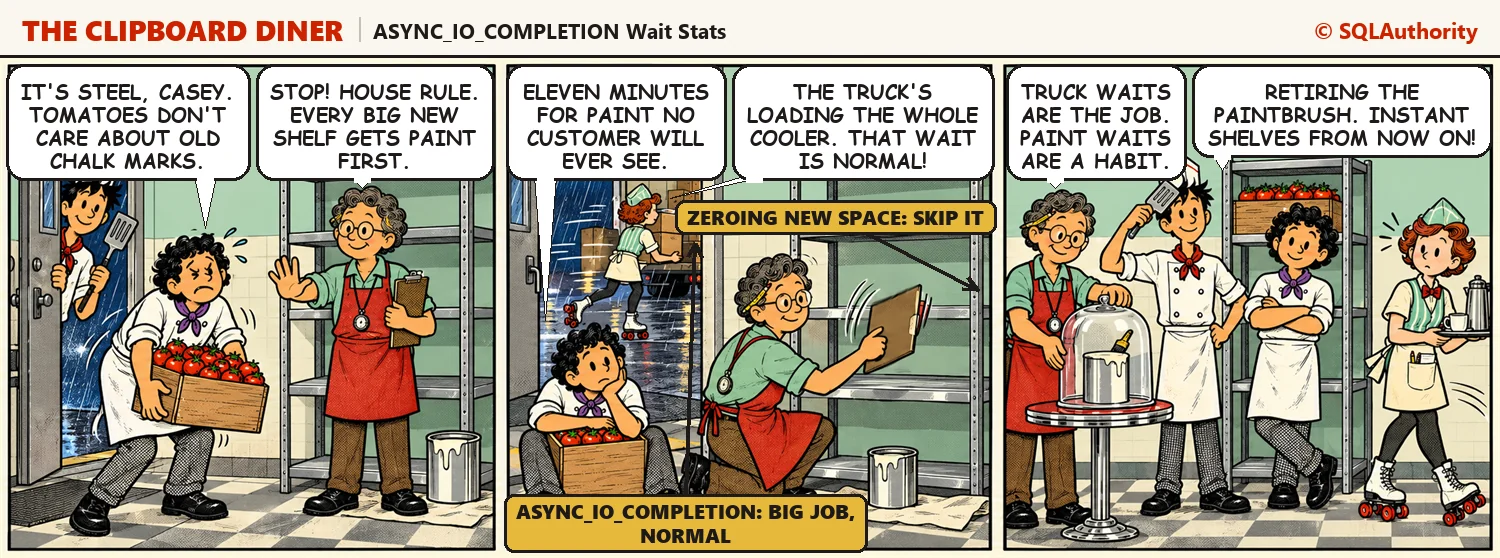
ASYNC_IO_COMPLETION Wait Stats: Large File Operations
ASYNC_IO_COMPLETION wait stats measure the time SQL Server waits for big file jobs: backups, restores and new data file space. On Night 11 at the Clipboard Diner, the night truck and a freshly painted shelf show which part is normal and which part you can remove. One setting, instant file initialization, removes most of the avoidable waiting.
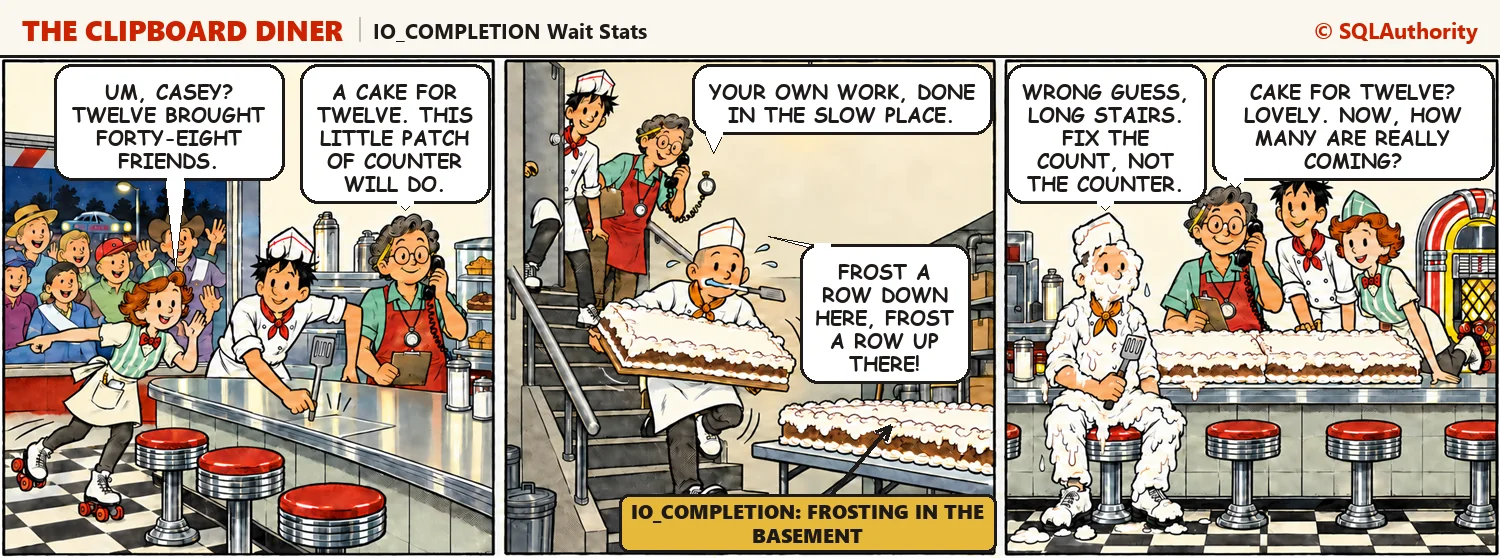
IO_COMPLETION Wait Stats: Spills, Sorts and File Growth
IO_COMPLETION wait stats measure queries waiting on disk work that isn’t a normal data page read, such as sorts and hashes that spill to tempdb. On Night 10 at the Clipboard Diner, a sheet cake for twelve turns out to be for sixty. Learn why spills happen, how to find them, and what SQL Server 2022 changed for log file growth.

Sorting Correctly: Collation and ORDER BY
Collation and ORDER BY decide case, accent, and text-number order; choose rules explicitly when one report needs different sorting.