
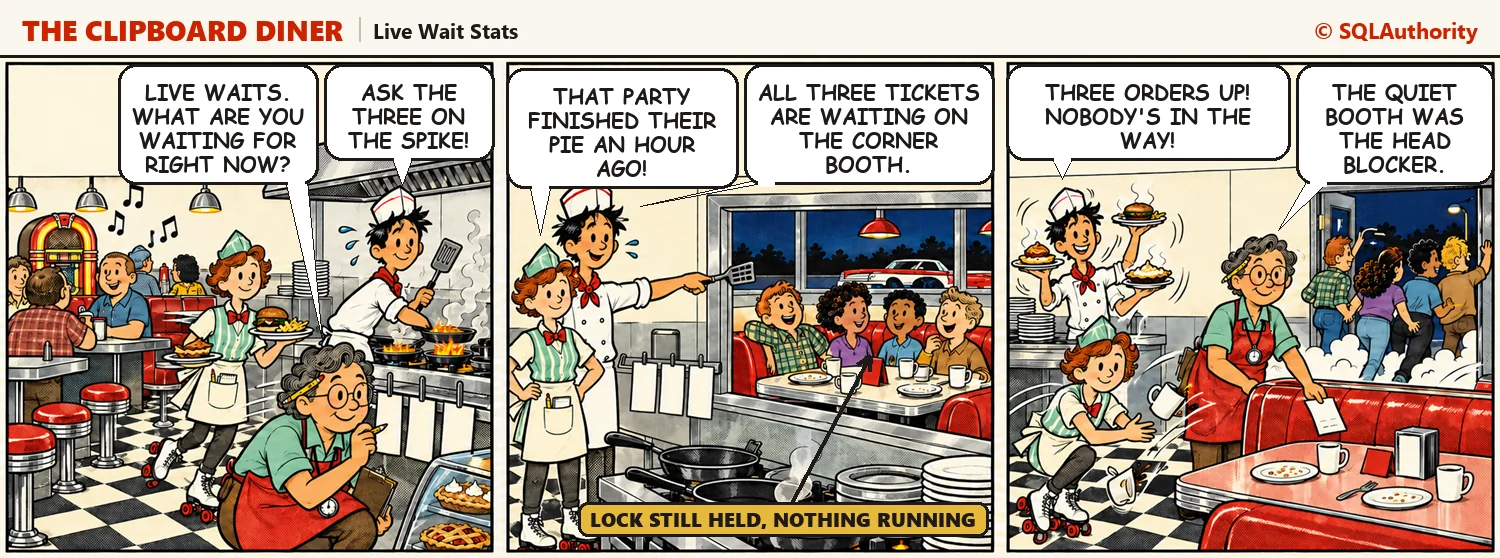
Live wait stats show what every request in SQL Server is waiting on at this moment, and who is in its way. On Night 4 at the Clipboard Diner, the Saturday rush stalls behind a party in booth 7 that isn’t waiting for anything. Then three queries find the waiting tasks, the head blocker and one session’s own waits.
sys.dm_os_wait_stats: Reading the Wait Stats List
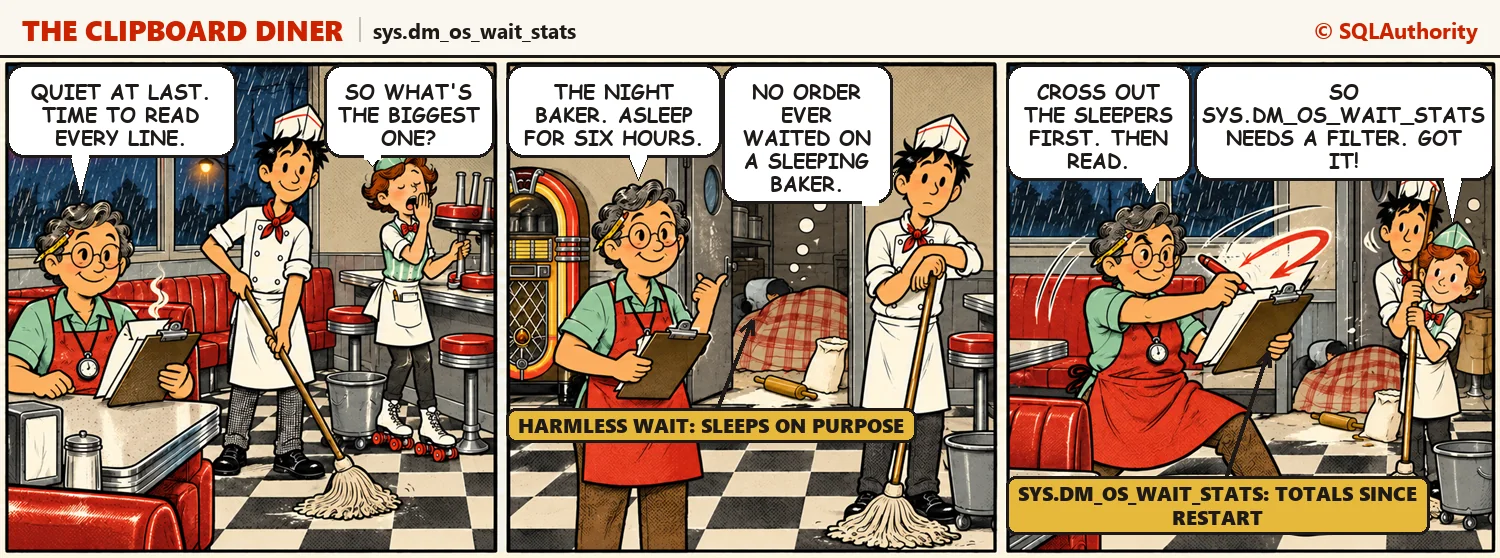
sys.dm_os_wait_stats is the running list of every wait SQL Server has recorded since its last restart. On Night 3 at the Clipboard Diner, Casey reads the clipboard at 2 AM and crosses out the sleepers. Then one query filters out the harmless waits and shows the share, the average and the signal part of every wait that matters.
Signal Wait Stats: CPU Waits vs Resource Waits
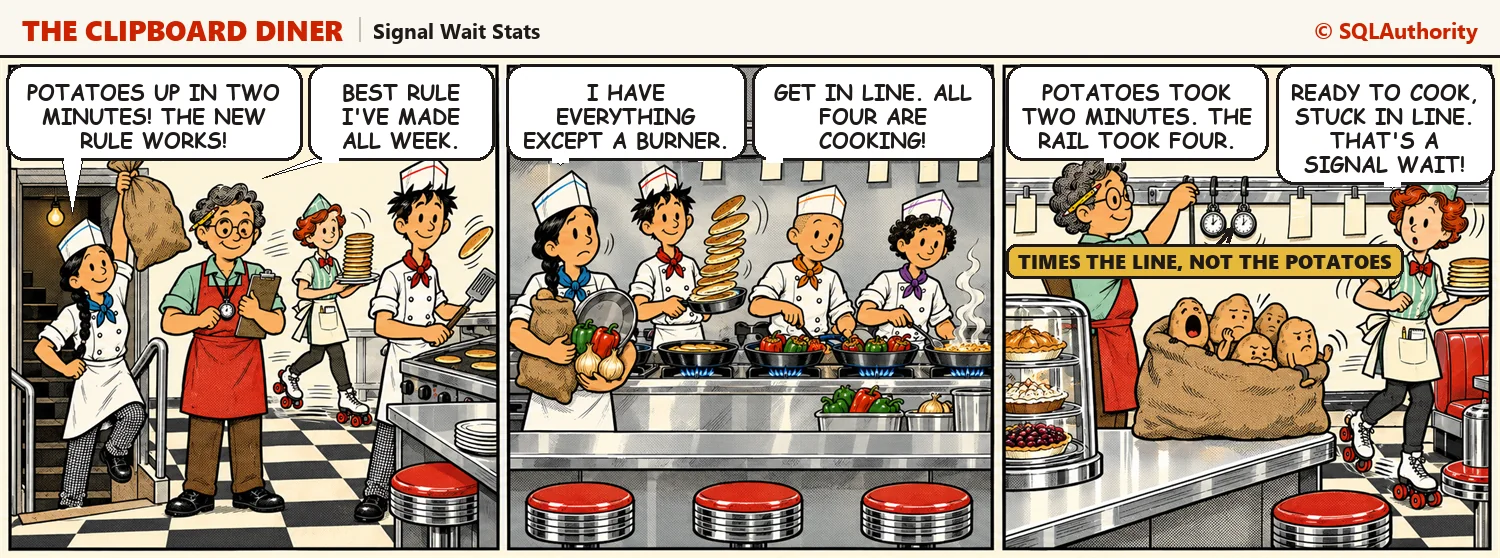
Signal wait stats show how long a SQL Server query sat ready to run, waiting in line for a CPU. On Night 2 at the Clipboard Diner, the potatoes arrive on time and the Garden Hash waits anyway. Then two queries split your server’s waits into the CPU part and the resource part.
Wait Stats Explained: SQL Server as an All-Night Diner
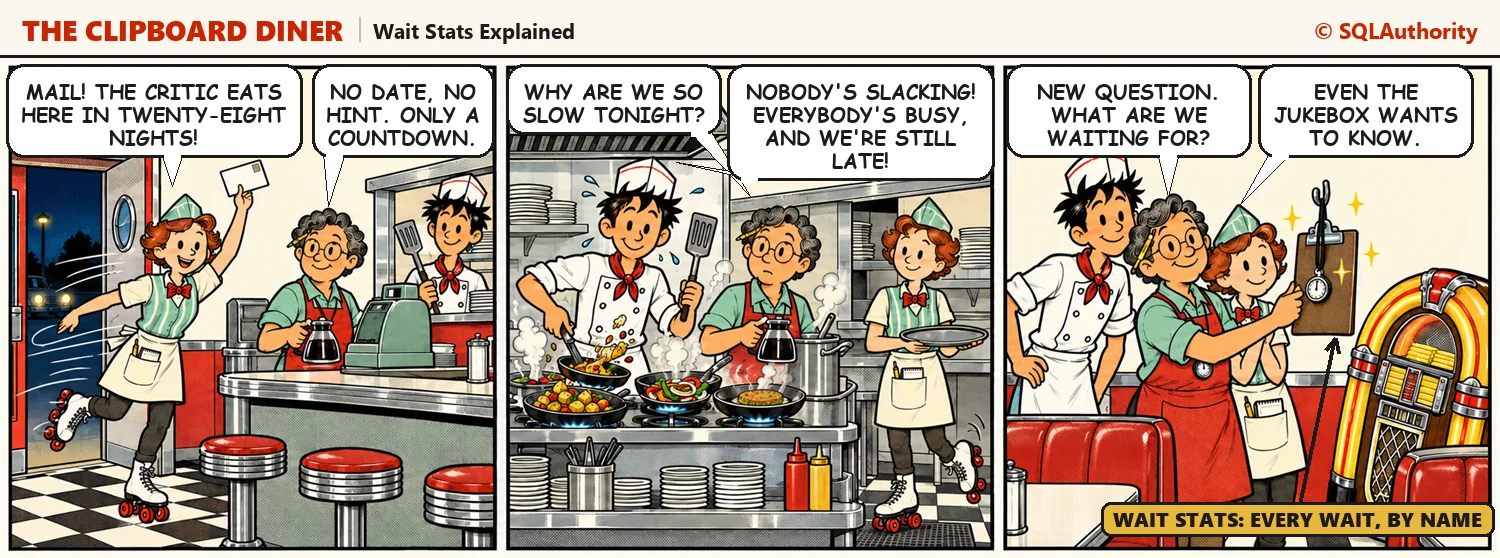
Wait stats explained with one picture: SQL Server is an all-night diner, and every query is an order ticket that waits for something. Meet the Clipboard Diner, its owner Casey, the cooks and booth 7. Then count the burners and cooks on your own server with one query.
Wait Stats Basics: How Waits Work in SQL Server
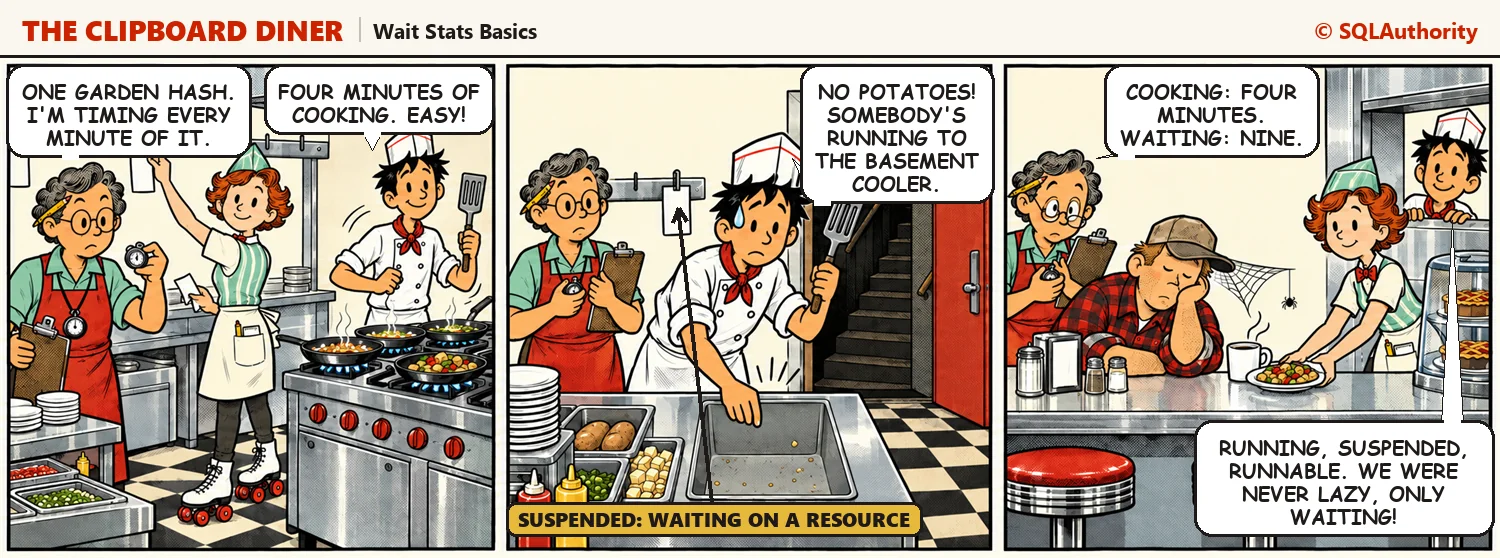
Wait stats basics start with one idea: a query in SQL Server is always either working or waiting. On Night 1 at the Clipboard Diner, one plate of Garden Hash shows the three states every query moves through. Then two queries show the same thing on your own server.

High-Frequency Inserts Without Blocking
High-frequency inserts can stall on the log, indexes, or last-page contention; learn to diagnose the wait and choose targeted SQL Server fixes.

Measure CPU Pressure in SQL Server with Waits and Schedulers
CPU Pressure means tasks are ready to run but every scheduler is busy, so they wait in a queue. This post reads that queue from the schedulers, compares signal waits with resource waits, checks recent CPU history and finds the queries that use the most CPU. It ends with a plain way to decide between a faster CPU, more cores and better queries.