
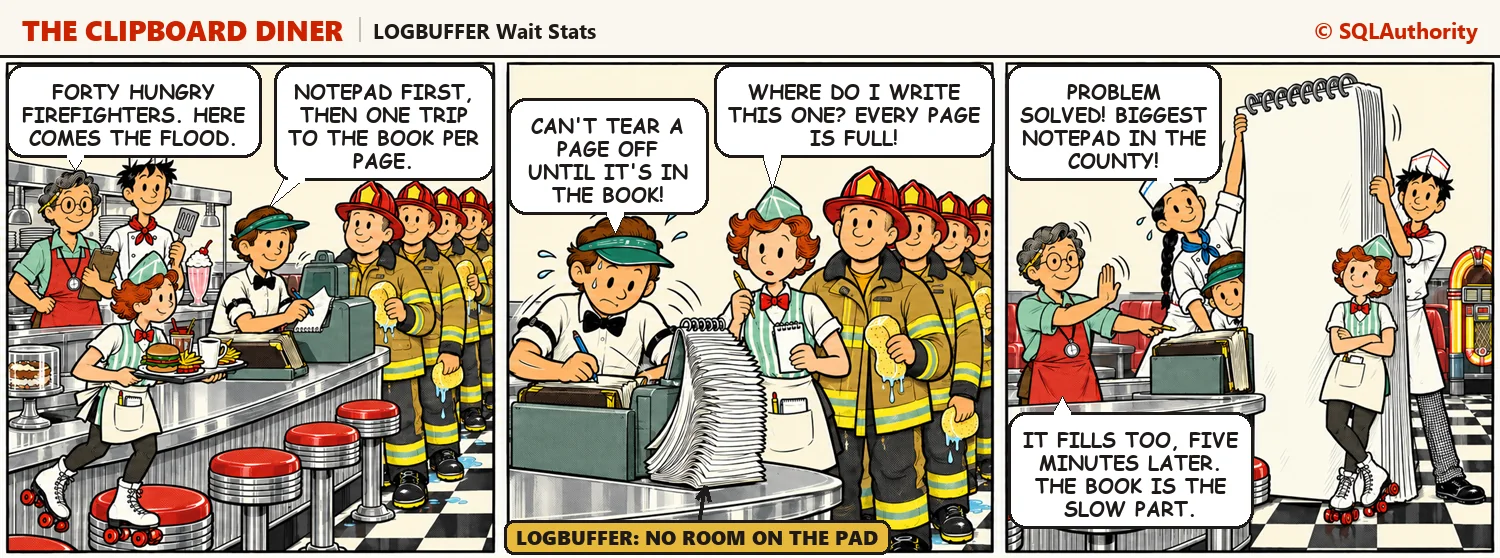
LOGBUFFER wait stats mean a task is waiting for free space in the log buffer before it can write a log record. On Night 18 at the Clipboard Diner, Pat’s notepad fills up faster than Pat can copy it into the order book. Then two queries show whether your log can keep up, and the fixes in order.
WRITELOG Wait Stats: Transaction Log Flush Waits
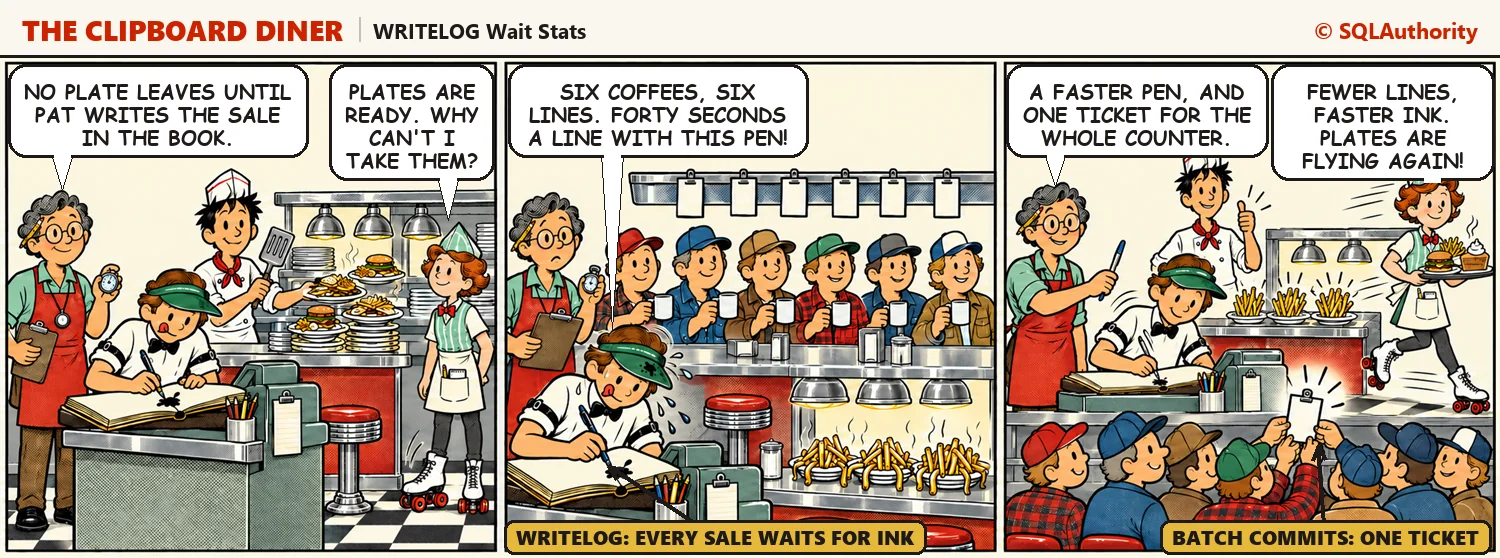
WRITELOG wait stats measure the time a commit waits for its log records to reach the disk. On Night 17 at the Clipboard Diner, Pat’s pen slows down and plates pile up at the pass. Then two queries show your log write latency, and a short script shows why many tiny commits hurt.
THREADPOOL Wait Stats: When Worker Threads Run Out
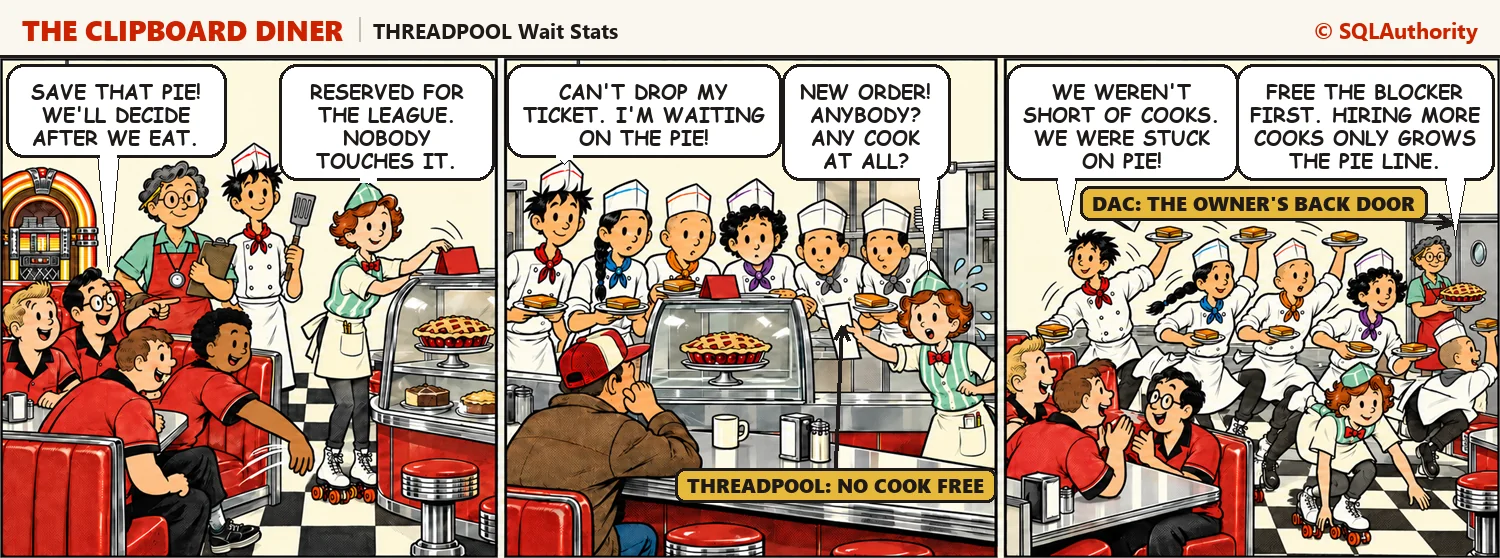
THREADPOOL wait stats mean a task is waiting for a worker thread because every worker is already busy. On Night 16 at the Clipboard Diner, every cook holds a ticket that can’t move, and nobody is free to take a new order. Then two queries show how close your server is to its worker limit, and how to get in when nobody else can.
LCK_M Wait Stats: Lock Waits and Blocking
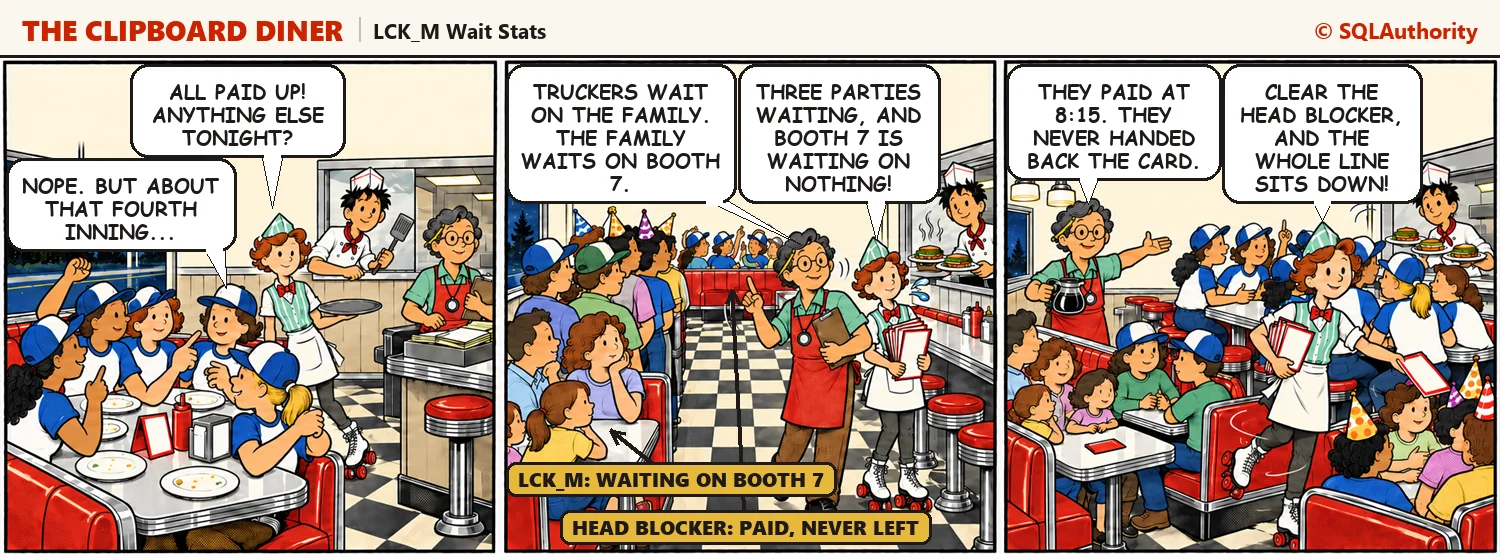
LCK_M wait stats show how long queries wait for a lock that another session holds. On Night 15 at the Clipboard Diner, a party in booth 7 pays and then won’t leave, and three parties wait behind it. Then two queries find the blocking chain and its head blocker on your own server.
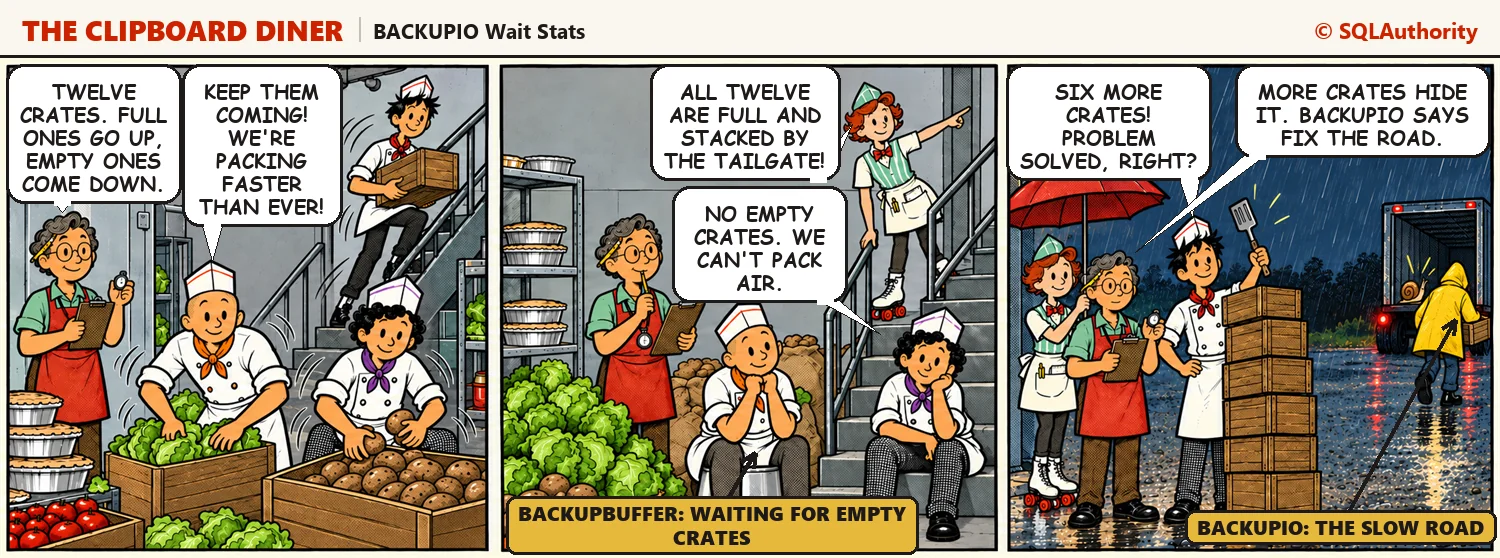
BACKUPIO Wait Stats: Why Backups Wait
BACKUPIO wait stats show a backup waiting on its own I/O, either reading the database or writing the backup file. On Night 14 at the Clipboard Diner, the night truck waits for empty crates and a slow gravel lot. You’ll see how BACKUPIO, BACKUPBUFFER and BACKUPTHREAD fit together, how to measure backup speed from msdb, and which fixes to try first, including ZSTD compression in SQL Server 2025.
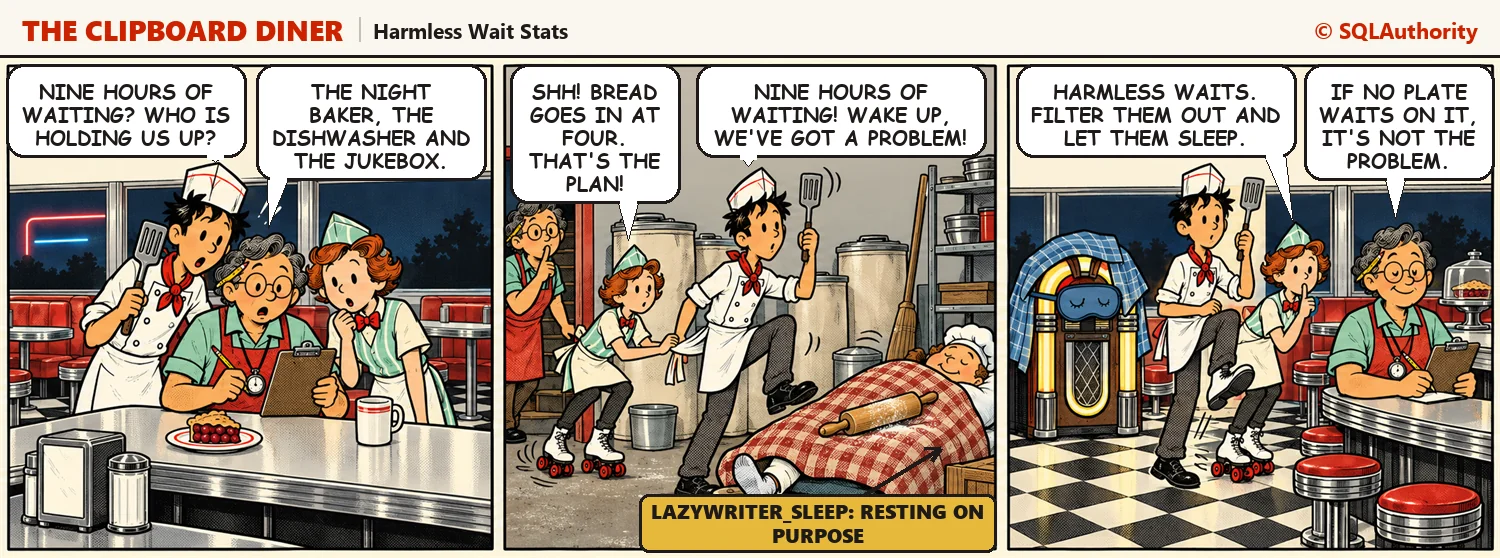
Harmless Wait Stats: Waits You Can Safely Ignore
Harmless wait stats come from background tasks that sleep on purpose, such as the lazy writer, the deadlock monitor and the full-text scheduler. On Night 13 at the Clipboard Diner, the biggest numbers on Casey’s clipboard belong to a sleeping baker and an idle dishwasher. Two queries show how much of your wait list they take up and how to judge an unknown wait yourself.
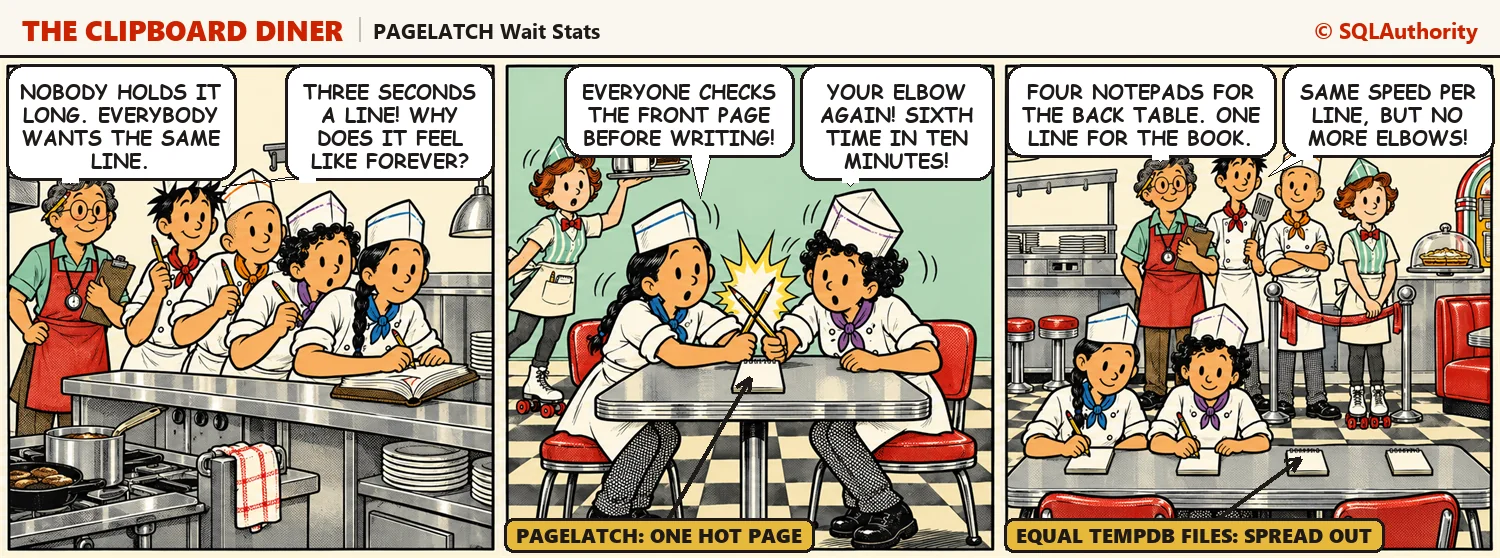
PAGELATCH Wait Stats: Hot Pages in Memory and tempdb
PAGELATCH wait stats show tasks queuing for a short grab on a page that is already in memory. On Night 12 at the Clipboard Diner, four cooks crowd one ticket book and one notepad. You’ll learn the difference between a latch and a lock, how to read a page like 2:1:1, and how to fix last page inserts and tempdb contention.