

Read running, runnable, and suspended SQL Server requests, inspect task states, and compare scheduler queues before diagnosing CPU pressure.
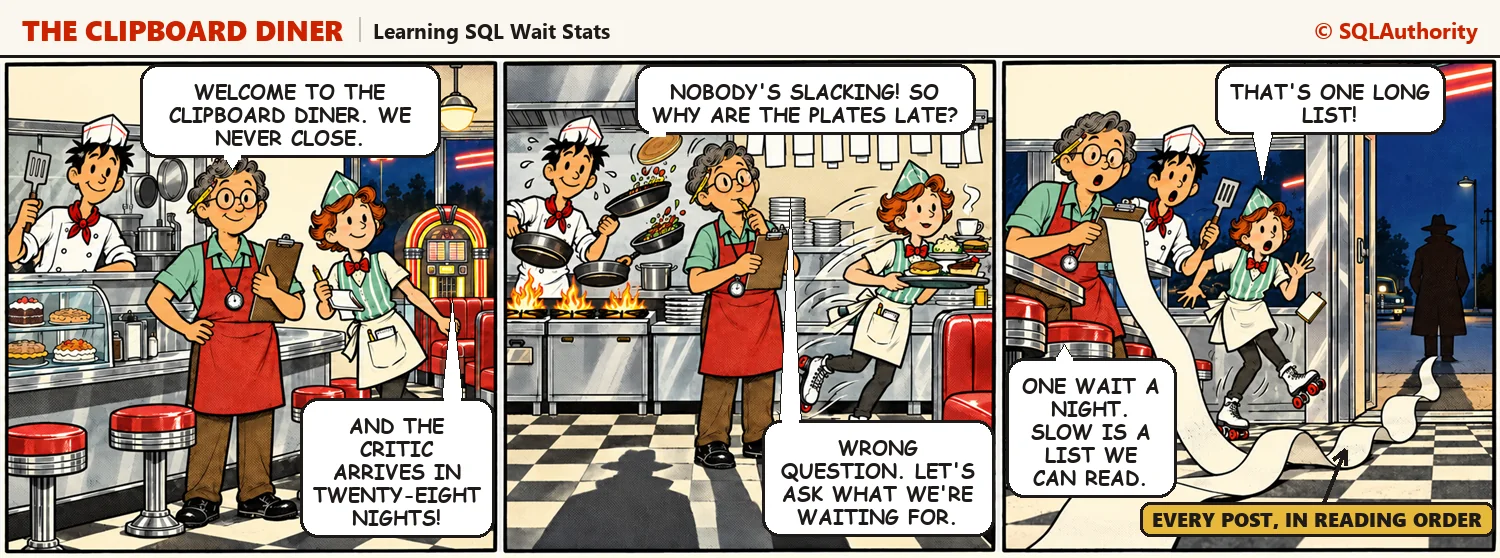
Learning SQL Wait Stats: The Complete Series Guide
Learning SQL Wait Stats is the fastest way I know to find out why a SQL Server is slow. This guide lists every post in my wait stats series, told as one story about an all-night diner, and answers the questions readers ask before they start.

SQL SERVER – Learning More About SQL Wait Stats
Are SQL Wait Stats still relevant for performance tuning? Absolutely. Here is what I told a customer in Delhi and where to start learning about them.

Single-Row Inserts in a Loop: Why Commits Cost So Much
A loop that inserts one row at a time waits for the log on every row. Here is how to see it, and three ways to wait far less.

WAITFOR DELAY in SQL Server: SQL in Sixty Seconds #055
WAITFOR DELAY pauses a SQL Server batch for a fixed amount of time. This episode shows the command, and the tests here measure how long it really waits, what it does to locks and workers, and where it stops being the right tool.

Scale Up or Scale Out: Signs Your Server Needs More Hardware
Decide when to scale up SQL Server by checking sustained CPU demand, memory pressure, storage latency, and whether query tuning comes first.

Reading Pending I/O Requests During a Storage Slowdown
Sample pending I/O requests during PAGEIOLATCH or WRITELOG stalls, map each request to a file, and share timed evidence.