What is open source cloud? It is any cloud built mainly from open source software. It can be private, public or hybrid. What makes it open source is what it is built from, not where it runs.
In one minute
- An open source cloud is built from open source parts such as Linux, Kubernetes and PostgreSQL.
- Its biggest gift is freedom: you can move to another provider without starting over.
- The trade-off is that your team needs the skills to run it, or a partner who has them.

Putting the Two Ideas Together
We have learned what the cloud is and what open source means. When I put both on the whiteboard in that meeting, the CEO smiled and said: “So an open source cloud is a cloud where we are allowed to see the recipe?” That is a very good way to say it.
A Simple Definition
A cloud is made of many layers: the operating system, the software that creates virtual machines, the tools that run containers, the databases, and so on. When most of those layers are open source, you have an open source cloud.
It does not matter whether it is private, public, hybrid or multi-cloud. It does not matter whether you use it as IaaS, PaaS or SaaS. Those describe where it lives and how much help you get. Open source describes what it is made of.
A good example from today: Kubernetes, the open source system for running containers, is offered by every major public provider and can also run in your own building. An app built for Kubernetes on one cloud can move to another with far less work than an app built on one provider’s own special tools.
The Three Big Advantages
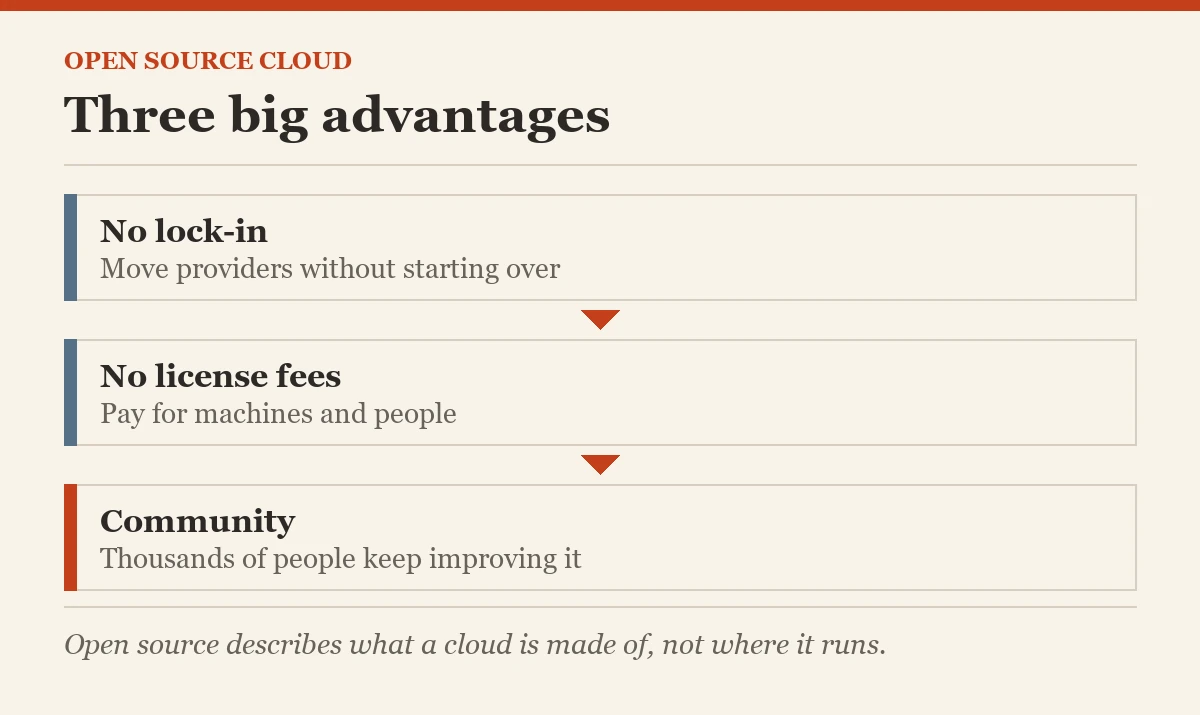
In that meeting we listed many benefits, but three mattered most to the leaders at the table.
1. No Vendor Lock-In
Vendor lock-in means it is so hard to leave a provider that you are stuck with them, even if prices rise or service drops. With open source building blocks, you can move your systems to another provider, or back to your own building, without rebuilding from scratch. That freedom also gives you a stronger position when you negotiate prices.
2. No License Fees for the Software Itself
Most open source software has no license fee. You still pay for the machines it runs on, for support and for your people, but you do not pay per copy or per processor for the software. For large systems this can be a big saving.
3. A Community That Keeps Improving It
Popular open source projects are improved by thousands of people from many companies. New features, fixes and security patches arrive quickly, and good ideas from one company help everyone else.
The Honest Trade-Offs
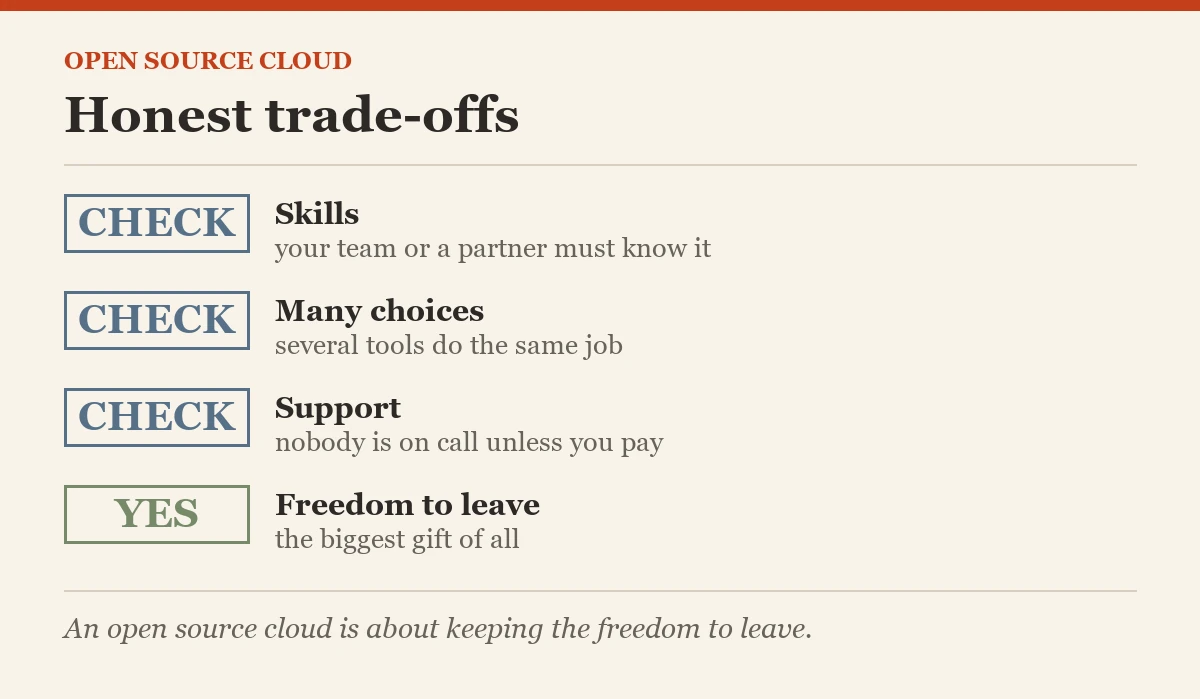
- Skills. Running open source well needs people who know it, or a partner who does.
- Many choices. There are often several good open source tools for the same job, and choosing takes time.
- Support is your decision. Nobody is on the hook unless you sign a support contract with someone.
Words to Know
- Open source cloud: a cloud built mainly from open source parts
- Vendor lock-in: being stuck with one provider because leaving is too hard
- Container: a small, portable package for an app and everything it needs
- Kubernetes: open source software that runs and manages containers
Common Mistakes Beginners Make
- Thinking a public cloud cannot be open source. Public providers offer many open source services, such as managed PostgreSQL and Kubernetes.
- Using a provider’s special services everywhere. Each one is convenient, but together they can lock you in without anyone noticing.
- Ignoring license changes. An open source part can change its license in a new version. Keep an eye on it.
What Comes Next
If an open source cloud sounds right for you, the next question is how to get one. In the next post we look at the two main paths: adopt a ready platform, or build your own from open source parts.
Open Source Cloud series, part 5 of 10
- What is the Cloud?
- What is Cloud Computing?
- What are the Different Types of Cloud Deployments?
- What is Open Source?
- What is Open Source Cloud? (you are here)
- Open Source Cloud: Different Options
- What are the Different Layers of Open Source Cloud?
- Checklist for the Best Open Source Cloud
- The CXO Role in Implementing Open Source Cloud
- Open Source Cloud: Final Post
Previous: What is Open Source? | Next: Open Source Cloud: Different Options
An open source cloud is not about a cheaper bill, it is about keeping the freedom to leave.
Published by Pinal Dave on SQLAuthority. More of my work at pinaldave.com.
Discover more from SQL Authority with Pinal Dave
Subscribe to get the latest posts sent to your email.