This final post brings the whole open source cloud series together on one page: the ten ideas in order, the key lesson from each, and a simple guide on where to start tomorrow.
In one minute
- The series goes from the basics of the cloud to leading a real move.
- The key idea: an open source cloud keeps your freedom to choose and to leave.
- Start small, measure honestly, and keep improving every month.

Why I Wrote This Series
This series began in a meeting with the leaders of a large financial technology client. Everyone used the word “cloud” and everyone meant something different. Over ten days I wrote down, one topic at a time, the simple answers we worked out together. If you are a CTO, CIO or any leader planning a move, or simply curious and new to the cloud, this page is your map.
The Ten Ideas, One Line Each
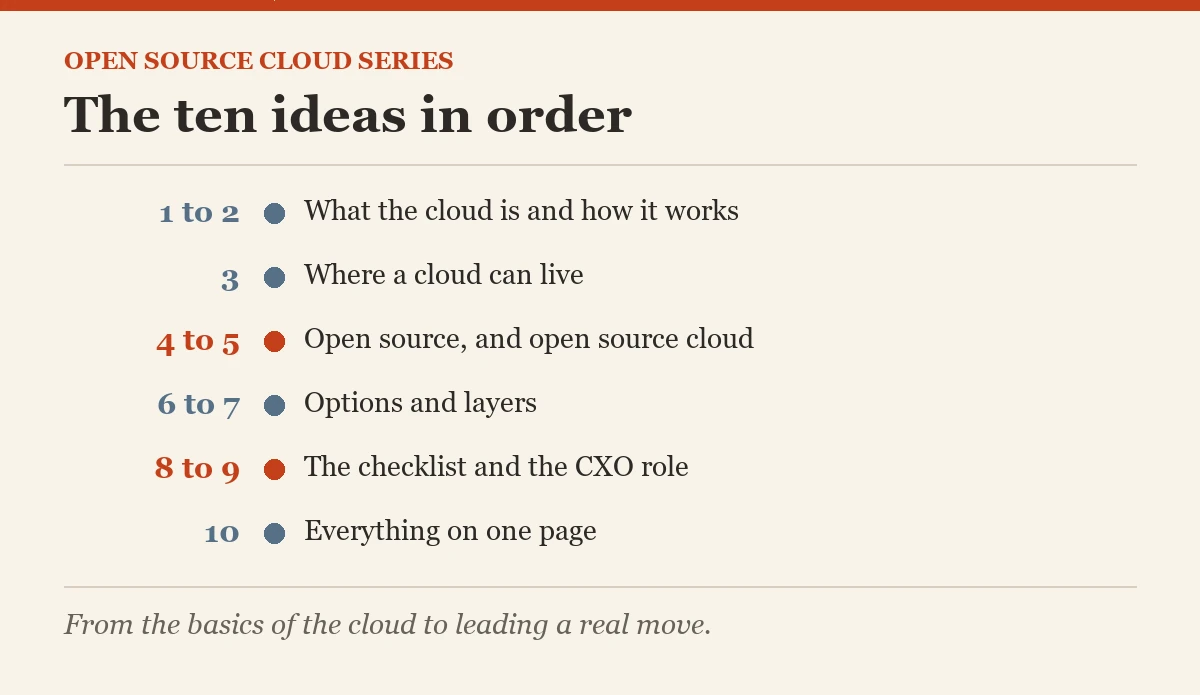
- What is the Cloud? Someone else’s computer that you rent over the internet. Your data and costs are still your job.
- What is Cloud Computing? Virtualization shares big machines out as many small ones. IaaS, PaaS, SaaS and serverless decide how much you manage.
- What are the Different Types of Cloud Deployments? Private, public, hybrid and multi-cloud. The real question is where your data may live.
- What is Open Source? Software whose recipe is public. Always read the license.
- What is Open Source Cloud? A cloud built from open source parts. Its biggest gift is freedom from lock-in.
- Open Source Cloud: Different Options Adopt a ready platform, or build your own. Most teams should adopt first.
- What are the Different Layers of Open Source Cloud? From hardware to apps, with security and monitoring running through every layer.
- Checklist for the Best Open Source Cloud Seven topics and plain questions that turn a sales pitch into a fair comparison.
- The CXO Role in Implementing Open Source Cloud Five steps: understand, set goals, start small, move in waves, keep improving.
- Open Source Cloud: Final Post (you are here) Everything on one page.
The Five Lessons That Matter Most
- Know whose computer it is. Renting hardware does not rent away your responsibility for data, security and cost.
- Let the data decide the deployment. Rules about where data may live often choose between private, public and hybrid for you.
- Keep your freedom to leave. Open source building blocks such as Linux, Kubernetes and PostgreSQL make moving possible.
- Start with a proven platform. Build only what it does not give you.
- Lead it, then keep reviewing it. The move is the start. Monthly cost and performance reviews are where the value grows.
Where to Start Tomorrow
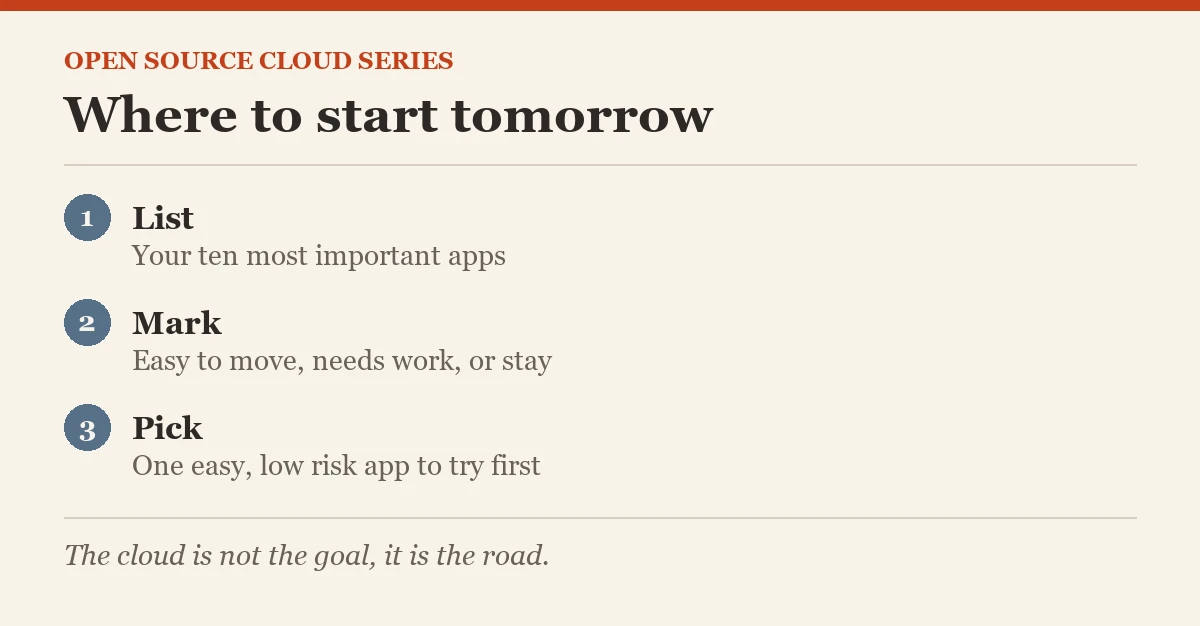
If your organization is not in the cloud yet, do just three things this week:
- List your ten most important applications and the data each one uses.
- Mark each one: easy to move, needs work, or should stay.
- Pick one easy, low risk application as your first small experiment.
In my experience, almost every organization ends up with some systems in the cloud and some kept close to home. A hybrid, open source based cloud gives you the best of both, and keeps the choice in your hands for the years ahead.
Words to Know
- Cloud: computers you rent over the internet
- Open source: software you may read, use and change
- Hybrid: your own servers working together with a public cloud
- Lock-in: being stuck with one provider
Thank You
Thank you to the leaders whose questions shaped this series, and to every reader who wrote in with their own experiences. If this series helped you, please share it with someone just starting their cloud journey.
Open Source Cloud series, part 10 of 10
- What is the Cloud?
- What is Cloud Computing?
- What are the Different Types of Cloud Deployments?
- What is Open Source?
- What is Open Source Cloud?
- Open Source Cloud: Different Options
- What are the Different Layers of Open Source Cloud?
- Checklist for the Best Open Source Cloud
- The CXO Role in Implementing Open Source Cloud
- Open Source Cloud: Final Post (you are here)
The cloud is not the goal, it is the road, and open source keeps you free to choose where it leads.
Published by Pinal Dave on SQLAuthority. More of my work at pinaldave.com.
Discover more from SQL Authority with Pinal Dave
Subscribe to get the latest posts sent to your email.