
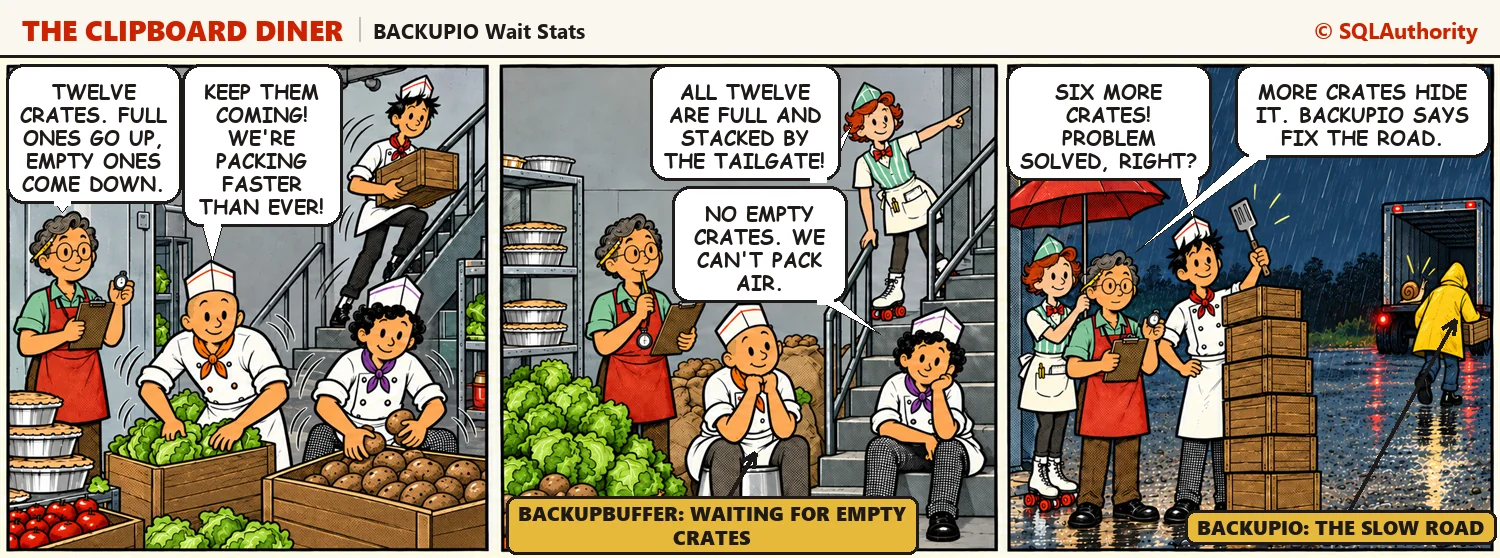
BACKUPIO wait stats show a backup waiting on its own I/O, either reading the database or writing the backup file. On Night 14 at the Clipboard Diner, the night truck waits for empty crates and a slow gravel lot. You’ll see how BACKUPIO, BACKUPBUFFER and BACKUPTHREAD fit together, how to measure backup speed from msdb, and which fixes to try first, including ZSTD compression in SQL Server 2025.
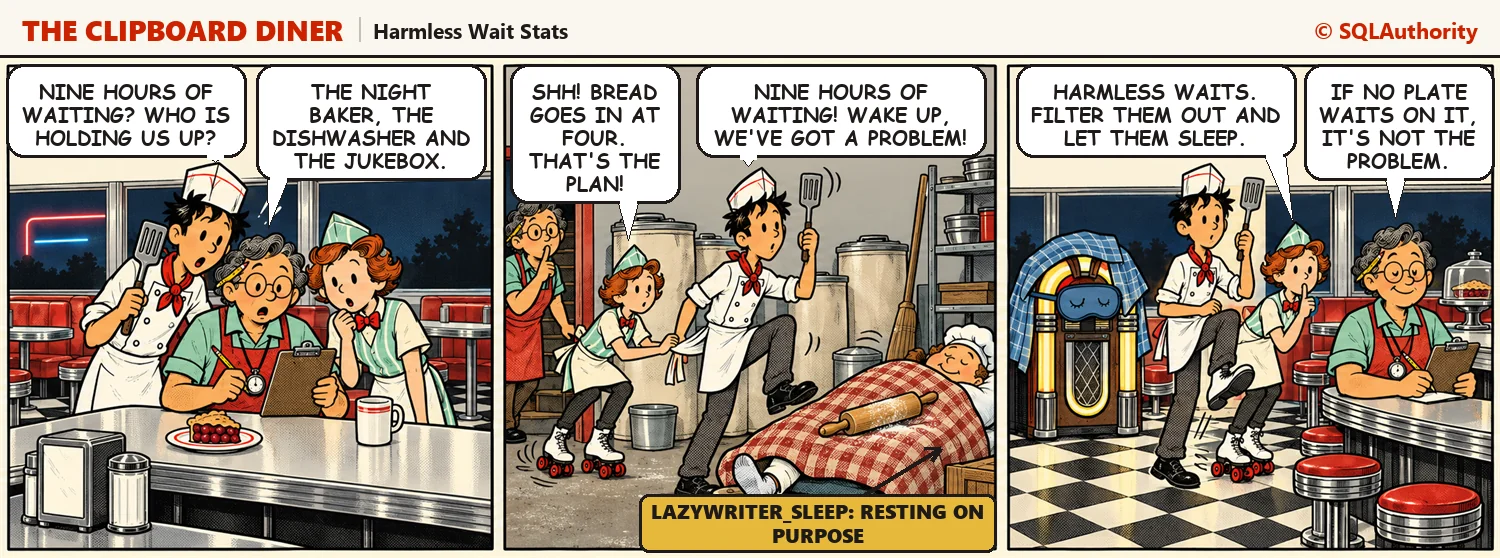
Harmless Wait Stats: Waits You Can Safely Ignore
Harmless wait stats come from background tasks that sleep on purpose, such as the lazy writer, the deadlock monitor and the full-text scheduler. On Night 13 at the Clipboard Diner, the biggest numbers on Casey’s clipboard belong to a sleeping baker and an idle dishwasher. Two queries show how much of your wait list they take up and how to judge an unknown wait yourself.
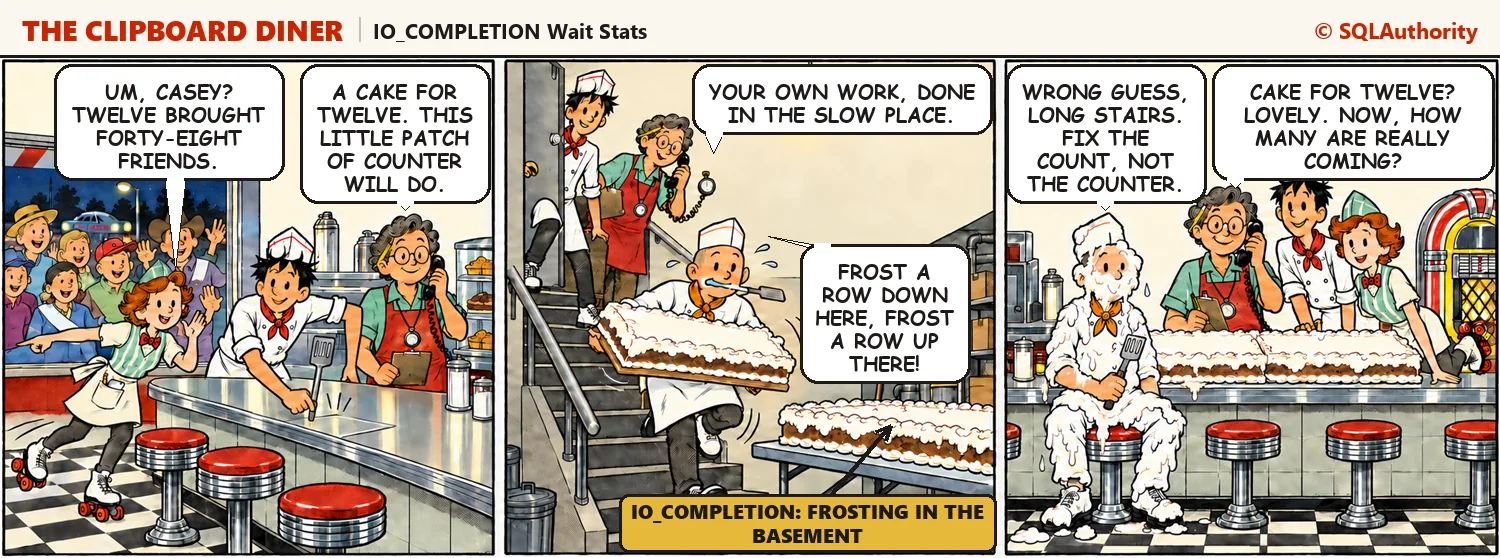
IO_COMPLETION Wait Stats: Spills, Sorts and File Growth
IO_COMPLETION wait stats measure queries waiting on disk work that isn’t a normal data page read, such as sorts and hashes that spill to tempdb. On Night 10 at the Clipboard Diner, a sheet cake for twelve turns out to be for sixty. Learn why spills happen, how to find them, and what SQL Server 2022 changed for log file growth.
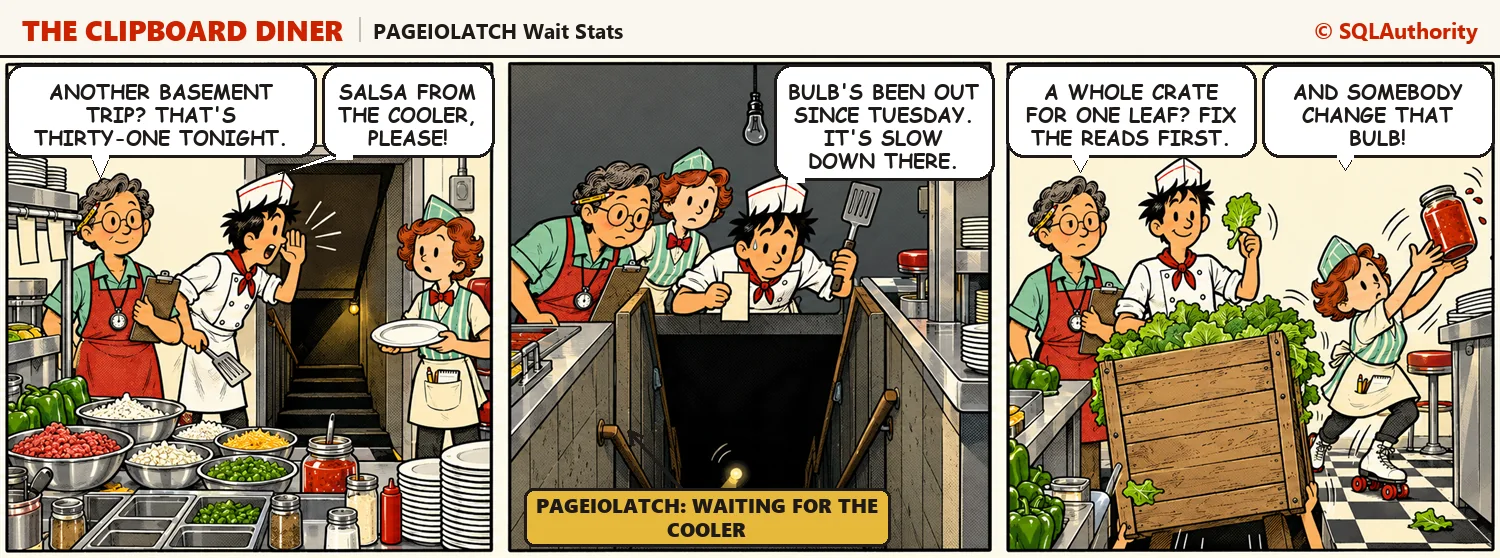
PAGEIOLATCH Wait Stats: Waiting for Data From Disk
PAGEIOLATCH wait stats measure queries waiting while data pages are read from disk into memory. On Night 9 at the Clipboard Diner, the prep counter is too small for the menu and the cooks keep sending for things from the basement. Learn the two causes, how to read file latency per file, and the fixes in order.
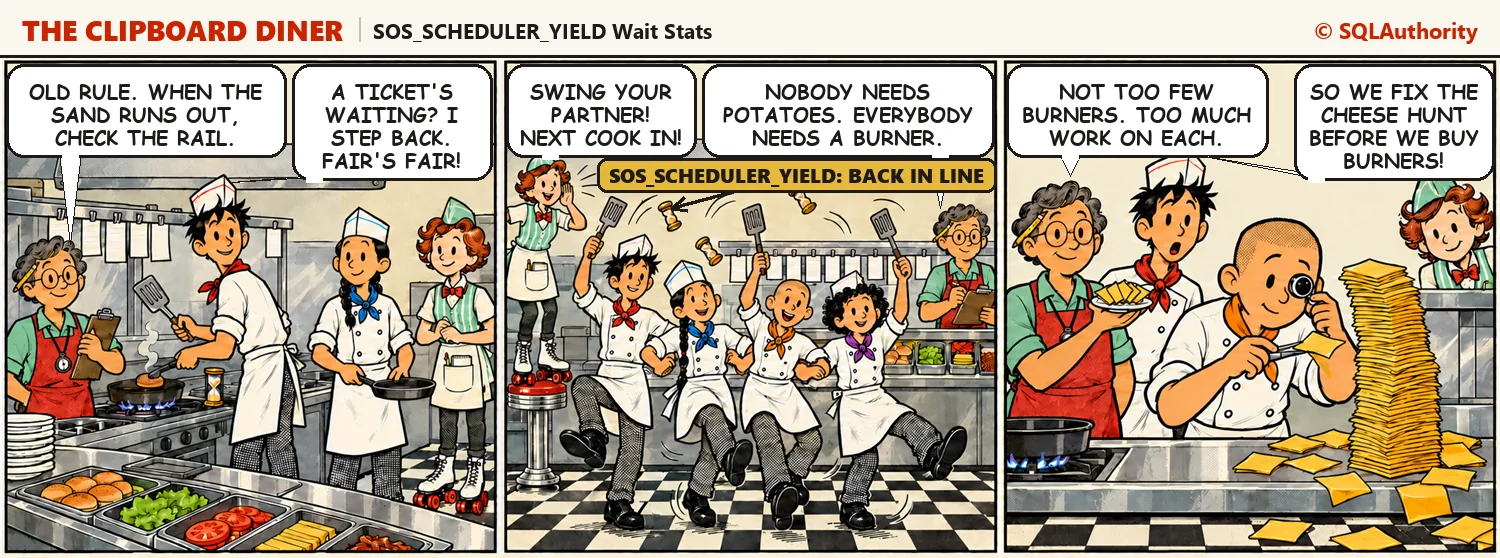
SOS_SCHEDULER_YIELD Wait Stats: Reading CPU Pressure
SOS_SCHEDULER_YIELD wait stats count the moments a query gives up the CPU after its 4 ms turn and waits to get it back. On Night 8 at the Clipboard Diner, every cook steps on and off the burners all night. Learn when this wait is harmless, when it means CPU pressure, and how to find the queries that burn the most CPU.
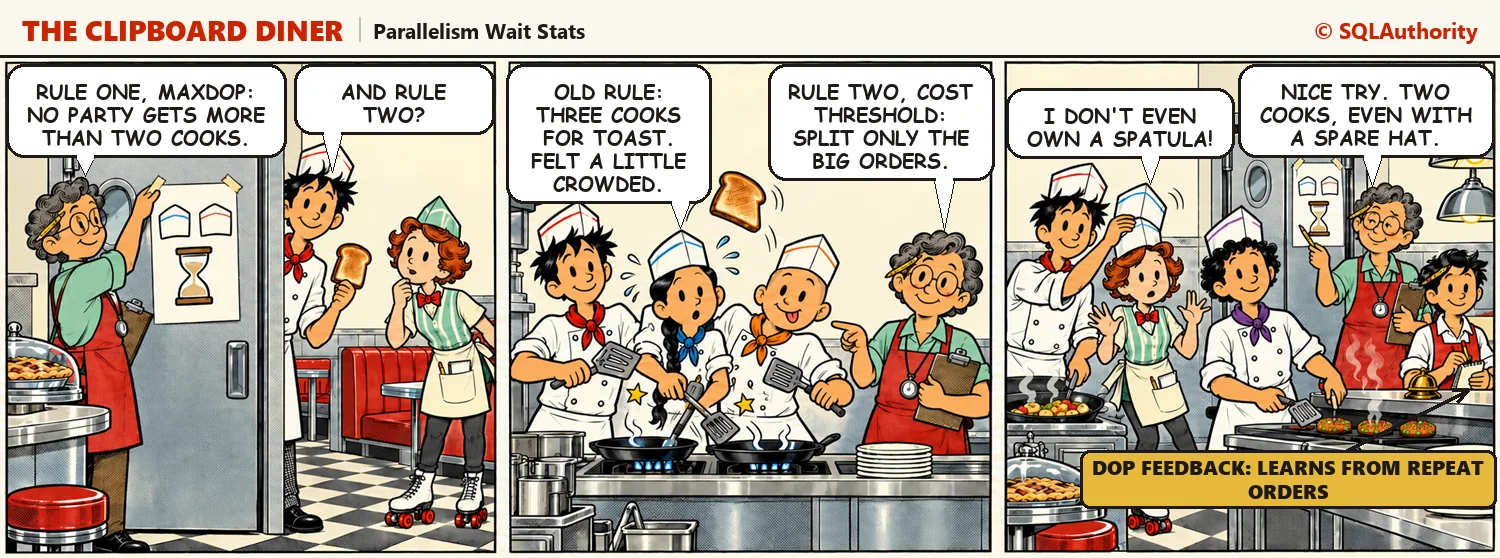
Parallelism Wait Stats: Tuning MAXDOP and Cost Threshold
Parallelism wait stats drop when two settings fit your server: cost threshold for parallelism decides which queries go parallel, and MAXDOP decides how many threads they get. On Night 7 at the Clipboard Diner, Casey writes two house rules for big parties. Then the kitchen starts learning on its own, the way DOP feedback does in SQL Server 2025 Enterprise.

OUTPUT INTO: Record Old and New Values in One Write
OUTPUT INTO records old and new values during a write, while the transaction determines whether the change survives. Test NULL transitions, unchanged values, rollback and target failures before treating captured rows as committed history.