

Async updates save hours when each message carries everything the reader needs. This post shows the five fields of a clean update, a made-up example and a default action that keeps work moving. It also says when a meeting still wins.

Context Switching Has a Cost: Batch Your Interruptions
Context switching costs more than the seconds it takes to change windows. This post compares attention with SQL Server commits: pay the fixed fee once per batch, not once per ping. It gives concrete ways to batch messages, tickets and reviews, and ends with a short checklist.

Frame Your Week: Why a Weekly Review Beats a Daily To-Do List
A weekly review beats a daily to-do list because it shows seven days of work at once. This post borrows the rolling window from SQL to show how to look back, look ahead and choose up to four outcomes. It ends with a checklist you can try this week.

Say No at Work Without Burning Bridges When You’re Over-Committed
To say no at work without burning bridges, queue the request instead of refusing it. This post borrows a busy server’s habit of holding requests in line with a clear wait time. You’ll get a short reply format, ways to offer options and a limit for the queue.

Rank Your Work: Only One Task Can Be Number One
Rank your work every morning, and give each task its own place. A priority list with five items marked high is a pile, not a plan. This post shows how to number your tasks, break ties with a rule and re-rank when something real arrives.
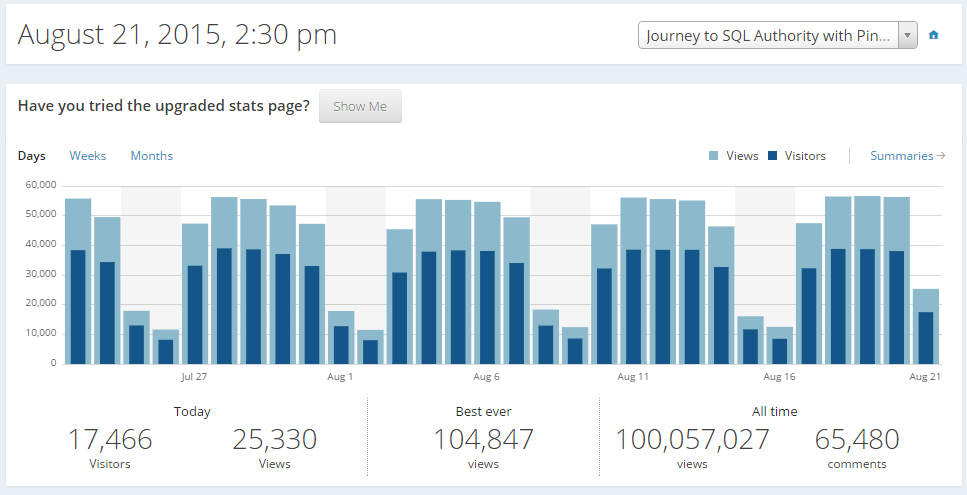
SQL Authority News – 100 Million Views and Onwards
On August 20, 2015 SQLAuthority.com crossed 100 Million Views. A short thank you note to every reader who made this journey since 2006 possible.

Median Day Planning: Time Management That Survives a Normal Week
Median day planning means sizing your week around a typical day, not your best one. This post shows how to measure your own median in ten workdays, split work into a commit list and a stretch list, and keep a small buffer. Your plan then survives a normal week.