The CXO role in implementing open source cloud is not to pick the tools. It is to set the goal, choose what moves first, protect the budget and the data, and keep everyone moving in the same direction.
In one minute
- A cloud move succeeds or fails on leadership, not technology.
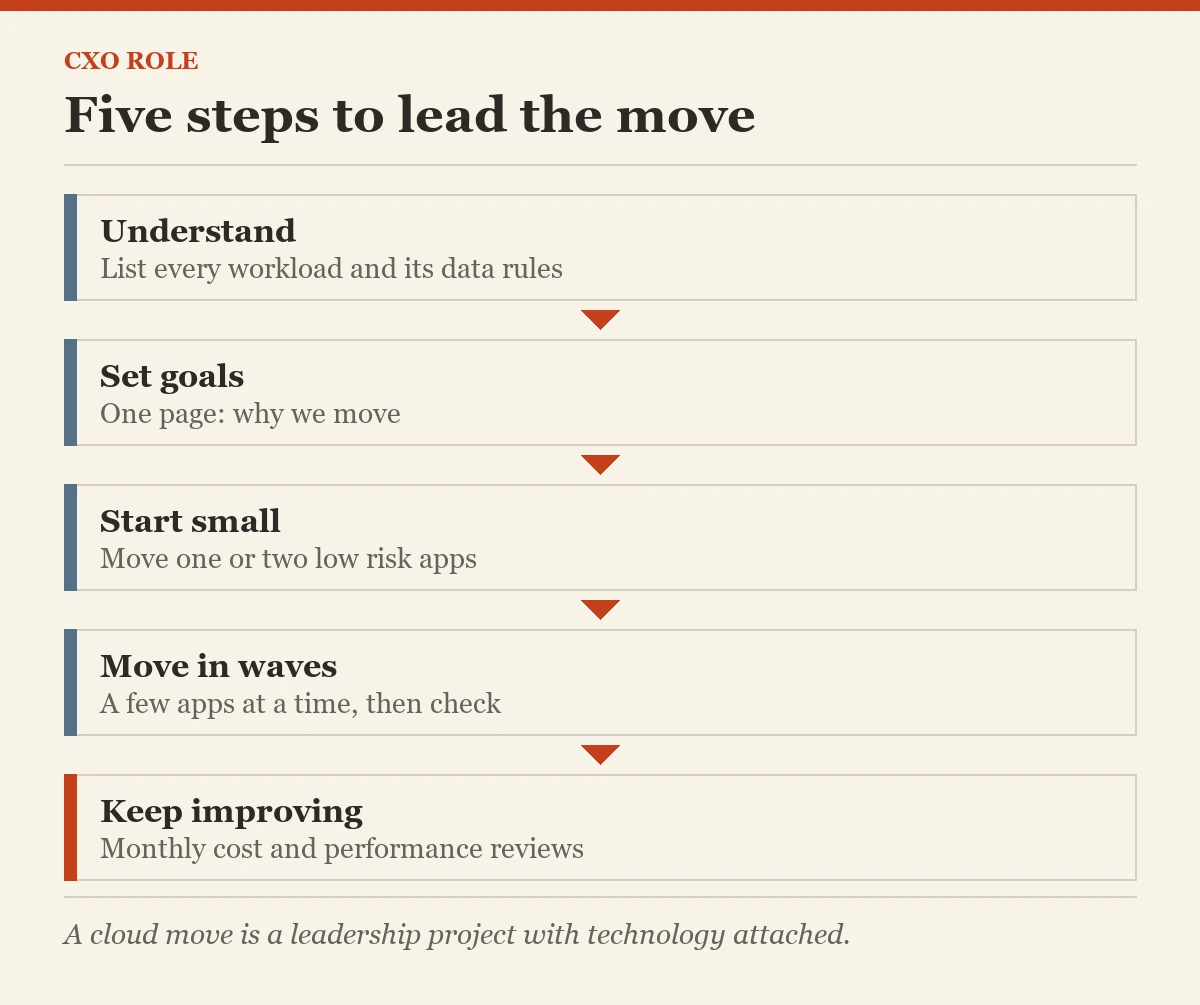
- Five steps: understand your workloads, set goals and rules, start small, move in waves, then keep improving.
- The hardest part is usually rules and people, not software.

The Question Every Leader Asks
After we went through the checklist, the CIO leaned back and said: “Now we know how to choose. What is my job in all this?” Here are the five steps I shared. They work whether you are a CEO, CIO, CTO or any leader with the word “chief” in your title.
Step 1: Understand Your Workloads
Before moving anything, make a list of every application and the data it uses. For each one, note how important it is, how busy it gets, and what rules apply to its data. You will quickly see three groups: easy to move, needs work before moving, and should stay where it is for now.
Surprisingly, the biggest blocker is rarely technology. It is usually rules about data and privacy. Bring your legal and compliance teams in at this step, not at the end.
Step 2: Set Clear Goals and Rules
Write down, in one page, why you are moving. Faster launches? Lower costs? Freedom from one vendor? Then set simple rules everyone follows, such as “every resource has an owner tag” and “no data leaves our chosen regions”. Clear goals stop endless debates later.
Step 3: Start Small and Learn
Pick one or two low risk applications from the easy group and move them first. Treat it as a learning exercise. Measure cost, speed and problems honestly. Your team gains skills, and you gain real numbers instead of guesses.
Step 4: Move in Waves
Use what you learned to move the rest in planned waves, a few applications at a time. After each wave, pause, check that everything works, fix what did not, and then start the next. Waves keep risk small and let the business keep running normally.
Step 5: Keep Improving Cost and Performance
The move is not the finish line. Set a monthly review of cost, performance and security. Many companies now have a FinOps practice, a small group that helps teams see and reduce their cloud spending. In my own work, simple fixes such as tuning a heavy query or right-sizing an oversized server often cut a cloud bill more than any discount.
What Leaders Must Protect
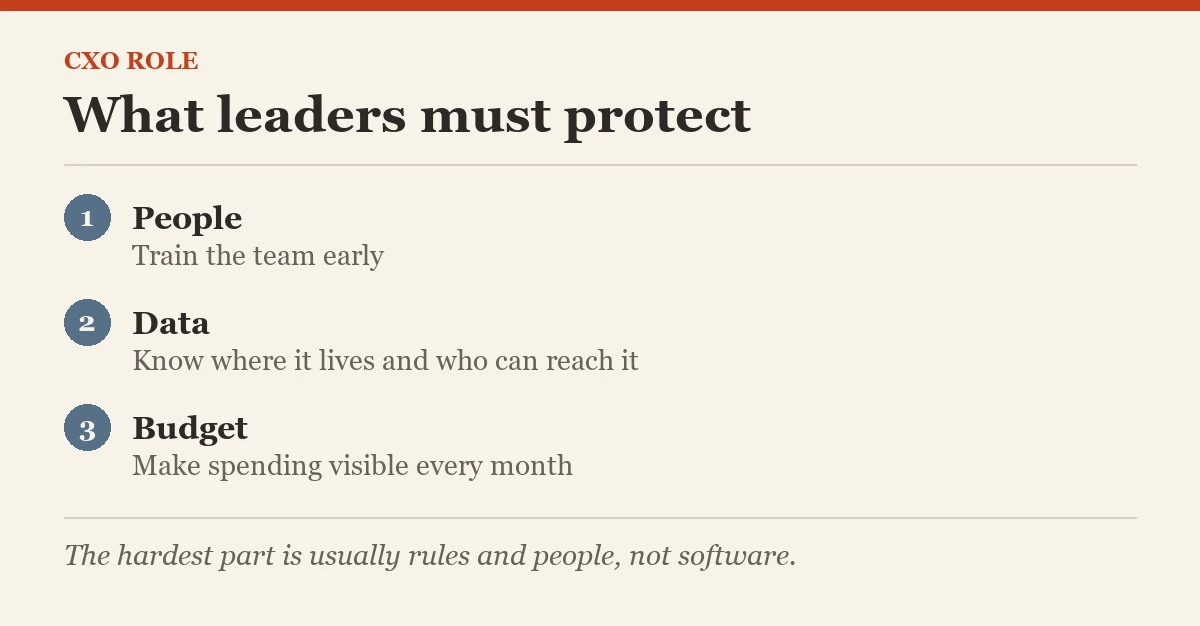
- The people. Train your team early. A cloud nobody understands is a risk, not an asset.
- The data. Know where it lives and who can reach it, always.
- The budget. Make spending visible to every team, every month.
Words to Know
- Workload: an application plus the data and work it does
- Migration wave: a planned group of apps moved together
- FinOps: the practice of managing cloud spending
- Right-sizing: matching a server’s size to what it really needs
Common Mistakes Leaders Make
- Moving everything at once. Big bang moves create big bang problems.
- Treating it as an IT project only. Finance, legal, security and the business must all own part of it.
- Stopping after the move. Costs creep up quietly without regular reviews.
What Comes Next
That completes the journey from “what is the cloud” to leading a real move. The final post brings the whole series together on one page.
Open Source Cloud series, part 9 of 10
- What is the Cloud?
- What is Cloud Computing?
- What are the Different Types of Cloud Deployments?
- What is Open Source?
- What is Open Source Cloud?
- Open Source Cloud: Different Options
- What are the Different Layers of Open Source Cloud?
- Checklist for the Best Open Source Cloud
- The CXO Role in Implementing Open Source Cloud (you are here)
- Open Source Cloud: Final Post
Previous: Checklist for the Best Open Source Cloud | Next: Open Source Cloud: Final Post
A cloud move is not a technology project with a leader attached, it is a leadership project with technology attached.
Published by Pinal Dave on SQLAuthority. More of my work at pinaldave.com.
Discover more from SQL Authority with Pinal Dave
Subscribe to get the latest posts sent to your email.