

The default query shortcuts in SSMS are Alt+F1, Ctrl+1 and Ctrl+2, and each runs a system procedure on the text you select. This post shows what sp_help, sp_who and sp_lock return, why sp_lock has a better replacement, and which keys you can change.

Custom Query Shortcuts in SSMS: Run Your Own Procedure
Custom query shortcuts in SSMS run a stored procedure of your own on the text you have selected. This post writes a small procedure that explains any session, tests it the way the shortcut calls it, assigns it to a free key, and explains which keys you can use.
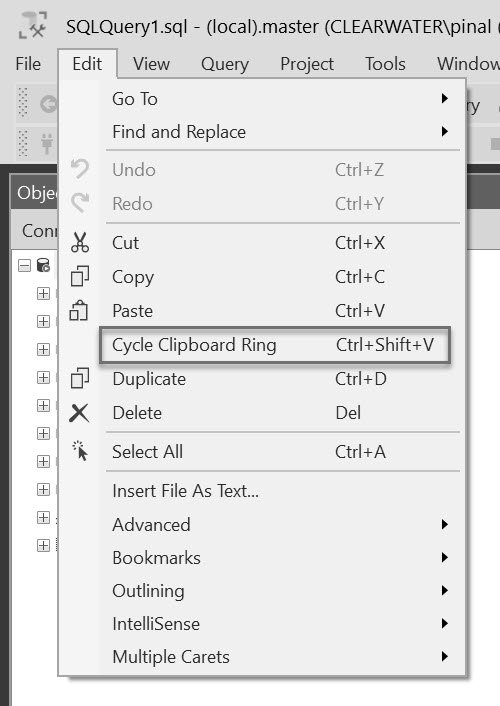
Cycle Clipboard Ring – SQL in Sixty Seconds #129
Copy (CTRL + C) and Paste (CTRL + V) are the friends of the DBAs and Developers. In SQL Server it is totally possible to use the Cycle Clipboard Ring.

STATISTICS TIME and IO: Turn Them On for Every SSMS Query
To get STATISTICS TIME and IO for every query, tick two boxes in the SSMS options once instead of typing SET STATISTICS in each window. This post builds a small demo, reads the output line by line, shows that a SELECT and an UPDATE both report their cost, and explains which windows the option affects.

Box Selection in SSMS: Four Edits With the ALT Key
Box selection in SSMS selects vertical text: hold the ALT key and drag the mouse across the text. This post shows four edits that the box makes quick: typing on many lines at once, deleting a column, pasting a column into a column, and moving lines with the arrow keys. Each result is a query that runs.

Select Vertical Text in SSMS: Alt Shift and Arrow Keys
To select vertical text in SSMS, hold Alt and drag with the mouse, or hold Alt and Shift and press the arrow keys. This post explains what a vertical selection does, how to edit many lines at once and how to turn a pasted column into an IN list. It also shows a T-SQL alternative for long lists.

Remove Completion Time From the SSMS Messages Tab
To remove completion time from the Messages tab in SSMS, clear one check box in the options. This post gives the exact steps for SSMS 22, explains why no T-SQL setting controls the line and says why old query windows keep showing it. It also shows how to print a time yourself, when a script needs one.