

Installing AdventureWorks is one RESTORE statement, and a few checks before and after it prevent the common failures. The tests here read a backup header and file list, restore under a new name with MOVE, and confirm the result on SQL Server 2025.
SQL SERVER – Cleaning Up SQL Server Indexes – Defragmentation, Fillfactor – Video
Cleaning up SQL Server indexes starts with fragmentation. Learn the two types, when to reorganize or rebuild, and how fillfactor fits in.

Compound Assignment Operators in SQL Server: SQL in Sixty Seconds #009
Compound assignment operators such as += and *= combine an operation with an assignment in T-SQL. The tests here run all eight operators on SQL Server 2025, and show how NULL, integer division, overflow, truncation and precedence change the result.

MAXDOP 1 in SQL Server: SQL in Sixty Seconds #008
MAXDOP 1 requests serial execution for one SQL Server query. I measured four variants of one query on SQL Server 2025, and the serial plan was the slowest in elapsed time with about the same CPU. The post shows the settings behind the hint and how to read the degree of parallelism a query actually used.

Table Variables and Transactions in SQL Server: SQL in Sixty Seconds #007
Table variables and transactions do not mix the way temporary tables do, because a ROLLBACK leaves the rows in a table variable. The tests here cover a full rollback, a savepoint, a failed statement and a logging pattern, all on SQL Server 2025.

SQL Server Indexing Basics: SQL in Sixty Seconds #006
SQL Server indexing basics start with the query you want to help. The tests here use a 200,000 row table to compare a scan, a plain index and a covering index, show when SQL Server ignores an index, and measure what three extra indexes cost on an insert.
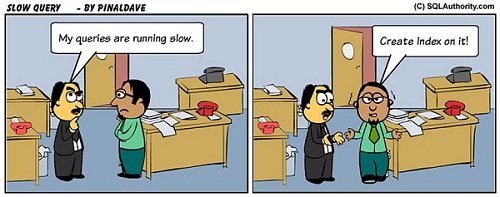
Indexing Basics Course: Learning SQL Server Performance
Vinod Kumar and I released an indexing basics course in 2012. This post keeps the original outline and cartoon, and adds tests on SQL Server 2025 for four of its practical topics: column order, functions on indexed columns, filtered indexes and disabled indexes.