

A quick introduction to the PARSE function in SQL Server Denali: convert a string to a number or a date and time, and see what happens when it fails.

What a Preview Build Is For, and What It Is Not
Use a SQL Server preview to test specific features and report reproducible issues while keeping production data and recovery paths separate.

AT TIME ZONE Cost: Converting Many Rows Without Burning CPU
Converting a whole column with AT TIME ZONE looks harmless on three rows and hurts on a hundred thousand. Here is the cheaper way to filter a local day.
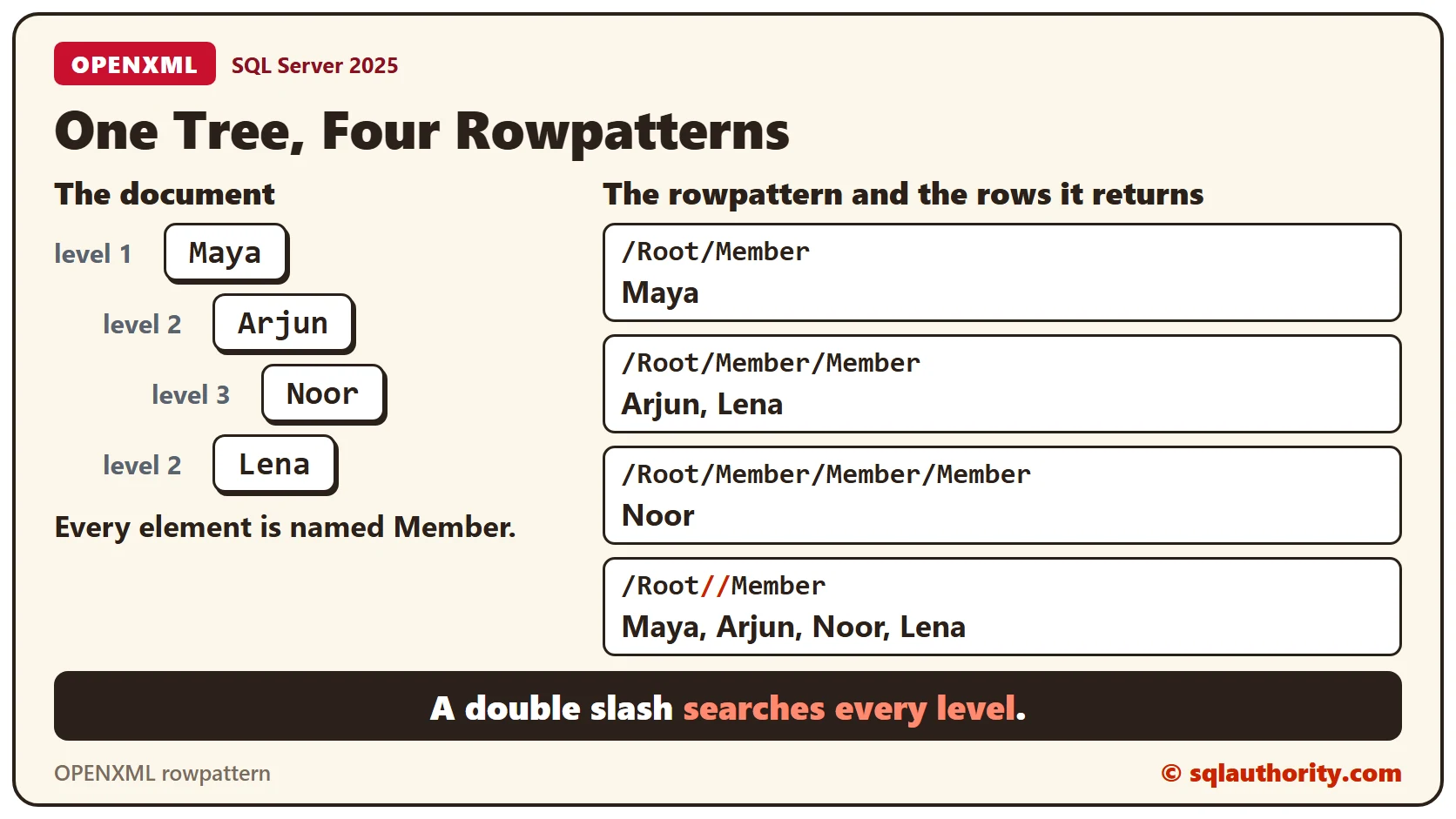
OPENXML Rowpattern in SQL Server: Search Every Level and Read the Parent
An OPENXML rowpattern decides which XML elements become rows. This post tests absolute paths, a double slash that searches every level, and the ../ column pattern that reads the parent and grandparent. It repeats the result with nodes() and explains the flags value. Every result comes from SQL Server 2025.
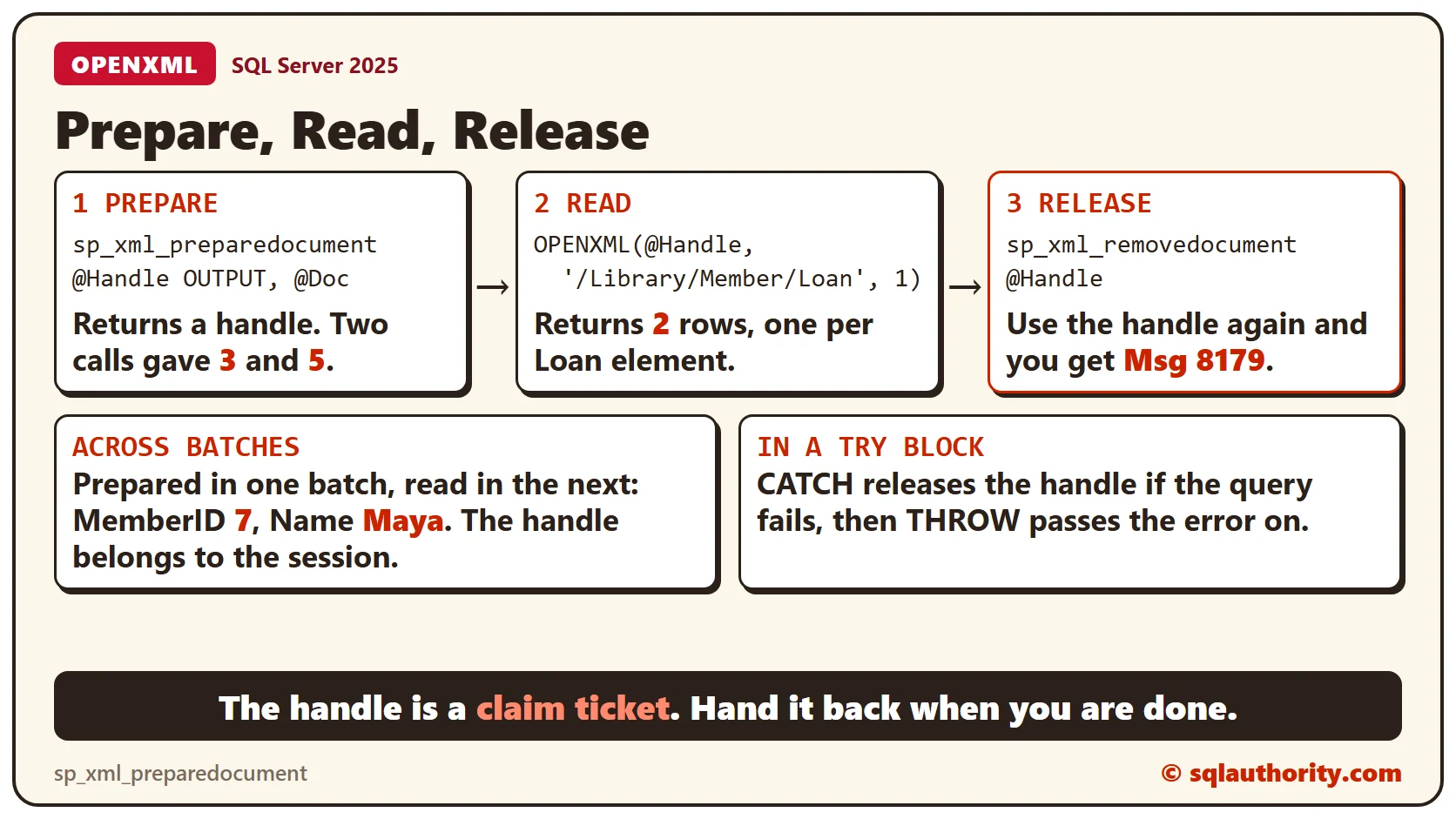
sp_xml_preparedocument: Prepare XML in Memory and Always Release It
sp_xml_preparedocument parses an XML document into memory and returns a handle that OPENXML can read. This post shows the safe pattern with TRY and CATCH, why the handle number is not yours to choose, what happens when you reuse a released handle, and how the WITH clause and flags shape the rows. Every result comes from SQL Server 2025.
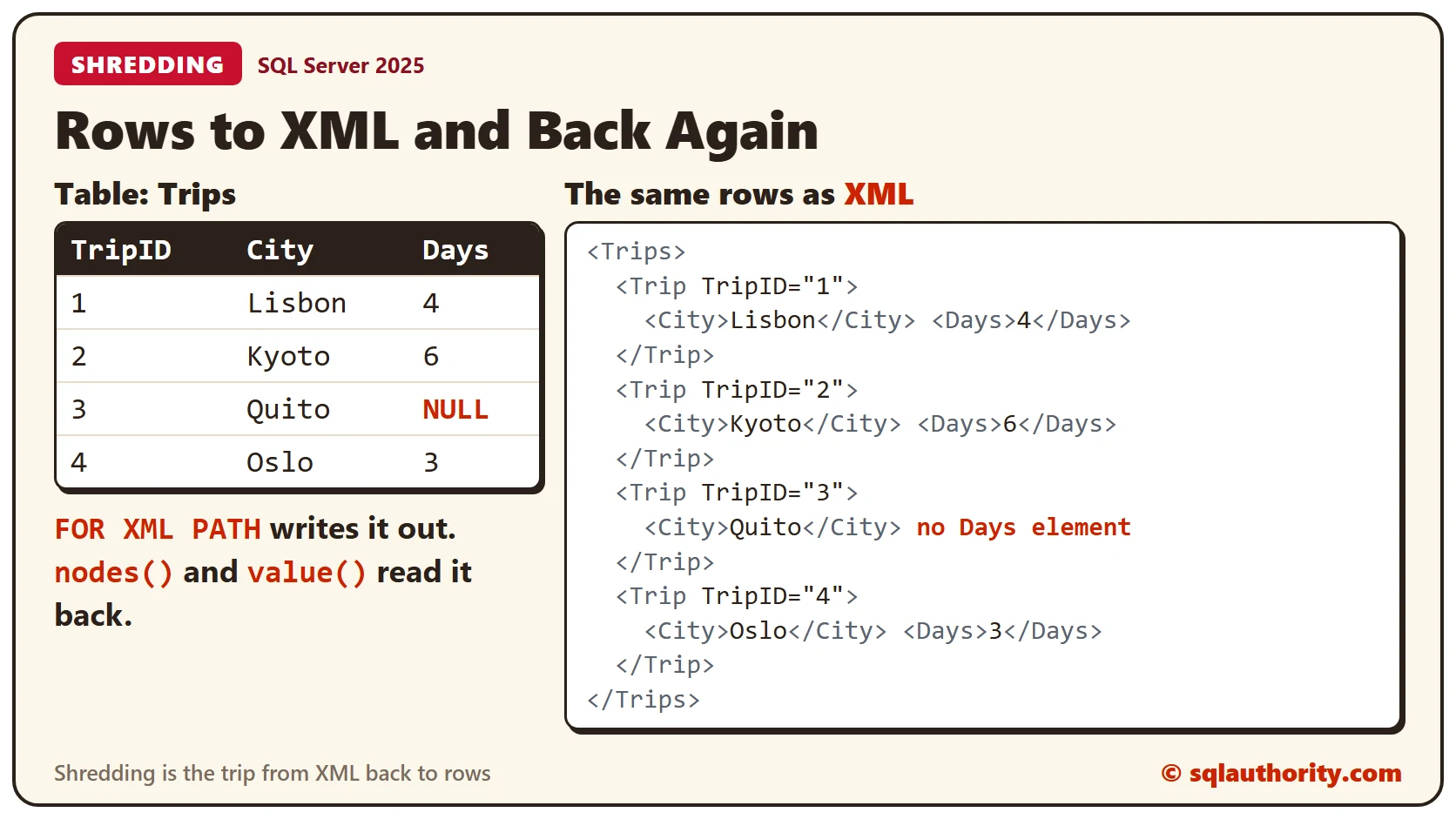
Shredding XML in SQL Server: Turn XML Back Into Rows
Shredding XML means turning XML back into rows and columns. This post writes a small table out with FOR XML PATH, reads it back with nodes() and value(), and proves the copy matches the original, NULL included. It also shows two easy mistakes: a path in the wrong case and a missing [1]. Every result comes from SQL Server 2025.
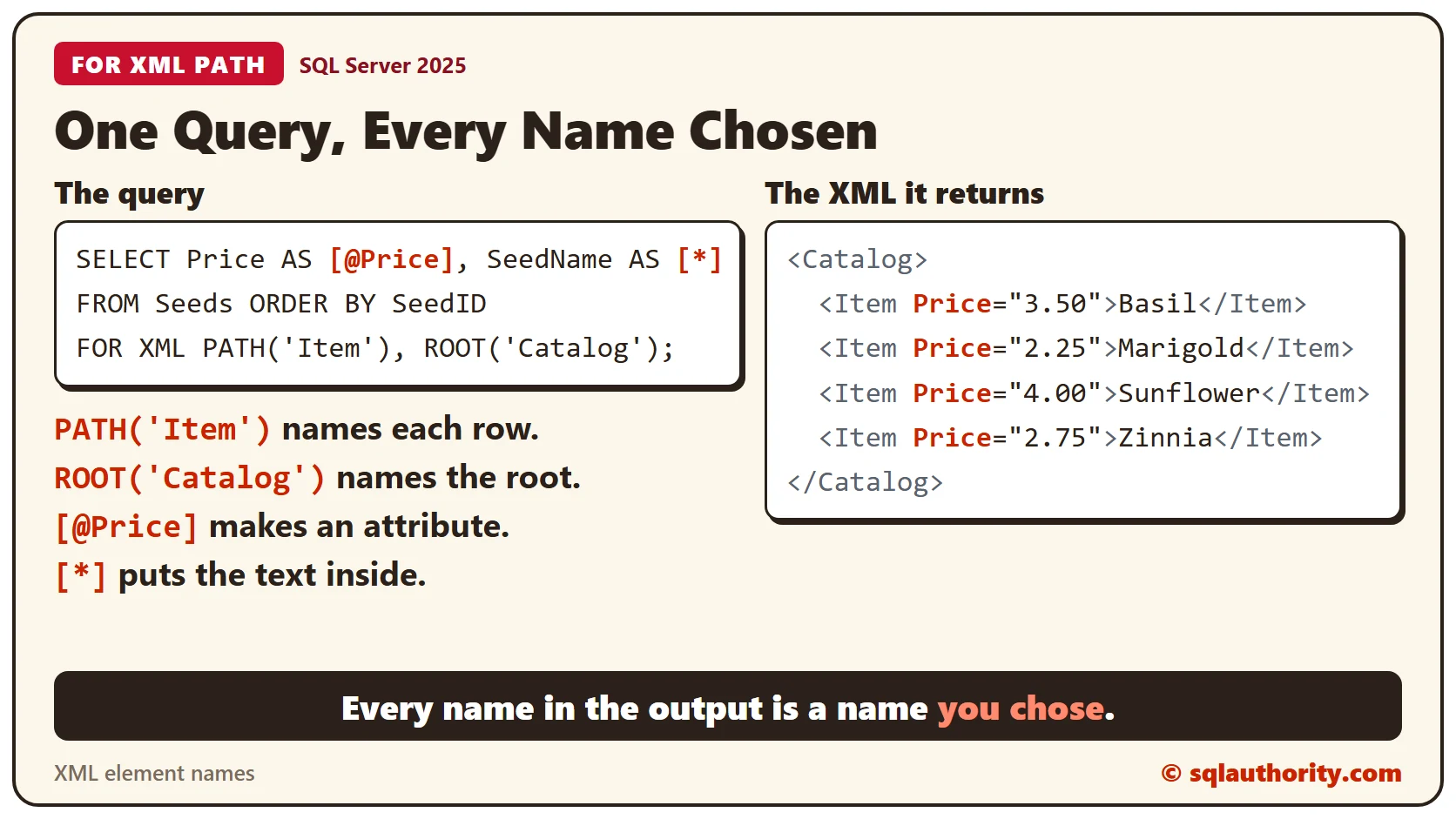
XML Element Names in SQL Server: Row, Root and Text With FOR XML PATH
XML element names in SQL Server come from your query, and FOR XML PATH lets you choose them. This post sets the row and root names, turns a column into an attribute, writes text inside an element and shows the error you get when an attribute column comes too late. Every result comes from SQL Server 2025.