

An ETL framework in SQL Server needs a small set of configuration, run logs, restart checkpoints, and alerts that operators can trust.

SQL SERVER – Microsoft Certification – SQL Server 2012
Microsoft Certification changed for SQL Server 2012. A simple map of the new MCSA and MCSE path and of exams 70-461, 70-462 and 70-463.

Moving a Database to New Hardware With Little Downtime
Moving a database to new hardware with little downtime uses early restore, a maintained log chain, final synchronization, and a tested client switch.
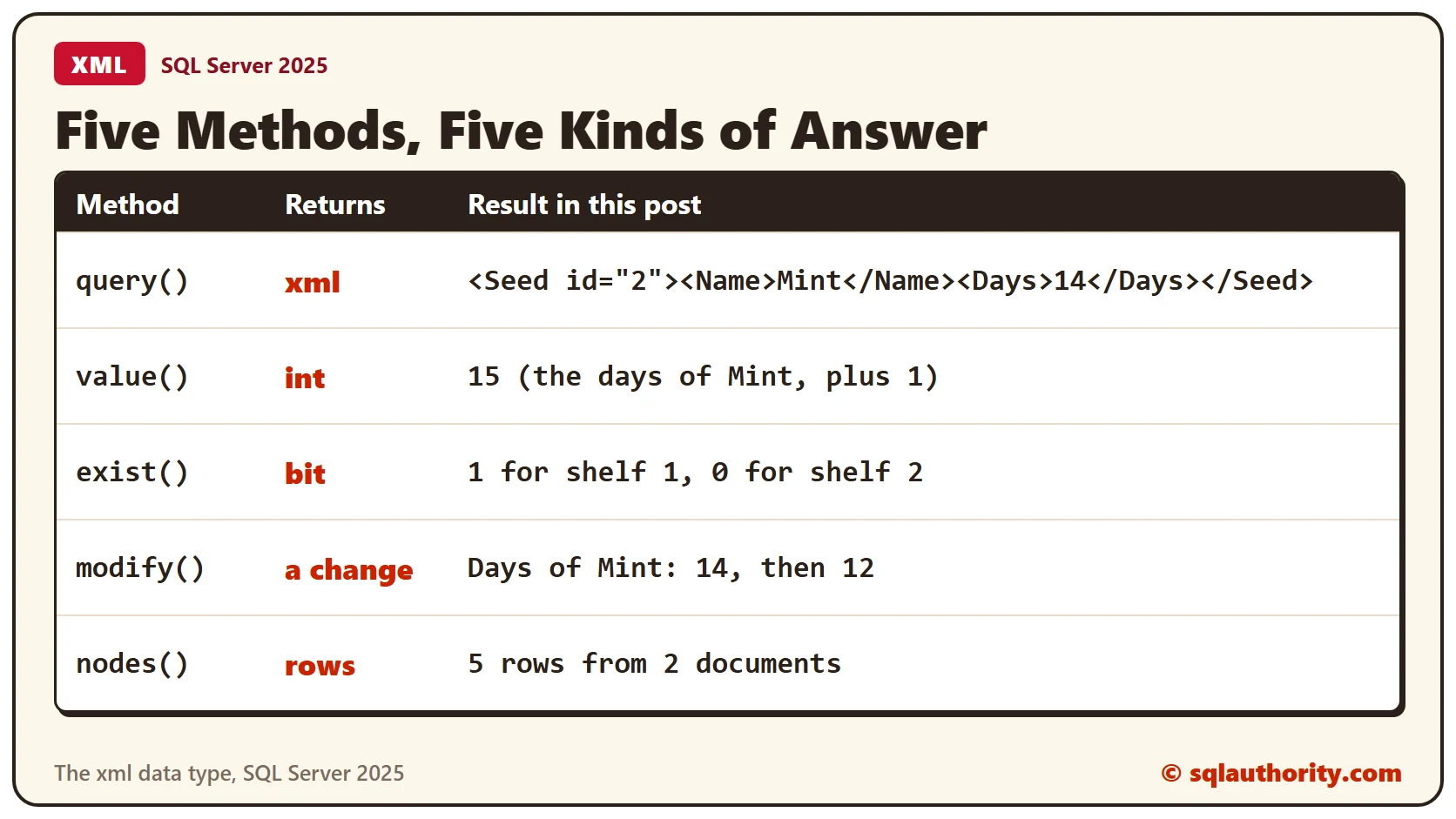
XML Data Type Methods in SQL Server: query, value, exist, modify and nodes
XML data type methods are the five functions you call on an xml column or variable: query(), value(), exist(), modify() and nodes(). Each gives back a different kind of answer: xml, a typed value, 1 or 0, a changed document or rows. This post runs all five on one small table of seeds, shows two common errors, and asks SQL Server what each method returns. Every result comes from SQL Server 2025.
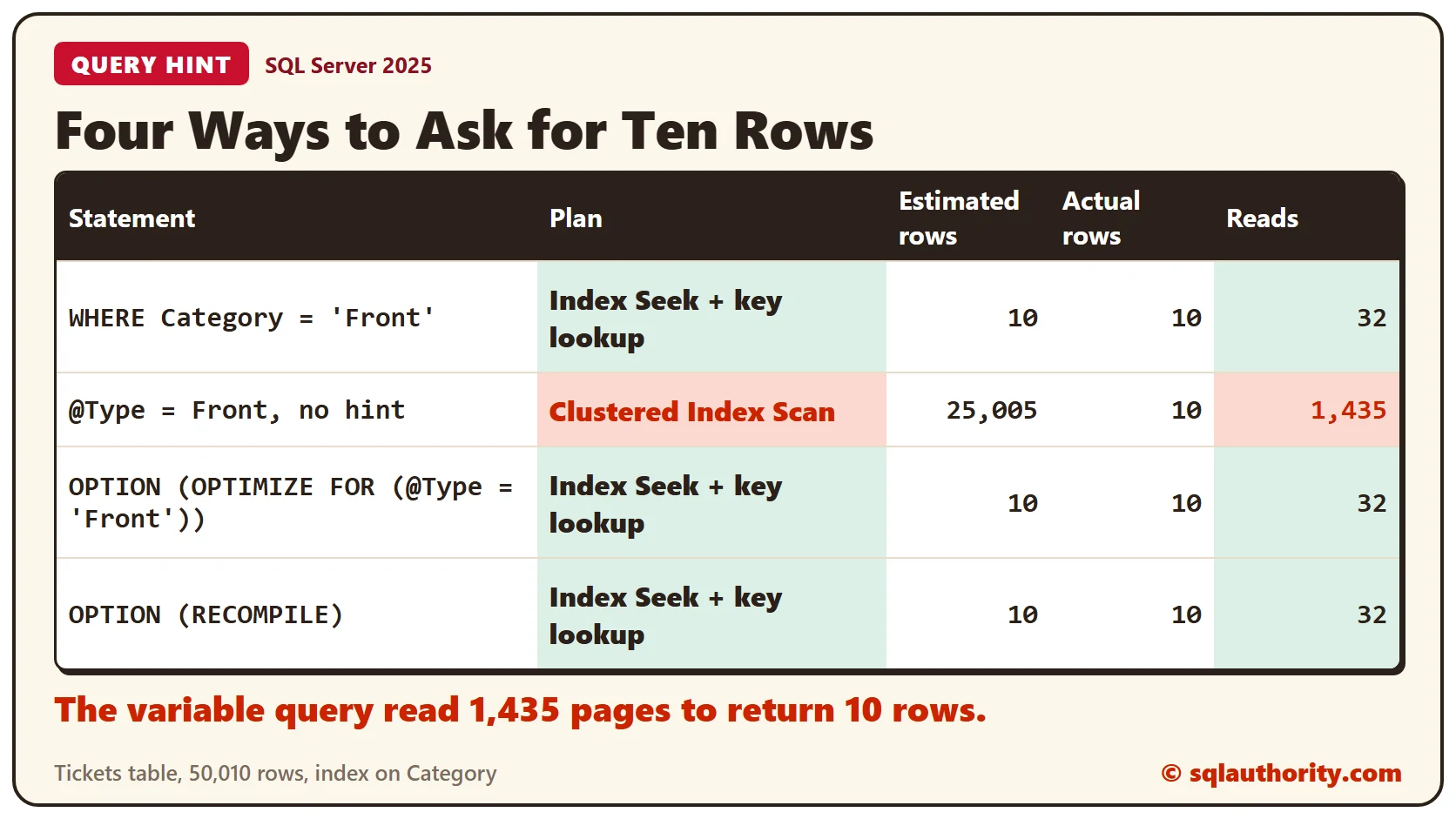
Query Hint Basics: Why a Variable Scans and OPTIMIZE FOR Seeks
Query hint basics start with one idea: a query hint is an instruction you add to one statement in the OPTION clause. This post builds a table of 50,010 tickets, shows a seek for a literal value, a scan for the same value in a variable, and a seek again with OPTIMIZE FOR and with RECOMPILE. It also shows what the hint costs when the value changes. Every number comes from SQL Server 2025.
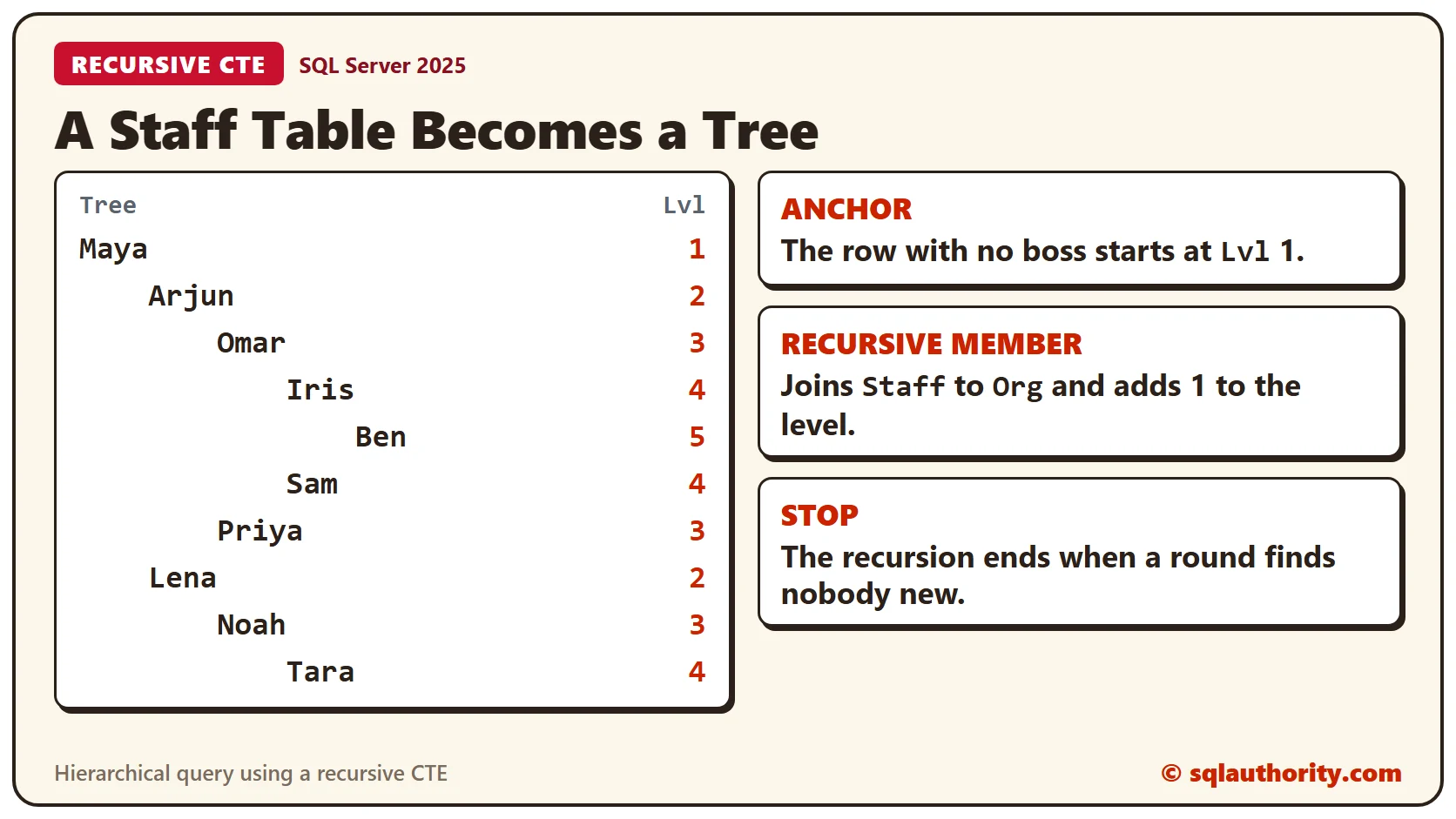
Hierarchical Query Using a Recursive CTE: Levels, Order and Loops
A hierarchical query using a recursive CTE walks a table that points at itself, one level at a time. This post builds the levels of a small staff table with Lvl + 1, sorts the tree so each person sits under their boss, walks upward from one person and stops a loop in the data. Every result comes from SQL Server 2025.