

JSON_PATH_EXISTS tests path presence, including JSON null. Compare missing properties, empty arrays and SQL NULL on SQL Server 2022.
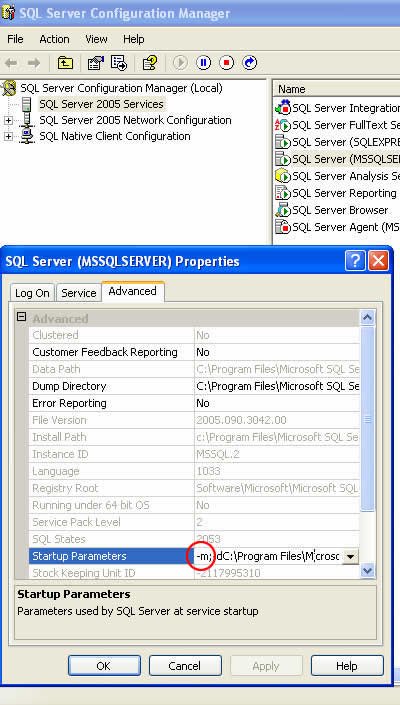
SQL SERVER – Start SQL Server Instance in Single User Mode
How to start a SQL Server instance in single user mode: add the -m; startup parameter in SQL Server Configuration Manager and restart the service.

Choosing the Server Collation at Install Time
Choose the server collation before installation by checking application comparisons, tempdb behavior, and the cost of changing an instance later.
SQL SERVER – Introduction to Force Index Query Hints – Index Hint – Part2
Part 2 on force index query hints: instead of the inline WITH table hint, use the OPTION clause at the end of the query and name the table for each hint.
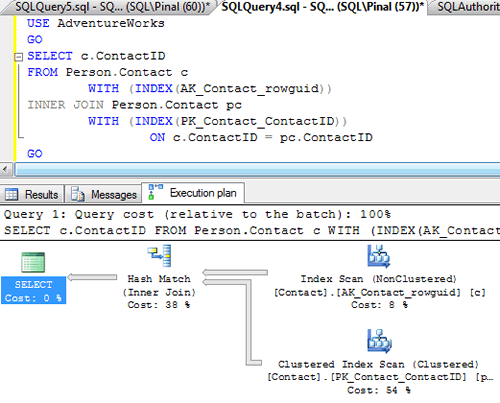
SQL SERVER – Introduction to Force Index Query Hints – Index Hint
An index hint lets you force SQL Server to use a specific index in a query. I show the WITH (INDEX()) syntax with examples, and why it is for special cases only.

SQL SERVER – Quickest Way to – Kill All Threads – Kill All User Session – Kill All Processes
The quickest way to kill all processes and user sessions in a database: SET SINGLE_USER WITH ROLLBACK IMMEDIATE, then back to MULTI_USER. No cursor needed.

Contained Databases and Contained Users
Understand contained users in SQL Server databases, how they travel with a database, and the security trade-offs of partial containment.
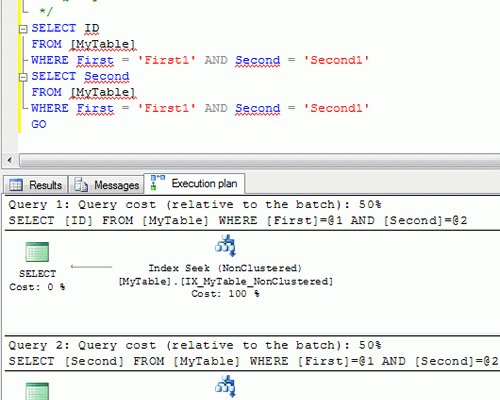
SQL SERVER – Observation – Effect of Clustered Index over Nonclustered Index
An observation from my query optimization work: the effect of clustered index on a nonclustered index, shown with a sample table and execution plans.

TRY_PARSE: Make the Culture Explicit for Numeric Text
TRY_PARSE needs an explicit culture when punctuation has a specific numeric meaning. I keep that culture beside the source text. A successful conversion alone cannot establish that the intended number was read.
SQL SERVER – T-SQL Script for FizzBuzz Logic
FizzBuzz is a common interview puzzle: print 1 to 100, with Fizz for multiples of three and Buzz for five. Here is my T-SQL answer using a WHILE loop.