Question: What are the Different Types of SQL Server CHECKPOINT?
Answer: There are four different kinds of checkpoints in SQL Server.


Question: What are the Different Types of SQL Server CHECKPOINT?
Answer: There are four different kinds of checkpoints in SQL Server.

Yellow Light on Alexa with no messages? Check notifications and reminders, then adjust Amazon Shopping alerts without silencing everything.

To drop tables by prefix, list the matching tables first and drop them with a script that quotes every schema and table name. This post shows why the underscore in a prefix is a trap, a one-statement version and a cursor version. It works in SQL Server and in Azure SQL Database.

Build performance condition alerts for log usage, tempdb free space, and blocking, with sensible delays and an operator response.

TempDB performance depends on five settings that you can read in a few minutes: how big it is, how many data files it has, whether they match, how it grows and where it lives. Three read-only queries check each one. The post also explains what to do with the answers.

The CHECKPOINT duration argument sets a target time in seconds. This post times a manual checkpoint on a database with 130 MB of dirty pages, and shows that a long duration slows it badly while a short one does not make it faster. It also shows that a backup flushes dirty pages by itself.
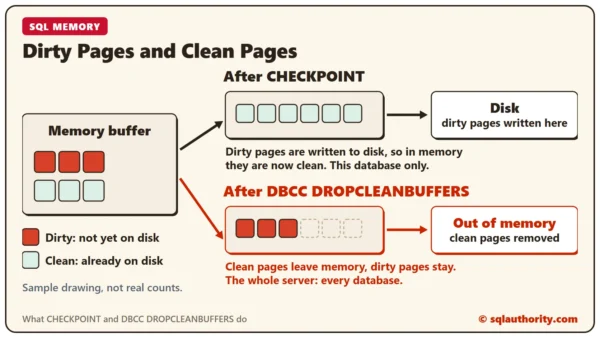
CHECKPOINT vs DBCC DROPCLEANBUFFERS comes down to which pages leave memory. CHECKPOINT writes dirty pages to disk, and DBCC DROPCLEANBUFFERS removes clean pages from the buffer pool. Here is the effect on memory, with results.

Question: How Dirty or Clean SQL SERVER Database is (by Memory)?
This blog post is the follow up of the earlier blog post on the same subject.

Bluetooth volume stays the same from 1 to 100 in Windows? Diagnose Absolute Volume, use a reversible fix, and restore the original setting.

Dirty pages are pages in memory that SQL Server has changed but not yet written to the data file. This post counts dirty pages and clean pages per database and per object, then watches a CHECKPOINT bring the dirty count to zero. It also explains why you should not try to clean the buffer pool on a production server.