
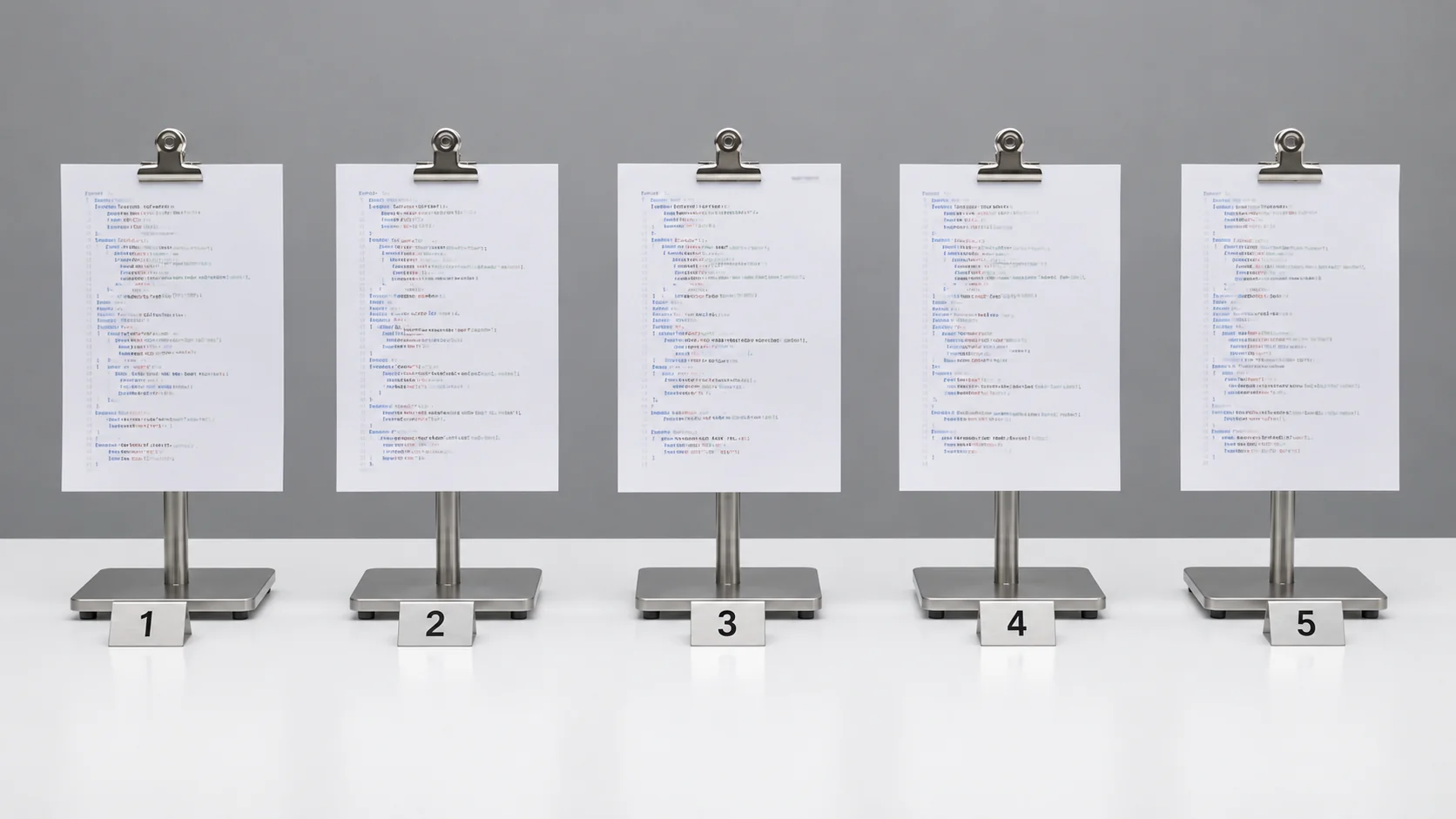
Paging in SQL Server, done five ways against the same 1,200,000 rows, the same sort, and the same page size. Every completed method produced the same checksum at each depth, which checks consistency without proving row-by-row equality. Then I counted the reads.

T-SQL Mistakes: Careless and Careful Write the Same Six Queries
T-SQL mistakes, in the two-panel format the children’s magazines used. Careless writes it one way. Careful writes it the other. Every pair was run on the same 1,200,000 rows on SQL Server 2025 and measured. One pair returned a wrong answer. One I stopped after fourteen minutes of CPU.

SQL SERVER – Exploring 3 Overutilized Features
Potentially leading to less efficient implementations or missed opportunities for optimization. In this blog post, we’ll explore three such Overutilized features.

SQL SERVER – Convert Cursor to Set Based Insert
In this blog post, we will focus on the issue of cursor-based inserts and demonstrate how to convert them into set based operations.

SQL SERVER – Replacing a Cursor with a Common Table Expression
Let us learn today – How I was able to improve the query performance by replacing the cursor with a common table expression (CTE).

Performance Tuning Mistakes in SQL Server: 11 Habits to Fix
Performance tuning mistakes are habits, and each one has a check. Eleven sit in one table, and five are measured on a demo database: a missing index, stale statistics, a row by row loop, a giant delete and a type that cannot be indexed.

NOCOUNT Performance: What SET NOCOUNT ON Saves in a Loop
NOCOUNT performance depends on the messages that SQL Server no longer sends to the client. This post counts the network packets of a procedure with a 5,000 step loop, with the setting off and on. It also explains why some tests show no time gain, and where the setting helps most.