

Object names in SQL Server can be up to 128 characters, but local temp tables stop at 116. Guest author Balmukund Lakhani explains this limit for Temp Objects.
XML Data Type Methods in SQL Server: query, value, exist, modify and nodes
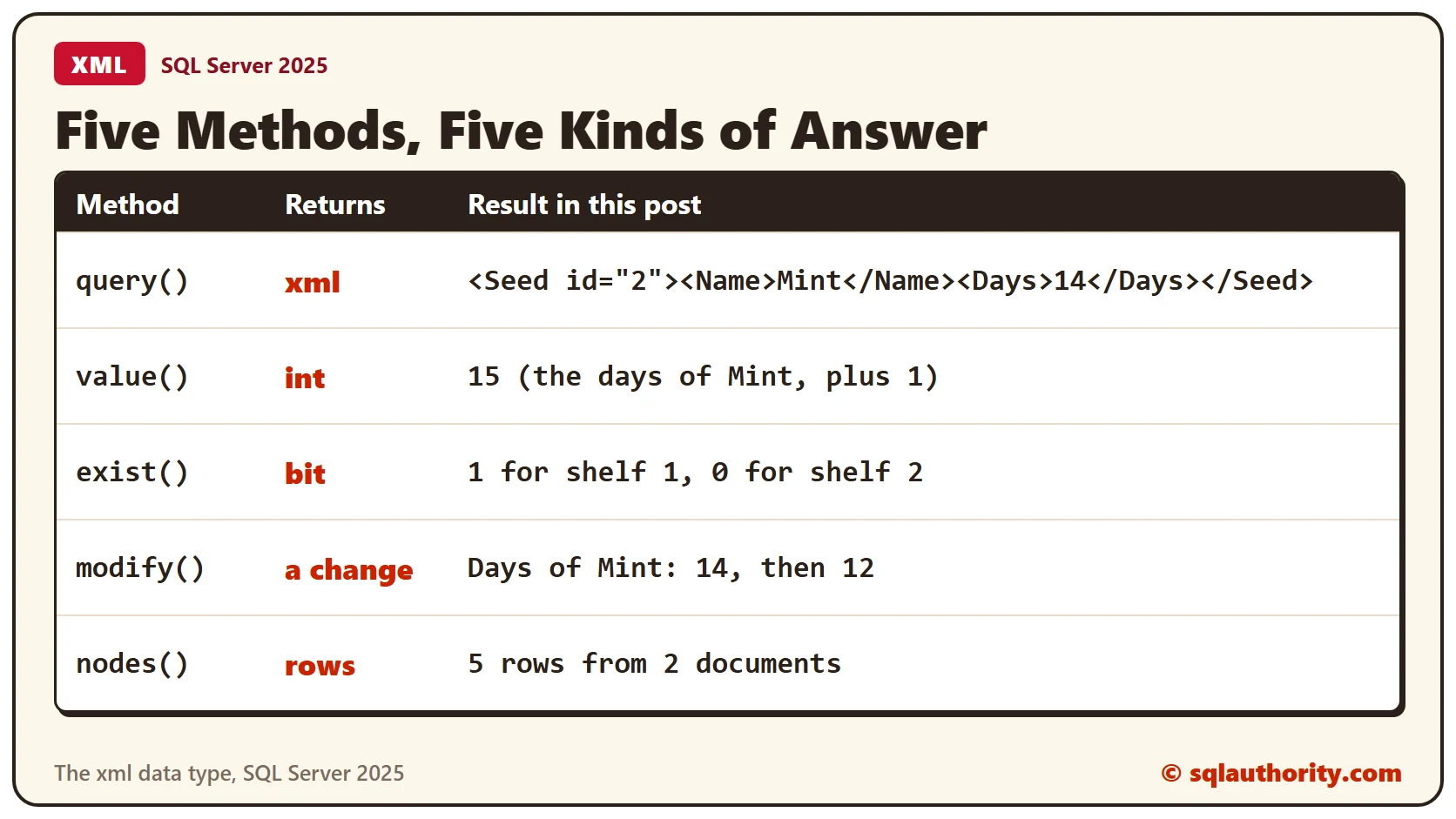
XML data type methods are the five functions you call on an xml column or variable: query(), value(), exist(), modify() and nodes(). Each gives back a different kind of answer: xml, a typed value, 1 or 0, a changed document or rows. This post runs all five on one small table of seeds, shows two common errors, and asks SQL Server what each method returns. Every result comes from SQL Server 2025.
Query Hint Basics: Why a Variable Scans and OPTIMIZE FOR Seeks
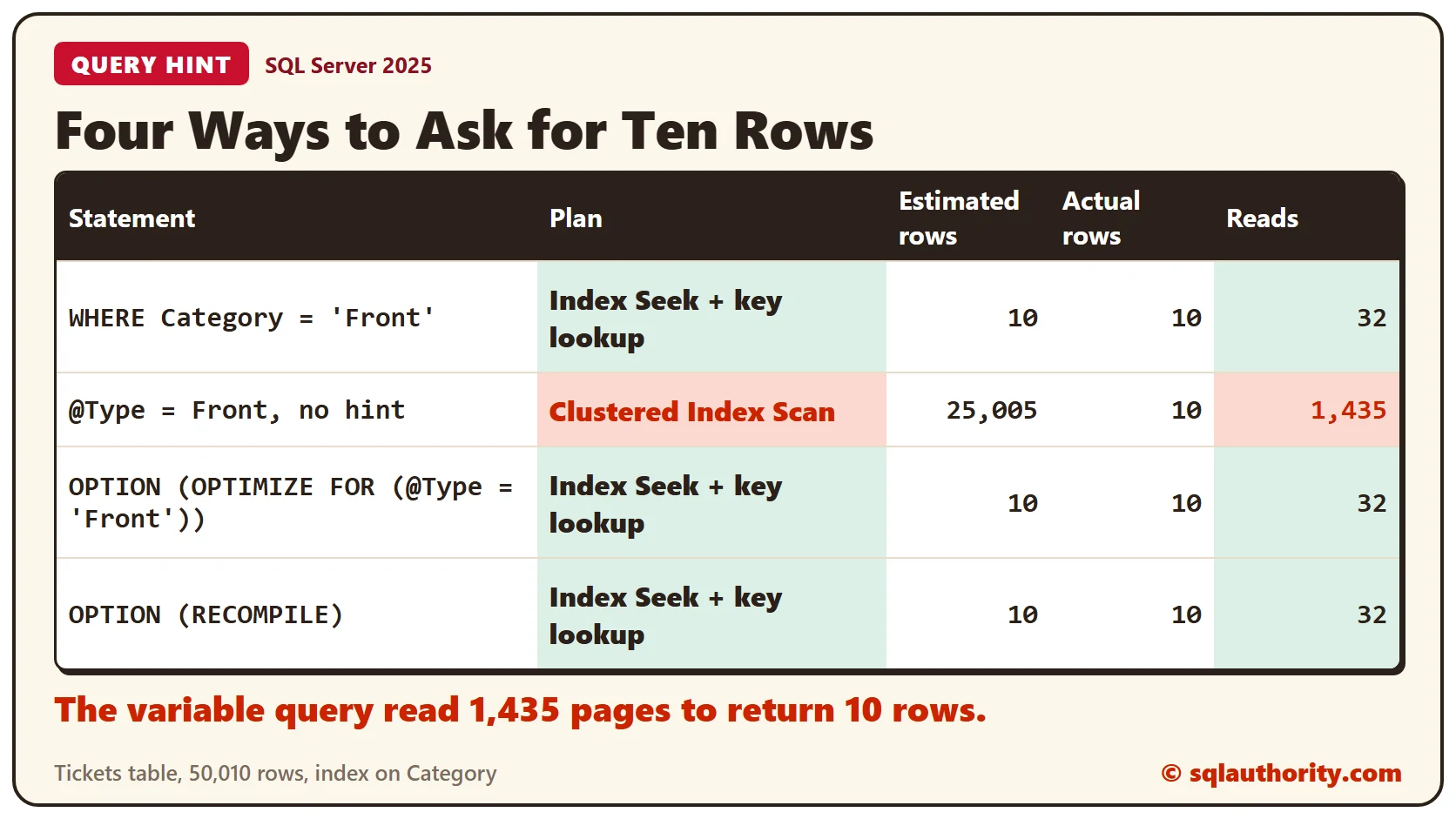
Query hint basics start with one idea: a query hint is an instruction you add to one statement in the OPTION clause. This post builds a table of 50,010 tickets, shows a seek for a literal value, a scan for the same value in a variable, and a seek again with OPTIMIZE FOR and with RECOMPILE. It also shows what the hint costs when the value changes. Every number comes from SQL Server 2025.
Hierarchical Query Using a Recursive CTE: Levels, Order and Loops
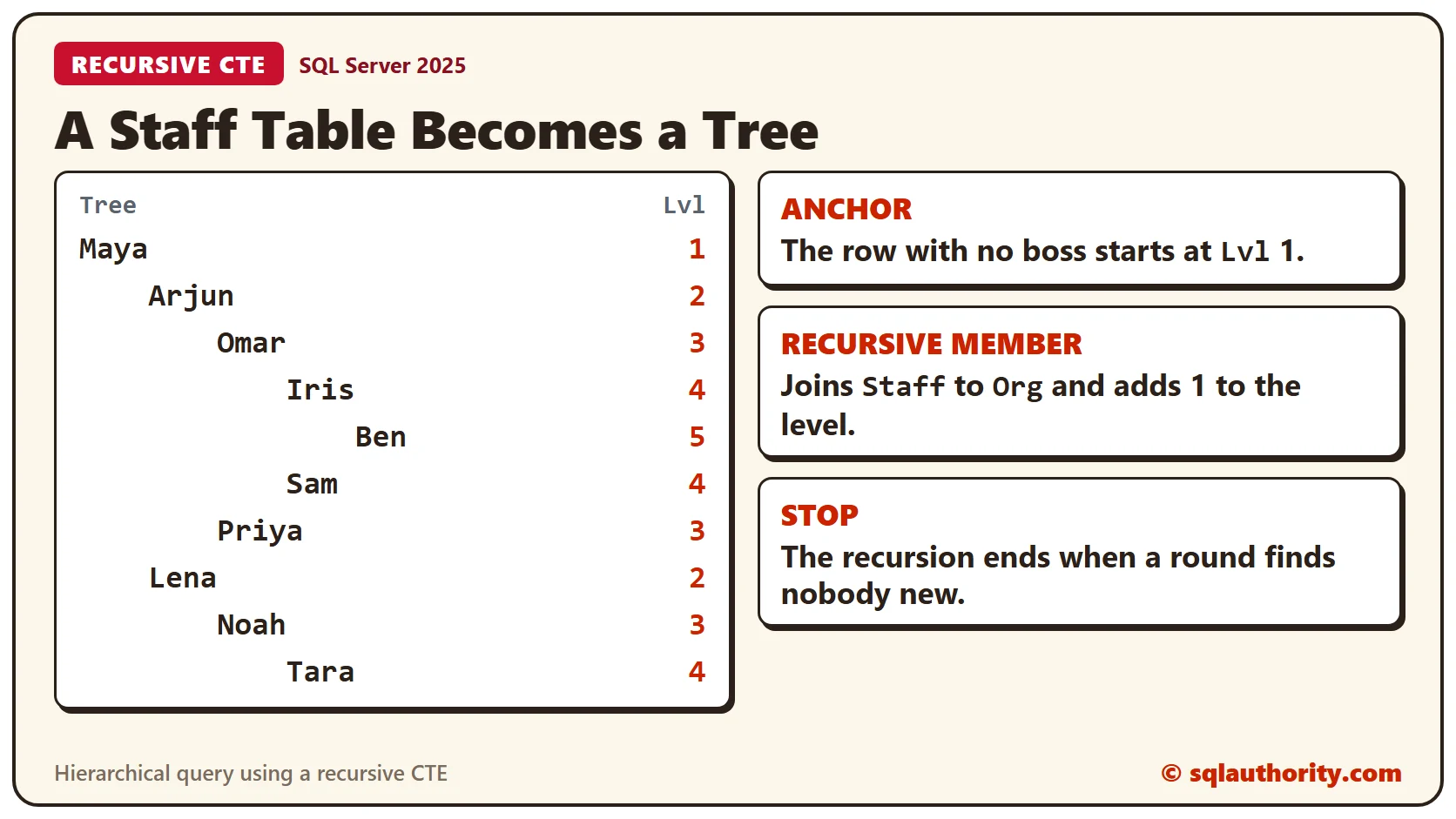
A hierarchical query using a recursive CTE walks a table that points at itself, one level at a time. This post builds the levels of a small staff table with Lvl + 1, sorts the tree so each person sits under their boss, walks upward from one person and stops a loop in the data. Every result comes from SQL Server 2025.
Securables and Principals in SQL Server: Who Gets Which Permission
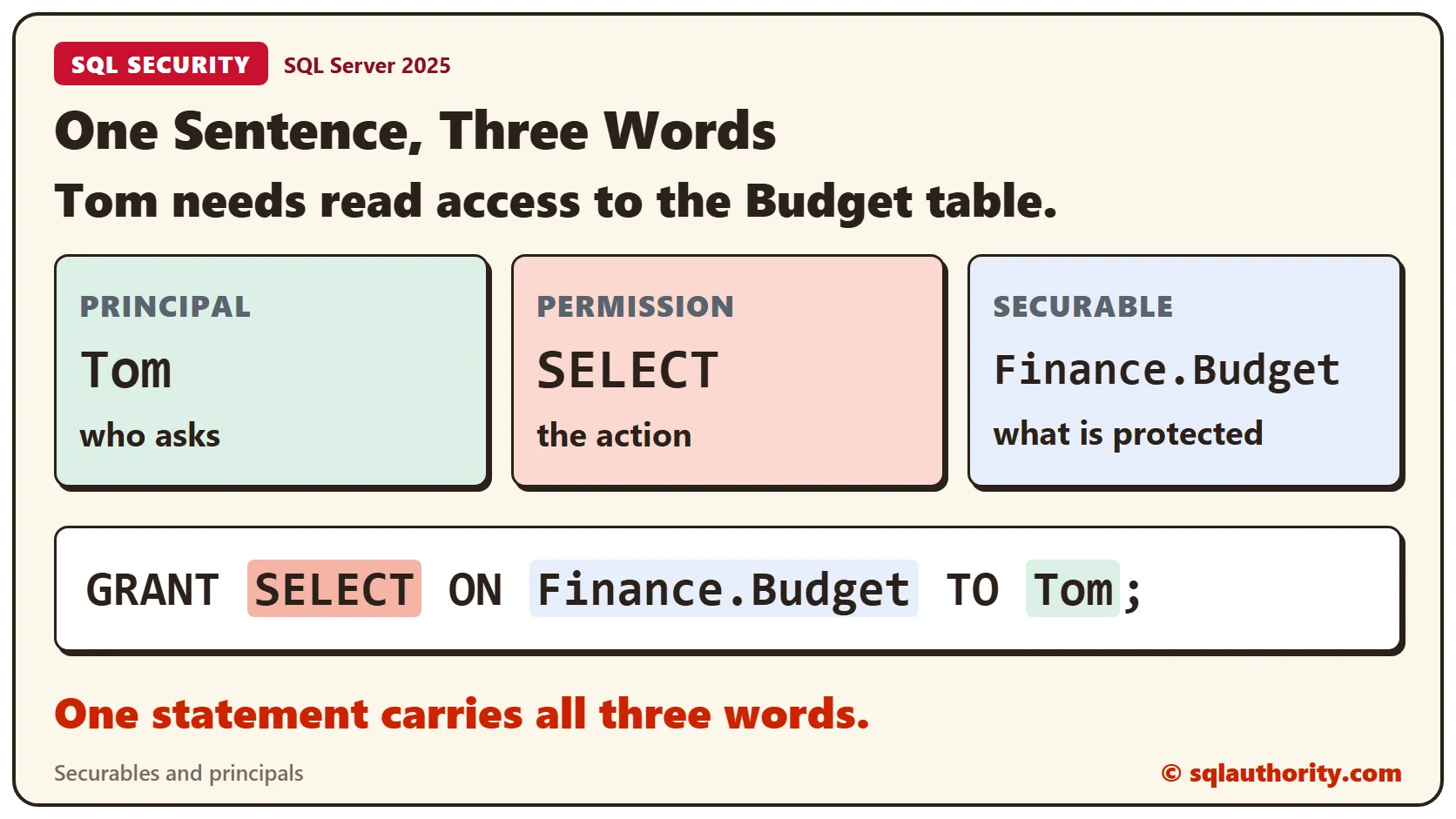
Securables and principals are the two nouns of SQL Server security, and a permission joins them. This post gives a user named Tom access to a Finance table, then uses GRANT, DENY and REVOKE and reads the permission list after each step. It ends with one grant on a whole schema. Every result comes from SQL Server 2025.

SQL SERVER – Working with FileTables in SQL Server 2012 – Part 3 – Retrieving Various FileTable Properties
Part 3 of my FileTables series for SQL Server 2012: queries to tell files from folders and find root paths, path locators and relative paths.
SQL SERVER – A Puzzle – Illusion – Confusion – April Fools’ Day
A light puzzle for April Fools’ Day: two division queries that look the same in SSMS. Will they return the same result, and why?