

My saga of working with JSON documents and finding out the various errors continues. With JSON being one of the new data structures introduced inside SQL Server 2016, I have been exploring to how these are fundamentally different from using the FORXML constructs. The more I have been working and testing with this capability, the more similarities I am seeing in them. Coming from a generation of working with SQL Server for more than a decade, I try to explore and learn the new concepts keeping some reference. This helps in faster learning and can accelerate the way you work with the new concepts.

SQL SERVER 2016 – InMemory OLTP LOB Datatype Enhancement
My exploration with SQL Server 2016 features are just continuing and I am delighted every other day to figure out something new been added to the capabilities which in the opinion were of limited capacity in the prior versions of SQL Server. I will spare the ranting exercise for now but will look at some of the things that caught my attention in my recent exploration with SQL Server InMemory OLTP enhancements.

How to Attach MDF Data File Without LDF Log File – Interview Question of the Week #078
Just the other day I was busy during a performance tuning exercise I explained to the team of DBA that how much log file is critical and important for their performance. Once I was explaining the importance and role of the LDF file in the performance, one of the DBA from the team asked me question about what would they do if they somehow lose the LDF file or just have corrupted log file which they do not care now. Well, I though it was a very important question and I believe it can be a very good interview question as well. Let us learn about how to attach the MDF data file without LDF log file.


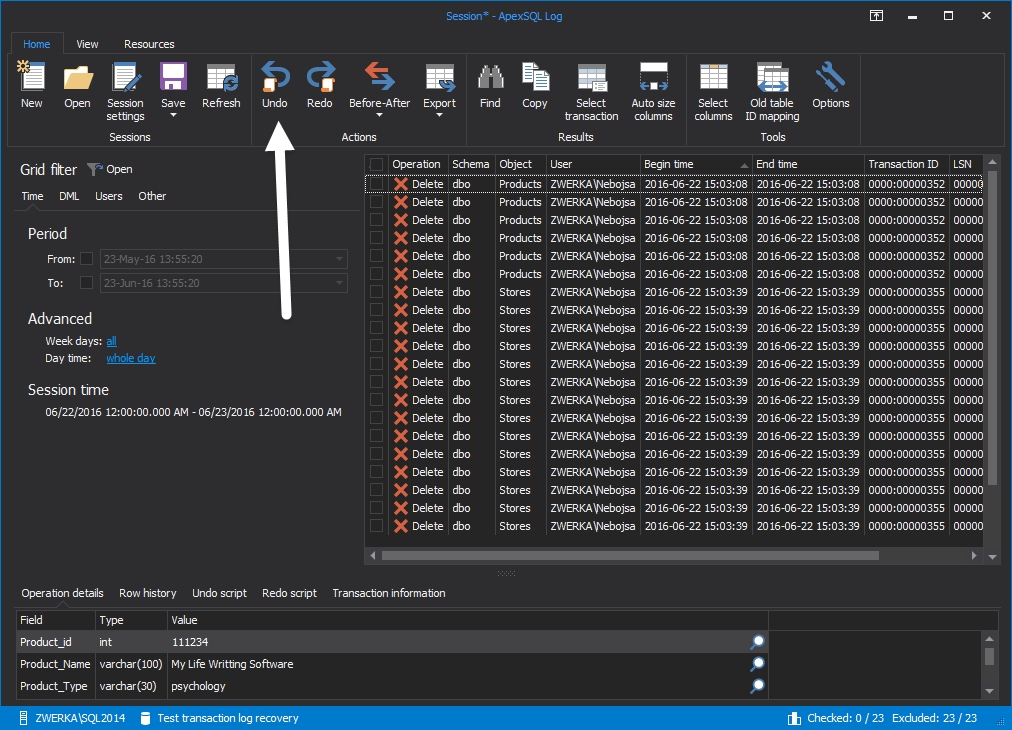
Recover Lost Data Using the Transaction Log Files
Every now and then, experienced SQL Server DBAs as well as the SQL Server rookies find themselves in the unpleasant situation when some important data has been changed or lost with the monumental task to solve this in the most efficient way. Regardless of the change source – was it an internal or external user, the intent behind it – unintended mistake or a malicious change, or even the exact nature of the change – update, delete, drop or something else, database administrators are faced with the task to recover the lost data and enable users to continue using the database as if the recovery was never required by providing the data recovery. Let us learn about how to recover lost data using the transaction log files.

Moving TempDB to New Drive – Interview Question of the Week #077
Midnight at 1 AM, I received a call from my customer where I have earlier worked on performance tuning project. As soon as I picked up the phone call the first statement from my friend was about TempDB and it was as follows:
“We should have followed your advice, the TempDB is full, now help us fix it.”