
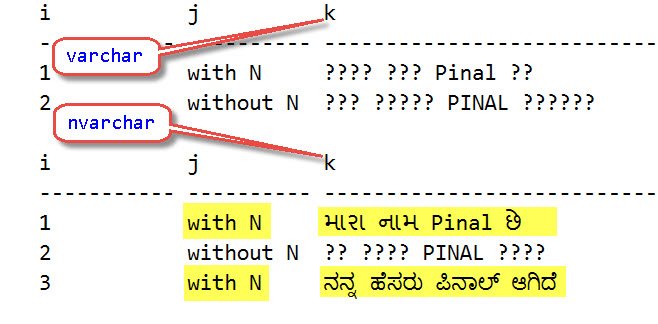
Getting ??? after storing data in Hindi, Tamil or Gujarati? Here are the basic rules to follow to keep many languages in the same table.

Unicode Lost: Finding Question Marks Left by varchar Conversion
Customer names turn into question marks, and an nvarchar column does not bring them back. Here is how it happens and how to repair it.

UNISTR and Unicode Escapes in SQL Server 2025
Build Unicode strings with UNISTR in SQL Server 2025, compare NCHAR, and preserve accented letters, Hindi text, and emoji in storage.

MySQL Habits That Trip Up Developers Moving to SQL Server
Replace six MySQL habits with SQL Server equivalents for LIMIT, AUTO_INCREMENT, quoting, GROUP BY, duplicate inserts, and collations.

Storing Hash Values: binary(32) or a 64-Character Hex String
A hex string is just a printed hash, and it costs twice the space. Here is the round trip, the index sizes and the traps.

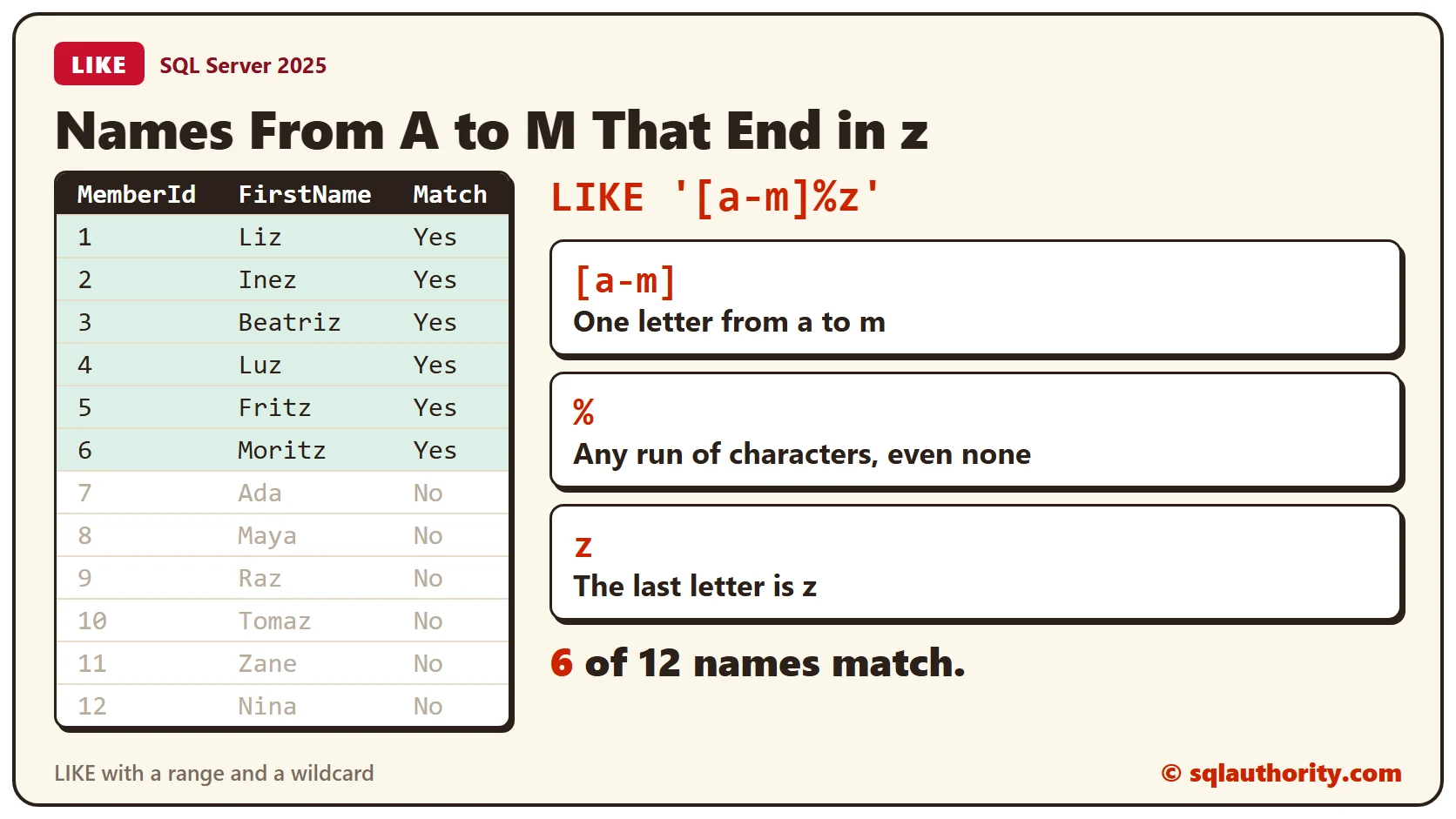
Querying Pattern Ranges With LIKE: A Wildcard Puzzle With the Answer
Querying pattern ranges with LIKE takes the % wildcard and a range in square brackets. This puzzle asks which of six queries finds every first name that starts with a letter from A to M and ends with z. The answer is tested on a small Members table, along with the = trap, the NOT range and a collation trap. Every result comes from SQL Server 2025.