
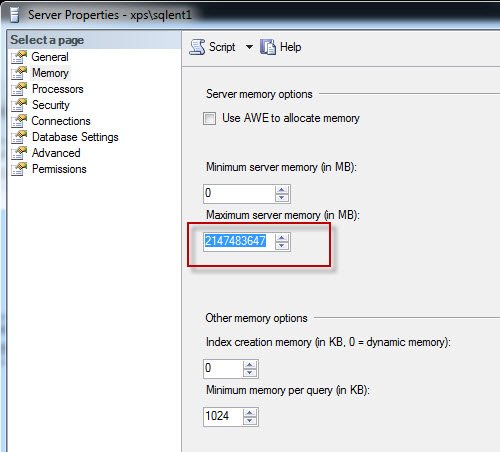
While reading about server memory options, I learned the lowest value you can set for max server memory is 16 MB. Anything lower is reset to 16 MB.

Sizing a New SQL Server
Sizing a new SQL Server starts with workload evidence, growth, and recovery goals to estimate CPU, memory, storage, and headroom.

SQL SERVER – Queries Waiting for Memory Allocation to Execute
Find queries waiting for memory allocation with sys.dm_exec_query_memory_grants, plus wait_order and the query plan, when you suspect memory is short.

Finding Single-Use Plans Wasting Memory in the Cache
Find single-use plans, compare their cache memory with the total, and inspect parameterization before discussing server-wide cache settings.

APPROX_COUNT_DISTINCT in SQL Server: Saves Memory, Not Time
APPROX_COUNT_DISTINCT counts distinct values with almost no memory. Tested on 5 million rows, it was within 2.2 percent of the exact count and needed no memory grant, while COUNT(DISTINCT) asked for 436 MB. It was not faster.

SQL Server on Virtual Machines: Settings That Matter
SQL Server on virtual machines needs deliberate CPU, memory, NUMA, and storage settings; learn what to inspect before blaming a slow query.

Windows Settings That Affect SQL Server
Windows settings can influence SQL Server CPU speed, file growth, memory stability, and security scanning; learn what to inspect and validate.