

XQuery Comparisons use different rules for general sequence operators and singleton value operators. I make equality and inequality visible side by side. A general unequal-pair result is not always the inverse of an equal-pair result.
SQL SERVER – Implementing IF … THEN in SQL SERVER with CASE Statements
Moving IF … ELSE logic from .NET code into a stored procedure? Here is how to rewrite it using CASE statements, with examples for SQL Server 2008 and 2012.

What a Data Scientist Does: The Skills That Still Matter
What a data scientist does is turn a vague question into an answer that people can trust and act on. This post walks through the work as a loop, and shows the summary statistics step in T-SQL on a small bike rental log.

Big Data Analytics: Descriptive, Diagnostic, Predictive and Prescriptive
Big Data Analytics answers four kinds of questions: what happened, why it happened, what will happen next and what to do about it. This post climbs that ladder with one small business and shows each step in T-SQL window functions.

The PRODUCT Aggregate: Multiplying Values Across Rows
Use the PRODUCT aggregate in SQL Server 2025 for growth factors and independent probabilities, with checks for NULL, zero, and precision.

MapReduce Explained: Map, Shuffle and Reduce Step by Step
MapReduce splits a big job into many small map tasks, moves the results by key in a shuffle, and adds them up in reduce tasks. This post walks one word count through every step, with a recreated diagram and the same idea in T-SQL.
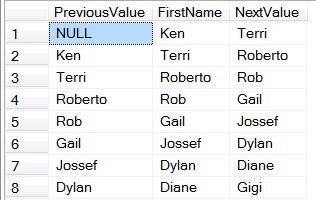
SQL SERVER – How to Access the Previous Row and Next Row value in SELECT statement? – Part 4
Part 4 on reading the previous row and next row value in a SELECT statement. My friend Szymon Wojcik shows how a numbers table can make the query even faster.