

A candidate asked me in an interview: how do I get started with SQL Server 2016? Here is my answer for anyone who has not tried it yet.

Documenting SQL Agent Jobs: Schedules, Steps and Owners in One Query
Start documenting SQL Agent jobs with owners, steps, readable schedules and retained run outcomes, then save a reviewed inventory document.

Putting a Database Under Source Control
Putting a database under source control starts with state or migration scripts, consistent object files, and a reviewable first commit.

Keeping Your Own Script Library
A script library stays useful when folders, names, review history, and safe headers make each SQL file understandable before it runs.
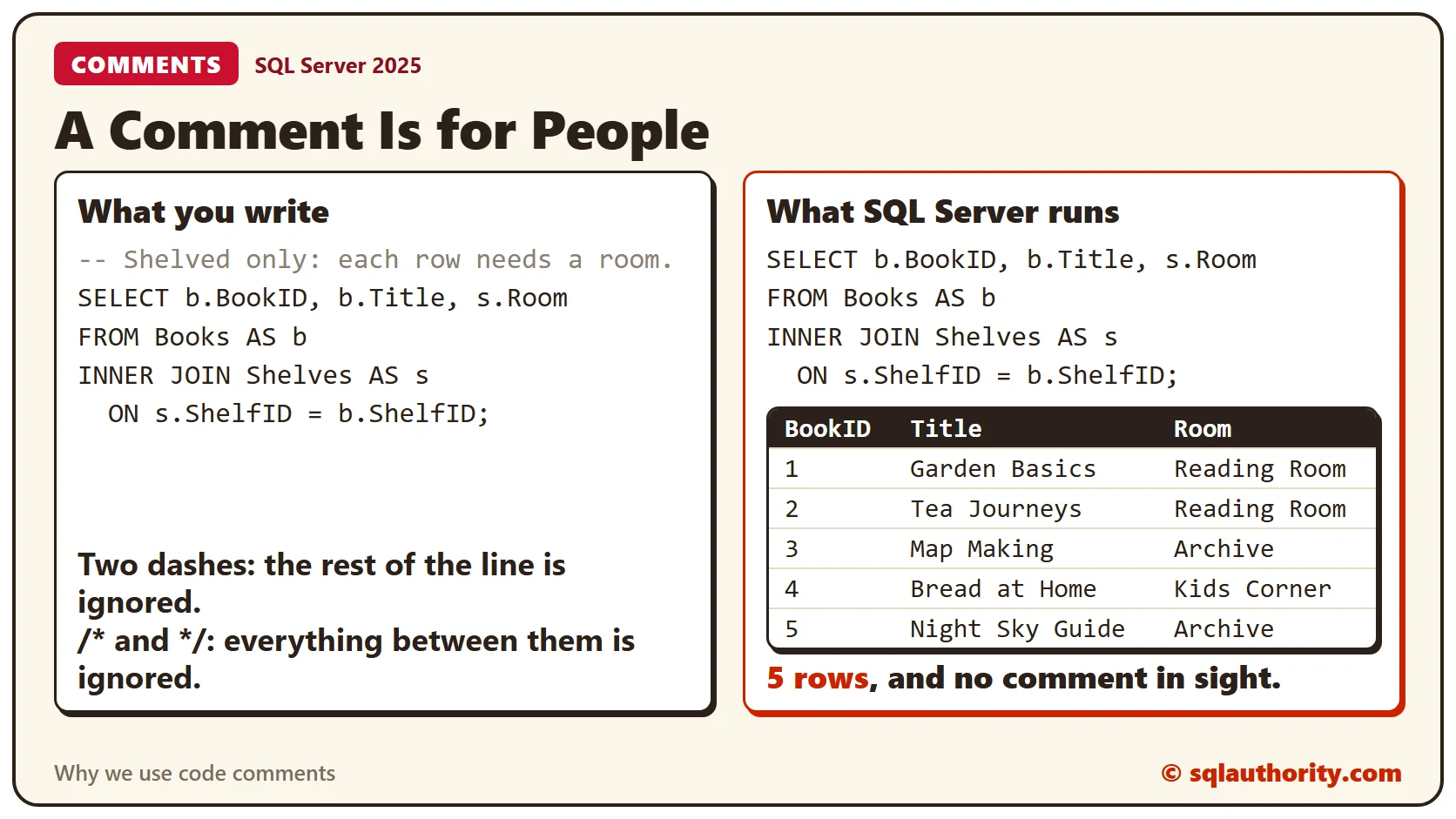
Why We Use Code Comments in SQL Server: Say Why, Not What
Why we use code comments comes down to one habit: write the reason, not the action. This post uses a small library table to show single-line and block comments, commenting out a join to test a theory, the Msg 156 trap, nested comments, and whether comments slow a query. Every result comes from SQL Server 2025.

Keeping Database Documentation Next to the Code
Keep database documentation close to SQL Server objects with extended properties, durable module comments, and catalog-generated reports.

SQL SERVER Cheatsheet – Released for SQL Server 2012 Edition
The SQL SERVER Cheatsheet is updated for SQL Server 2012, now with SSMS shortcuts, Columnstore Index, and the datetime, ranking and analytic functions.