

Slow reports, slow transactions, and the internal team could not find why. In this case study, MAXDOP = 1 was quietly slowing down the entire business.
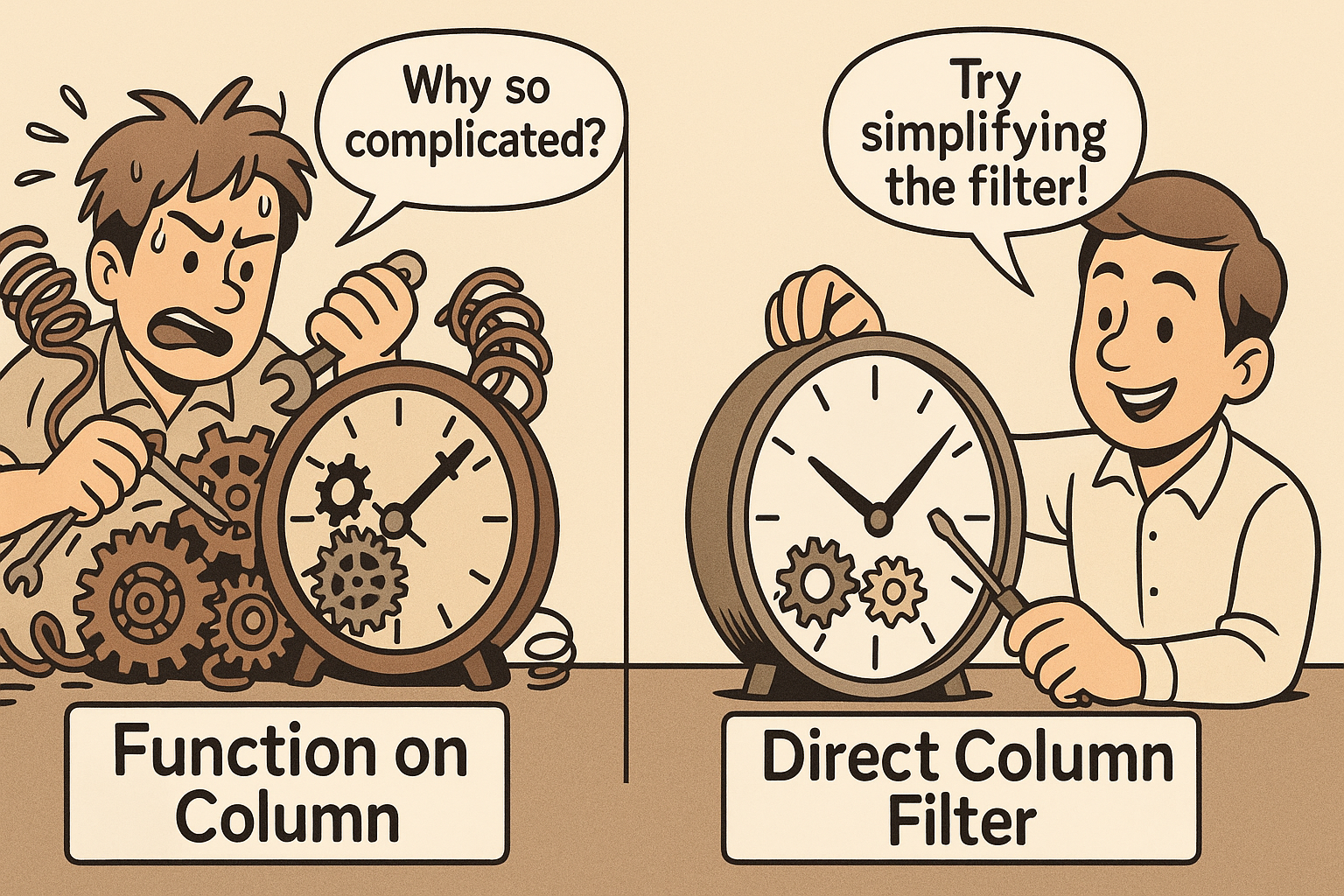
SQL SERVER – Catching Non-SARGable Queries in Action
If you ever wondered why a query that looks harmless is performing poorly despite having indexes in place, the answer could non-SARGable queries.

SQL SERVER Performance Tuning: Catching Key Lookup in Action
In this blog post, we’ll explore what a Key Lookup is, how to spot it, and most importantly, how to eliminate it using a covering index.

SQL SERVER – Understanding WITH RECOMPILE in Stored Procedures
The culprit? Parameter sniffing. The solution? You guessed it: WITH RECOMPILE. Comprehensive Database Performance Health Check

Understanding the AUTO_DROP Option in SQL Server 2022
One such feature is the AUTO_DROP option for statistics. In this blog post, we’ll explore what the AUTO DROP option is, how it works.

Why ‘Max Server Memory’ Isn’t Always the Limit
What if I told you that setting a limit with “max server memory (MB)” doesn’t always mean SQL Server will stick to that limit?

Capturing Stored Procedure Executions with Extended Events in SQL Server
Capturing stored procedure executions with Extended Events: set up a session with module_end, run a sample procedure, and query the captured data.