
How a Hash Join works in two phases, build and probe, why it suits large data sets without indexes, and why it needs an equijoin predicate.

SQL SERVER – Recovery Models and Selection
SQL Server offers three recovery models: full, simple and bulk-logged. Here is when to select each one, based on how much data loss you can accept.

SQL SERVER – LEN and DATALENGTH of NULL Simple Example
A common mistake is checking LEN(@var) = 0 for a NULL value. LEN and DATALENGTH of NULL both return NULL, not zero, as this simple example shows.
SQL SERVER – 2005 Find Table without Clustered Index – Find Table with no Primary Key
A query on sys.indexes to find every table without clustered index in a database, why heaps can slow you down, and how to pick a clustered key.

SQL SERVER – Change Default Fill Factor For Index
The Default Fill Factor in SQL Server is 0. Change it with sp_configure to leave free space on index pages and reduce page splits. I like mine at 90.
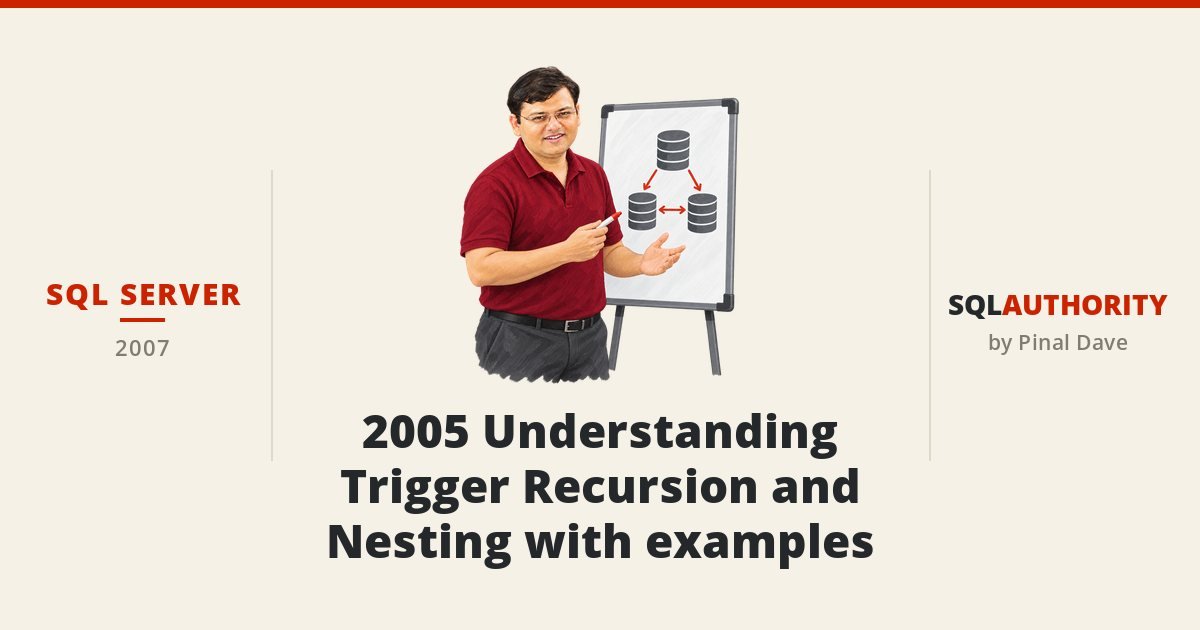
SQL SERVER – 2005 Understanding Trigger Recursion and Nesting with examples
How trigger recursion and nesting work in SQL Server 2005: triggers nest up to 32 levels, recursive triggers fire themselves, and both can be turned off.