

The three rules to use UNION from Ben Forta’s T-SQL book: two or more SELECT statements, the same columns in the same order, and compatible data types.

SQL SERVER – 2005 – OUTPUT Clause Example and Explanation with INSERT, UPDATE, DELETE
The SQL Server 2005 OUTPUT clause returns the rows changed by INSERT, UPDATE or DELETE. Each OUTPUT clause example below shows how.

SQL SERVER – Order of Result Set of SELECT Statement on Clustered Indexed Table When ORDER BY is Not Used
A Clustered Indexed Table still needs ORDER BY to promise result order. I declare the order the reader or application requires.

Scaling Out Read Queries
Scaling out read queries uses replicas, caches, and routing with measured freshness and operating cost; learn when each path fits.

Designing Tables for High Insert Rates
High insert rates depend on key choice, row width, index count, and retention design; learn a practical SQL Server table layout for sustained writes.
SQL SERVER – Actual Execution Plan vs. Estimated Execution Plan
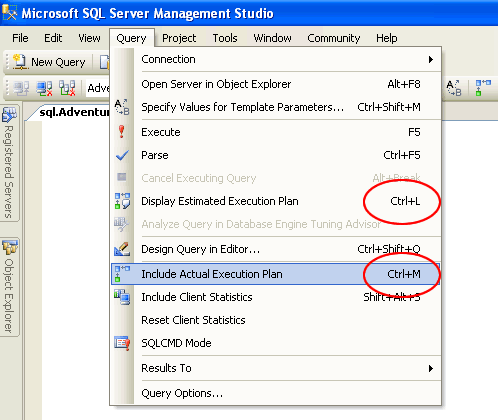
Actual Execution Plan or Estimated Execution Plan? I always use the actual plan because it is accurate. Shortcuts: CTRL+M for actual, CTRL+L for estimated.