
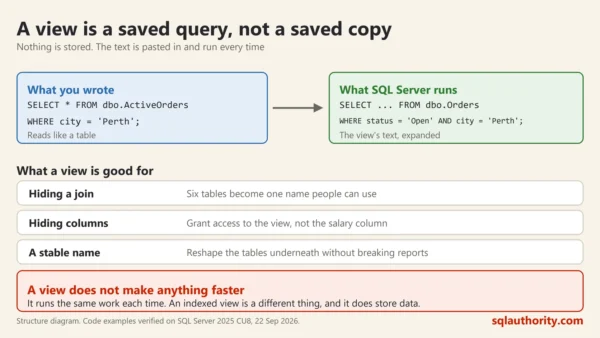
A view in SQL Server is a saved query, not a saved copy. Nothing is stored, the text is run every time, and that single fact explains what a view is good for and why it never makes anything faster.

Cleaning Up Ownership Before Dropping a Departed User
DROP USER fails when the user still owns a schema, a role or a table. Here is how to find those owners and hand them over safely.

Finding Deprecated Features Before They Bite
Find deprecated features with SQL Server counters, event metadata, and code searches, then separate future risk from features already removed.
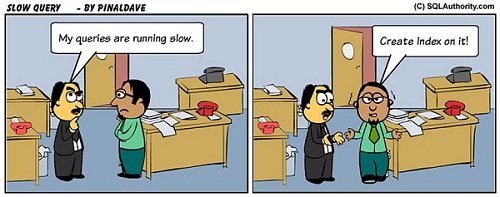
Indexing Basics Course: Learning SQL Server Performance
Vinod Kumar and I released an indexing basics course in 2012. This post keeps the original outline and cartoon, and adds tests on SQL Server 2025 for four of its practical topics: column order, functions on indexed columns, filtered indexes and disabled indexes.


Optimized Plan Forcing: Cutting Compile Time in SQL Server 2022
Check optimized plan forcing in SQL Server 2022 through scoped configuration and Query Store replay flags, then compare compile duration.

Why Staging Tables Earn Their Keep
Use staging tables to preserve raw input, validate changes, separate extraction from publication, and make failed loads easier to diagnose and replay.

SQL SERVER – Technical Reference Guides for Designing Mission-Critical Solutions
While helping a friend, I found the Technical Reference Guides for Designing Mission-Critical Solutions, an interactive map of architecture guidance.
SQL SERVER – Various Leap Year Logics
Dividing by 4 is not enough to find a leap year. Readers shared various leap year logics in the comments, and here are the best of them.

Stopping a Trigger From Firing Itself With TRIGGER_NESTLEVEL
A timestamp trigger that updates its own table can loop until SQL Server gives up. Here is the small guard that stops it, with a demo you can run.