

In Puzzle with UNION Part 5, the final part, two almost identical queries return the same answer, yet their execution plans are very different. Why?
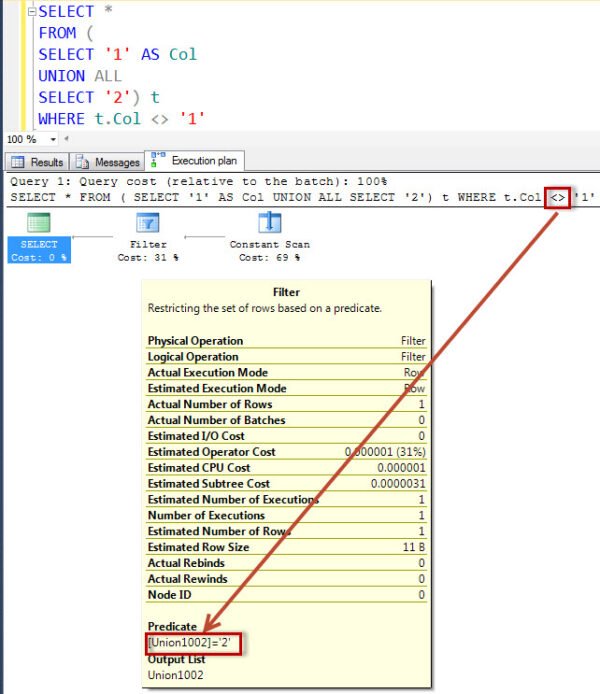
SQL SERVER – Simple Puzzle with UNION Part 4
Puzzle with UNION Part 4 is for readers who want to think: three queries using UNION, a subquery and NOT EQUAL TO return the same result. Compare their plans.

SQL SERVER – Simple Puzzle with UNION Part 3
Simple Puzzle with UNION Part 3 has three T-SQL scripts on the UNION clause, and only one is correct. Can you spot it without running them in Management Studio?

How to Check What SQL Server Licensing You Are Actually Using
Check SQL Server licensing evidence with edition and CPU queries, then reconcile visible processors with host inventory and your agreement.

Soft Delete With an IsDeleted Column: Indexes, Views and Keys
Design soft delete with an IsDeleted flag, filtered unique keys and indexes, a live-row view, and a measured archive process.
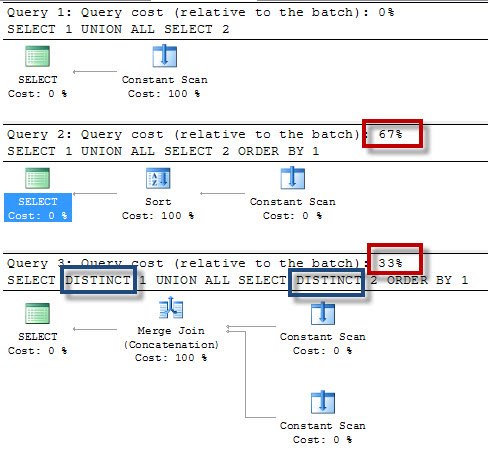
SQL SERVER – Simple Puzzle with UNION – Part 2
Another back to basics puzzle with UNION: run three queries using UNION ALL, ORDER BY and DISTINCT, then compare their execution plans.

SQL SERVER – Simple Puzzle with UNION
Try this simple puzzle with UNION and ORDER BY. Guess what each of the three queries returns, and see why one of them fails with Msg 108 and Msg 104.
Overlapping Chunks: Splitting Long Text With GENERATE_SERIES
Split long text into overlapping pieces with one short query. Plus the quiet traps: NULL text, a step that is too big, and chopped words.

Narrow Index Keys: Why the Clustered Key Width Matters Everywhere
Evaluate narrow index keys by comparing clustered GUID and integer designs, measuring index pages, and preserving natural uniqueness.

Database Security Basics for a Small Business
Database security basics for a small business cover patching, off-site backups, strong logins, limited access, and encryption that works.