

ETL vs ELT comes down to when you transform: before the load on a separate engine, or after it inside the platform. This post compares the two and runs a small ELT pipeline in T-SQL on JSON orders.

Storing JSON in SQL Server
Storing JSON in SQL Server can use validated nvarchar or the native 2025 json type, with indexed paths and relational columns for stable facts.


Trigram Matching: Finding Similar Words With an N-Gram Table
Build trigram matching with GENERATE_SERIES and an indexed n-gram table, rank shared pieces, and compare spelling similarity with SOUNDEX.
SQL SERVER – Select Columns from Stored Procedure Resultset
Need only some columns from a stored procedure resultset? Store it in a temp table with INSERT INTO and EXEC, then select what you need.
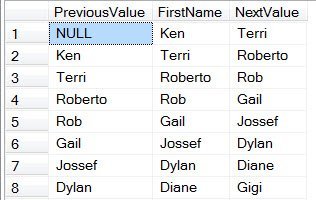
SQL SERVER – How to Access the Previous Row and Next Row value in SELECT statement? – Part 4
Part 4 on reading the previous row and next row value in a SELECT statement. My friend Szymon Wojcik shows how a numbers table can make the query even faster.
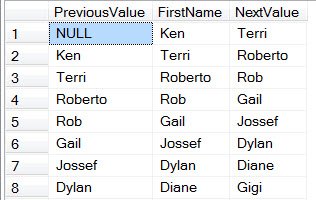
SQL SERVER – How to Access the Previous Row and Next Row value in SELECT statement? – Part 3
My part 2 solution used ROW_NUMBER, which SQL Server 2000 does not have. Here is how to access the previous row and next row in SQL Server 2000.

Granular Server Roles: ##MS_ServerStateReader## and Friends
Assign granular server roles in SQL Server 2022, inspect membership, and give monitoring accounts the state access their queries need.
SQL SERVER – How to Access the Previous Row and Next Row value in SELECT statement? – Part 2
No CTE in your SQL Server 2005 code? Here is another way to get the previous row and next row value in a SELECT statement, using ROW_NUMBER.
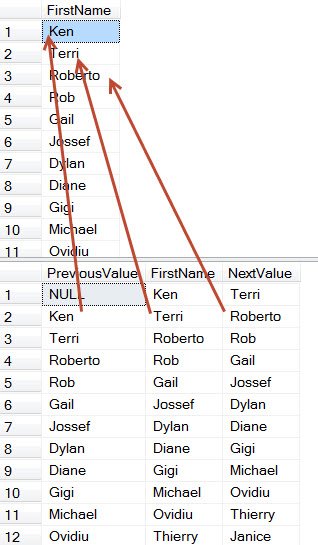
SQL SERVER – How to Access the Previous Row and Next Row value in SELECT statement?
How do you access the previous row and next row value in a SELECT statement? In SQL Server 2012 the LEAD and LAG analytic functions make it simple.