My Performance Observation found similar counting plans for a nonempty table. SUM(1) and COUNT(*) still differ on empty input.

CREATE TABLE #TestTable (ID int NOT NULL, Padding char(100) NULL);
CREATE INDEX IX_TestTable_ID ON #TestTable(ID);
INSERT #TestTable(ID) VALUES (1),(2),(3);
SET STATISTICS IO ON;
SELECT COUNT(*) AS CountStar FROM #TestTable;
SELECT COUNT(1) AS CountOne FROM #TestTable;
SELECT SUM(1) AS SumOne FROM #TestTable;
SET STATISTICS IO OFF;
DELETE #TestTable;
SELECT COUNT(*) AS EmptyCount,SUM(1) AS EmptySum FROM #TestTable;
DROP TABLE #TestTable;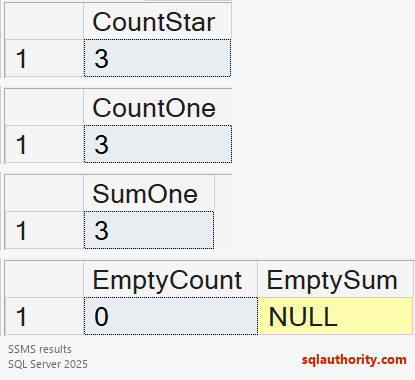
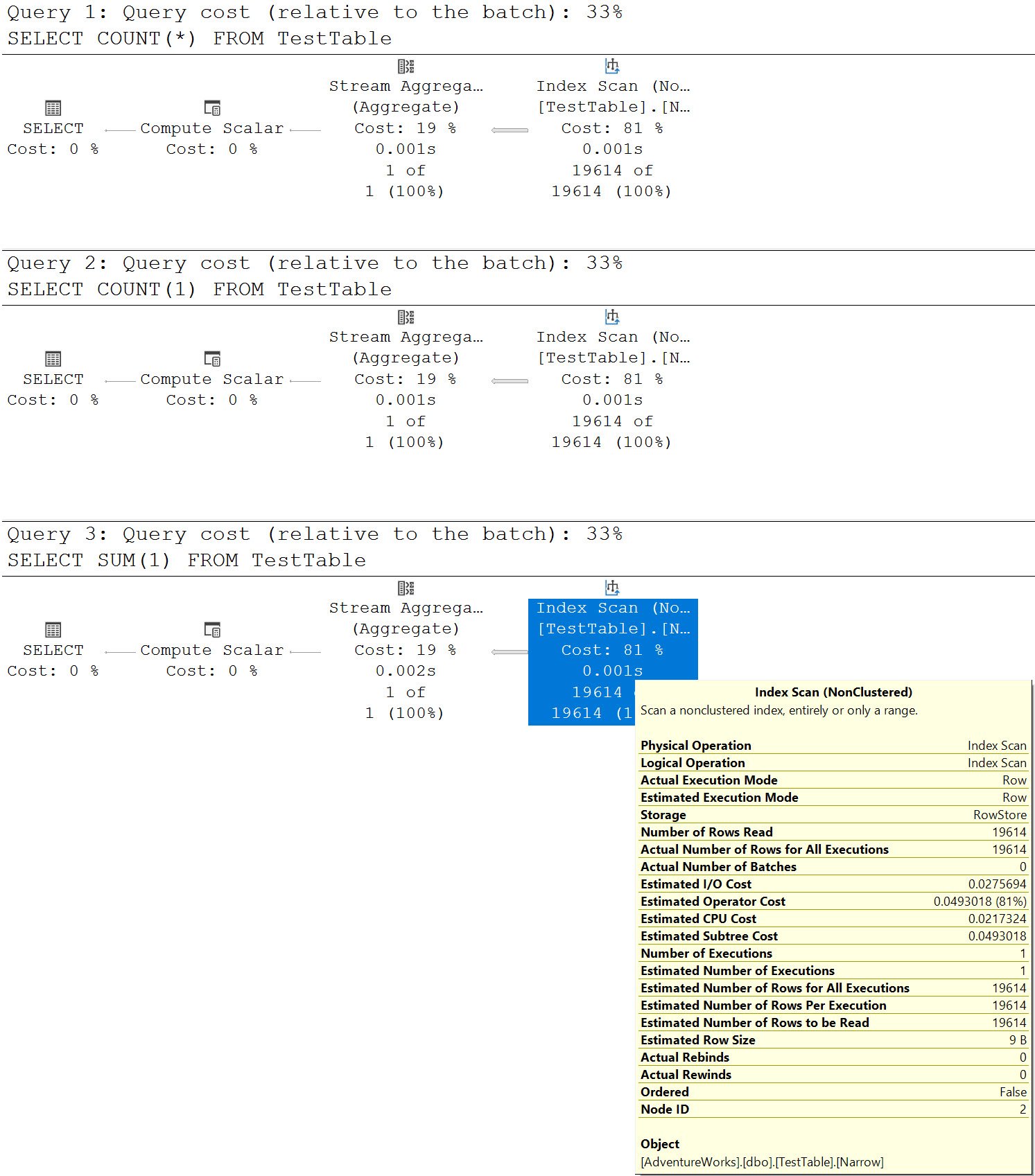
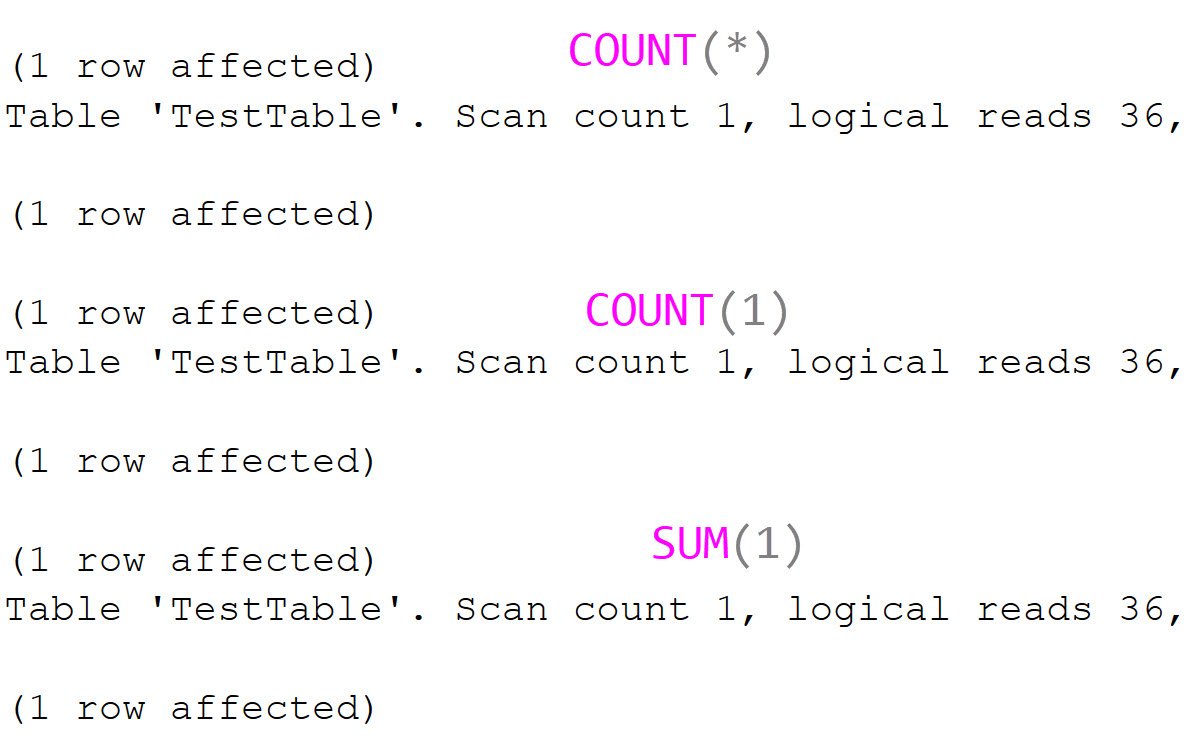
My earlier example used the same narrow index and logical reads for three shapes. That was a specific test. The temporary-table companion has its own size and plan. It does not reproduce the earlier timings.
On empty input, COUNT(*) returns zero and SUM(1) returns NULL. COUNT(1) counts every row. Datatype and overflow choices also matter for large inputs. Use COUNT_BIG when the count can exceed int.
I choose the expression that states the intended result. Then I compare actual plans and reads for representative data. Preserve correct behavior before optimizing performance.
Related reading
- COUNT(*) and Index – SQL in Sixty Seconds #175
- COUNT(*) and COUNT(1): Performance Battle – SQL in Sixty Seconds #176
- SQL in Sixty Seconds
- Index Scans – Good or Bad? – SQL in Sixty Seconds #174
- Optimize for Ad Hoc Workloads – SQL in Sixty Seconds #173
- Avoid Join Hints – SQL in Sixty Seconds #172
- One Query Many Plans – SQL in Sixty Seconds #171
- Best Value for Maximum Worker Threads – SQL in Sixty Seconds #170
- Copy Database – SQL in Sixty Seconds #169
- 9 SQL SERVER Performance Tuning Tips – SQL in Sixty Seconds #168
- Excel – Sum vs SubTotal – SQL in Sixty Seconds #167
- 3 Ways to Configure MAXDOP – SQL in Sixty Seconds #166
- Get Memory Details – SQL in Sixty Seconds #165
- Get CPU Details – SQL in Sixty Seconds #164
- Shutdown SQL Server Via T-SQL – SQL in Sixty Seconds #163
A matching test plan is not universal expression equivalence, it is an observation under specific data and conditions.
Published by Pinal Dave on SQLAuthority. More of my work at pinaldave.com.
Discover more from SQL Authority with Pinal Dave
Subscribe to get the latest posts sent to your email.