
I was engaged with a client for an AlwaysOn project and they had some follow-up questions. I took some time to find the answers and encountered an interesting error. I am sharing them here so that others can get benefited. They informed me that they are not able to see and modify listener properties. Let us learn about this error related to opening resource.
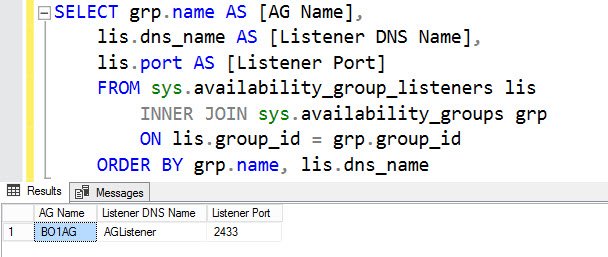
Initially, I shared script to get the properties of the listener via T-SQL. As you can see below, we can use catalog views.
SELECT grp.name AS [AG Name],
lis.dns_name AS [Listener DNS Name],
lis.port AS [Listener Port]
FROM sys.availability_group_listeners lis
INNER JOIN sys.availability_groups grp
ON lis.group_id = grp.group_id
ORDER BY grp.name, lis.dns_name
Here is the output.
My client came back and told that networking team has asked to change RegisterAllProvidersIP setting. We are not able to use PowerShell and getting error “An error occurred opening resource”. We are not sure what wrong with the listener in the cluster.
Get-ClusterResource AGListener | Get-ClusterParameter
PS C:\> Get-ClusterResource AGListener | Get-ClusterParameter
Get-ClusterResource : An error occurred opening resource 'AGListener'.
At line:1 char:1
+ Get-ClusterResource AGListener | Get-ClusterParameter
+ ~~~~~~~~~~~~~~~~~~~~~~~~~~~~~~
 + CategoryInfo : ObjectNotFound: (:) [Get-ClusterResource], ClusterCmdletException
 + FullyQualifiedErrorId : ClusterObjectNotFound,Microsoft.FailoverClusters.PowerShell.GetResourceCommand
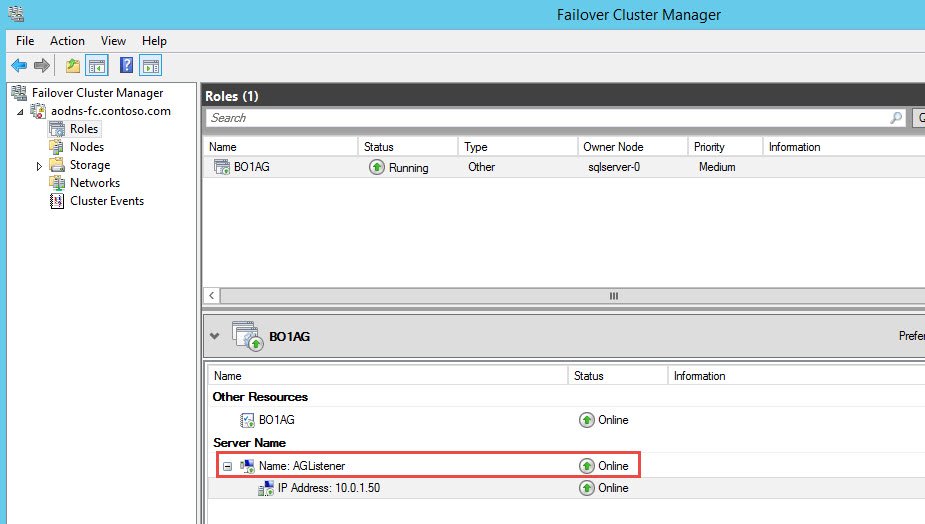
If we look at cluster the value “AGListener” we are using seems correct, but still PowerShell thinks its incorrect. Here is the screenshot from cluster manager.
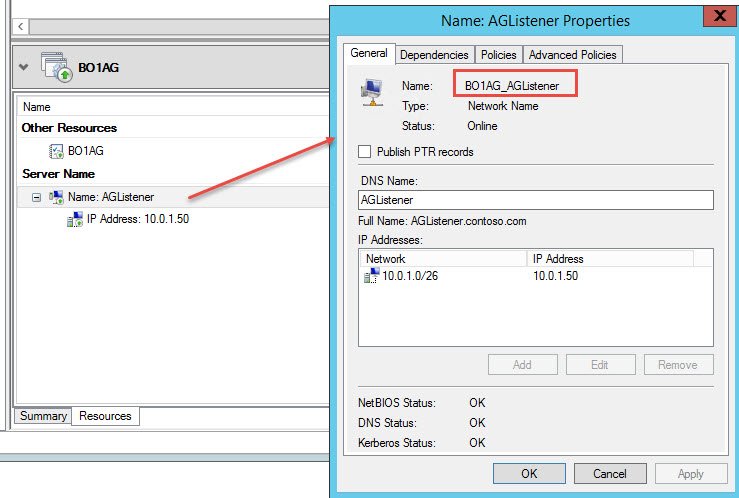
I did some more searching and found that when we create Listener in through SSMS its naming convention like AGNAME_ListenerName. This is the reason that when we run the command Get-ClusterResource for the listener, we can’t see the properties. Here are the properties of the listener resource. (Right Click)
WORKAROUND/SOLUTION
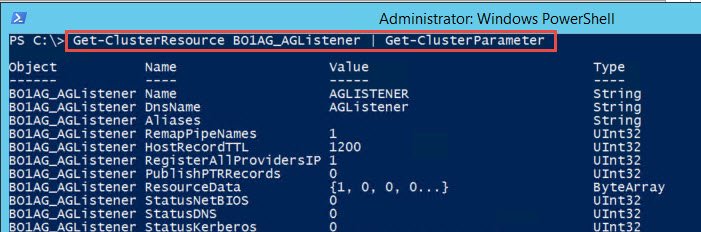
Based on above explanation, we need to use the “name” as shown in properties and the command was working as expected.
Get-ClusterResource BO1AG_AGListener | Get-ClusterParameter
Published by Pinal Dave on SQLAuthority. More of my work at pinaldave.com.
Discover more from SQL Authority with Pinal Dave
Subscribe to get the latest posts sent to your email.




3 Comments. Leave new
You can do something like this
function Get-SQL-Clusters
{
param([string]$server)
$servers = Get-Content -literalpath “C:\temp\sql_clusters.txt”
if ($server -ne 1)
{
$files = ForEach ($box in $servers) {invoke-command -ComputerName $box {Get-ClusterResource| Get-ClusterParameter} |
Where-Object {$_.Name -eq “Address”} |
Format-Table PSComputerName, ClusterObject, State, Name, Value}
}
else
{Write-Warning “‘$server’ is not a valid path.”}
return $files
}
Thanks for sharing this.
It is also possible to rename Cluster resource objects, see below command:
Get-ClusterResource “current listener or other object name” | %{ $_.Name = “new name here” }
Taken from here:
https://techcommunity.microsoft.com/t5/failover-clustering/powershell-for-failover-clustering-let-8217-s-rename-a-few/ba-p/371514