
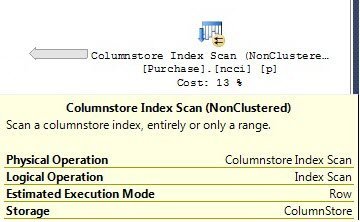
The last time when I wrote about ColumnsStore FAQ, one of the readers had an interesting question. The question was around how to identify the traits of using a column store inside an execution plan. The very thought got me thinking. I was thinking where to start. I remembered that ShowPlan XML was a great way to see some of these attributes. The very next question that came up, what should one look forward to inside a ShowPlan XML.
SQL SERVER – 2016 – Creating Additional Indexes with Clustered ColumnStore Indexes
Every version of SQL Server brings new capabilities that enhance the features that were introduced in the previous versions. I am sure the team is working based on the feedbacks given by customers as they starting using the new capability. As I was scanning through some of the enhancements that…
Read More
SQL SERVER – Fix SQL Server Index Fragmentation with dbForge Index Manager
You need to know SQL Server basics to keep database performance at the highest level. This knowledge will also help you to be prepared to any potential problems. When working with files, you may discover that there is not enough free space to store the required data in the file. By default, in such situations, SQL Server locks the file and extends it (it’s called – autogrow). Let us learn about SQL Server Index Fragmentation.
SQL SERVER – Basics ColumnStore FAQ – Part II
I wrote the first part of FAQ in here. This is not a typical blog post but more of a process oriented topic when working with ColumnStore Indexes. With the advancements done in SQL Server 2016, I know that this is going to be even more critical to understand some…
Read MoreSQL SERVER – ColumnStore Frequently Asked Queries
This blog talks about troubleshooting scenarios in FAQ format when dealing with ColumnStore Indexes inside SQL Server. Use a combination of trace flags, query hints, performance counters, extended events discussed in various blogs to gather relevant data and troubleshoot the problem. Sometimes I have seen people use ColumnStore as a…
Read MoreInterview Question of the Week #040 – Difference Between Unique Index vs Unique Constraint
Question: What is the difference between unique index and unique constraint? Answer: Add Unique Constraint ALTER TABLE dbo.<tablename> ADD CONSTRAINT <namingconventionconstraint> UNIQUE NONCLUSTERED ( <columnname> ) ON [PRIMARY] Add Unique Index CREATE UNIQUE NONCLUSTERED INDEX <namingconventionconstraint> ON dbo.<tablename> ( <columnname> ) ON [PRIMARY] There is no difference between Unique Index…
Read MoreInterview Question of the Week #039 – What is Included Column Index in SQL Server 2005 and Onwards?
You may find it interesting that not many people still know what is Included Index in SQL Server. I have seen it personally around me and also have seen at Question: What is Included Column Index? Answer: In SQL Server 2005, the functionality of non-clustered indexes is extended by adding non-key…
Read More