

Starting a blog takes an afternoon, but where it lives is the hardest choice to undo. This post compares hosted platforms with self-hosted WordPress, explains why your own domain keeps your links and readers safe, and lists what to set up first and what to skip.

Blog vs Website: Which One Do You Actually Need?
The blog vs website question comes down to how much your words change. This post explains who needs which, how to combine them on one address, what a blog costs in time, and why original writing still matters when AI tools answer questions.

Sharing Query Results From SSMS: Copy With Headers, Grids and CSV
Share SSMS results with copy with headers, text and file output, deliberate CSV quoting, and command-line exports for larger sets.

Date Boundaries With DATETRUNC and EOMONTH in SQL Server 2022
Use DATETRUNC and EOMONTH for month, quarter, and week boundaries in SQL Server 2022, including index-friendly half-open filters.
SQL SERVER – Solution to Puzzle – REPLICATE over 8000 Characters
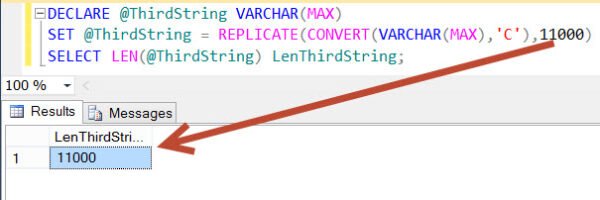
Here is the answer to my puzzle on REPLICATE over 8000 characters, with a quick recap of the script and why the lengths come out the way they do.

Page View Counters: Avoiding Hot Row Contention on Busy Rows
One counter row means every visitor waits in line. See how buckets spread the locks, and why rows on one page can still crowd each other.

Three-Valued Logic: TRUE, FALSE and UNKNOWN in a WHERE Clause
Understand three-valued logic in WHERE and CHECK, avoid NULL-poisoned NOT IN, and use SQL Server 2022 null-safe comparisons.

SQL SERVER – How to use xp_sscanf in Real World Scenario?
I came across the extended stored procedure xp_sscanf and could not find a real world use for it. Here is how it works. Can you tell me where to use it?
SQL SERVER – Puzzle and Answer – REPLICATE over 8000 Characters
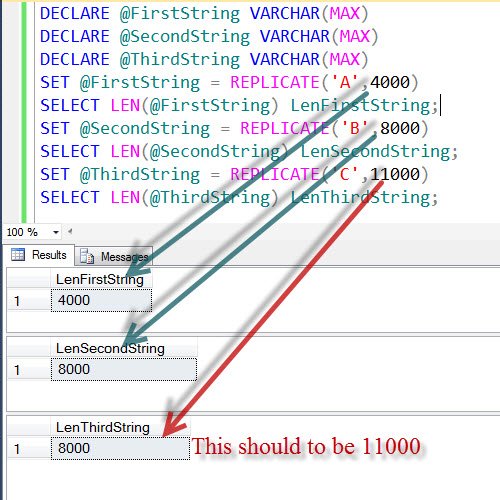
A quick Monday puzzle: what happens when you REPLICATE over 8000 characters into a VARCHAR(MAX) variable? Guess the lengths before you run it.

CONCAT_NULL_YIELDS_NULL and CONCAT: How NULL Behaves in Strings
The CONCAT_NULL_YIELDS_NULL setting decides whether a string plus NULL returns NULL. The CONCAT function never looks at it and treats NULL as an empty string. This post tests both on a customer table, shows the errors the OFF setting causes, and gives safe patterns for names and numbers.