Learning from people is the oldest way any craft has traveled. For some lessons, it still beats every other way. A book tells you what works. A person tells you what went wrong on the way there. They tell you what they’d do differently, and which of your questions is the right one.

This is the third post in the Workshop Bench series. So far we’ve stood at one bench, in one workshop. This post takes the craft on the road. It visits conferences, local meetups and the mentors who shape a career one conversation at a time.
The Journeyman’s Road
In the old crafts, finishing an apprenticeship didn’t make you a master. It made you a journeyman. In several European trades, journeymen were expected to travel for years. They walked from town to town and worked in one workshop after another. They learned how other masters did the same job differently.
The idea behind it was wise. One workshop teaches one way of doing things. Ten workshops teach you which habits are craft and which are only local custom. A journeyman came home with a bag of tools and a head full of other people’s tricks.
Conferences and meetups are our version of that road. For a few days, we leave our own bench. We stand in a room of people who solve our problems in other ways. Some of what we hear won’t fit our work. Some of it changes how we work for years.
Why a Room Teaches What a Screen Can’t
I’ll be honest: a lot of conference content is available online now. Many sessions are recorded. Slides get shared. You could stay home, watch them at double speed and save the airfare.
But a recording is a lesson with the questions cut out. In the room, someone in the third row asks the question you were too shy to ask. A demo fails, and you watch an expert recover calmly. Thirty people laugh at the same mistake, and you realize everyone makes it.
Classrooms have their own comedy. Anyone who has taught a room full of developers will recognize every person in this picture.
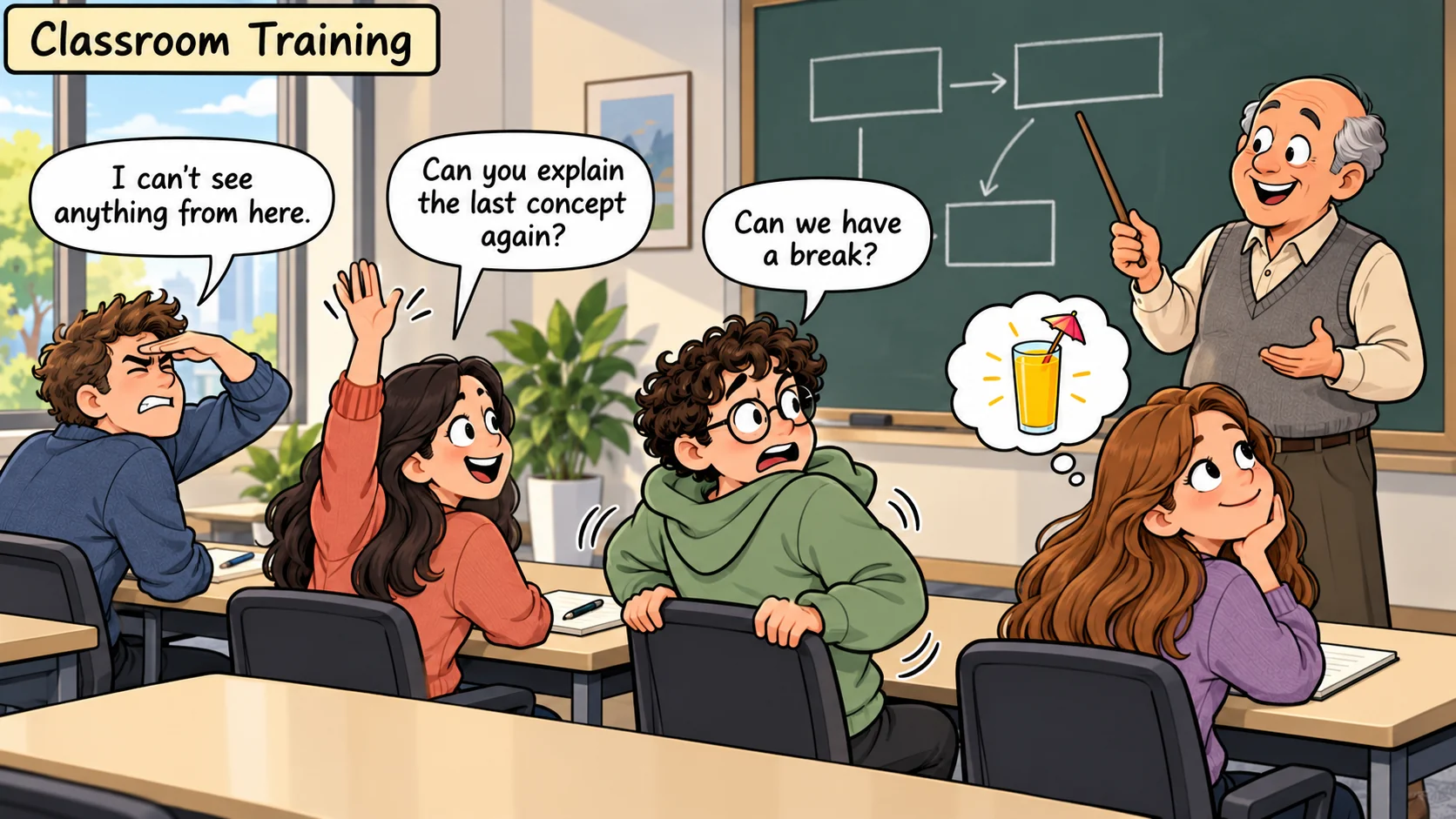
Even with the daydreams, the room works. Being physically present makes you commit. You traveled, you paid, you blocked the calendar. That commitment sharpens attention in a way a browser tab never will.
The Hallway Track
Ask experienced conference visitors about their best moment, and few of them name a session. They name a conversation. Someone they met at the tea table. A speaker who stayed after to answer one more question. A group that skipped lunch to argue about indexes.
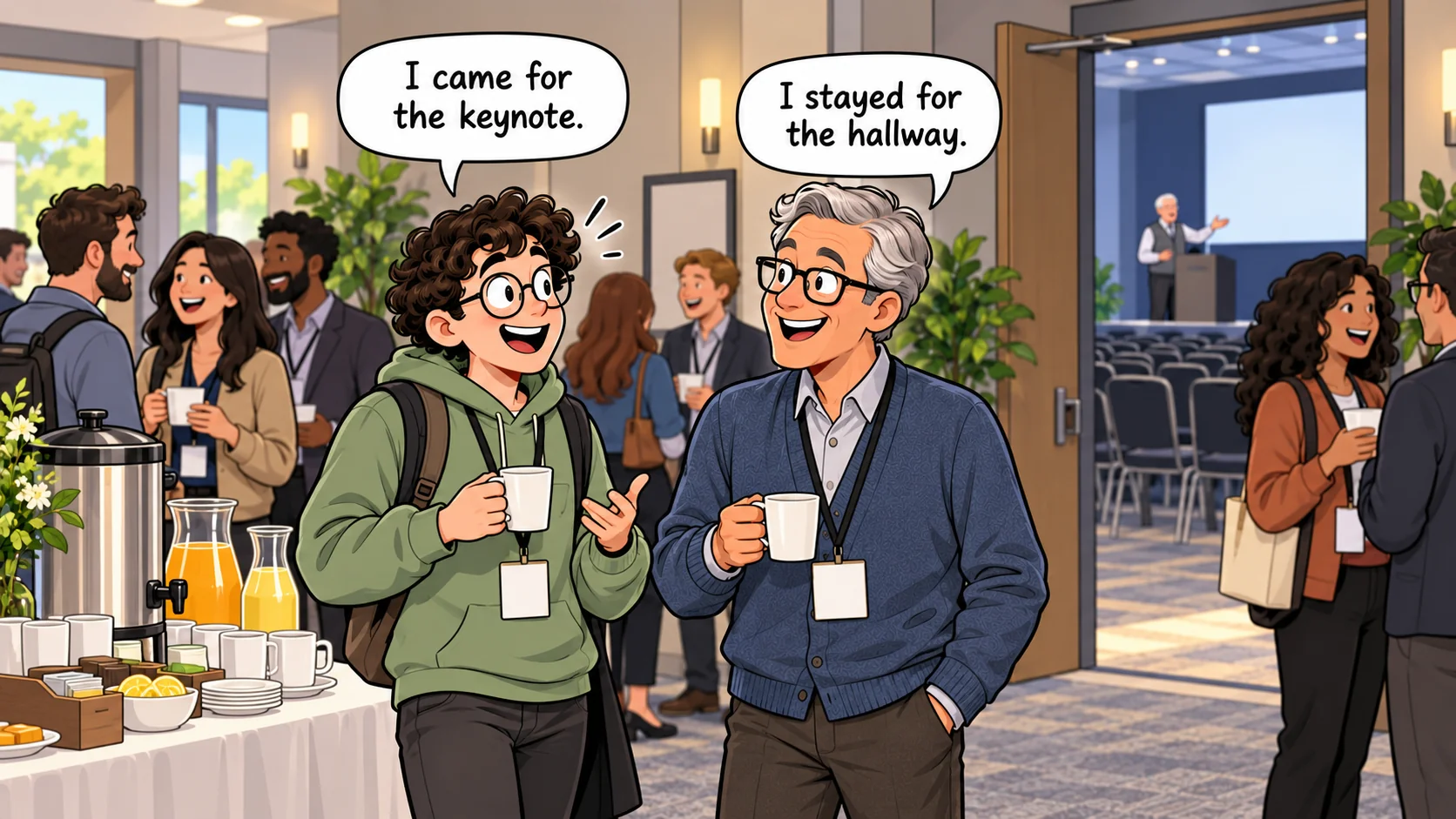
People call this the hallway track. It’s where you hear the things speakers can’t put on a slide. The project that failed. The vendor feature that didn’t work as promised. The design that looked brilliant and collapsed under real traffic.
The hallway also builds something sessions can’t: a network of people you can ask later. Six months later, the most valuable thing you brought home is a person. Someone who answers your message when you’re stuck.
Meetups: The Workshop Down the Street
Not every journey needs a plane ticket. Local user groups and meetups are the workshop down the street. They’re smaller, cheaper and closer to your daily work. The person presenting tends to do the same kind of job you do.
Meetups have another gift: they’re the easiest place to stand up and speak for the first time. A friendly room of twenty people is a gentle start. Explaining something you know to strangers forces you to understand it better than you thought you did.
If there’s no meetup near you, start one. It takes a room, a date and one person willing to talk for thirty minutes. The first meeting will be small. That’s fine. Every large community started as a small one.
Mentors: The Master Who Chooses You
Conferences and meetups are wide. A mentor is deep. A mentor is one experienced person who watches your career over time and tells you the truth about it.
Good mentoring rarely starts with a formal request. It starts with a good question, then another one a few weeks later. Experienced people notice the ones who come back prepared. Show what you tried, ask for a specific opinion and follow through on the advice. That’s how a conversation becomes a mentorship.
Mentoring runs both ways too. The mentor learns from the questions and sees new tools through younger eyes. There’s also the quiet joy of watching someone grow. In the old workshop, a master’s reputation was built on the journeymen they trained. That hasn’t changed.
If You’re the Quiet One
All this talk of hallways and networking can sound exhausting. Many developers are quiet people. A room of strangers drains their energy instead of filling it. That’s normal, and it doesn’t shut you out of learning from people.
Quiet people have their own strengths at events. They listen well, and listening is half of every good conversation. They also prepare, and a prepared question is worth ten casual ones.
Try a few small moves. Set a goal of one real conversation a day, not ten. Arrive early to a session, when the room is calm and the person next to you is also waiting. Talk to speakers after their session, when the topic gives you something to say. Join a smaller workshop session instead of a giant keynote.
Then give yourself permission to rest. Skipping one session to sit quietly with a juice isn’t a failure. It’s how you stay present for the conversation that matters later.
How to Get Real Value from an Event
Most people waste half of every conference. They arrive without a plan, attend sessions at random and go home with a bag of stickers. A little structure changes that.
Before you go, write down three problems from your real work. Choose sessions that touch them. Look up the speakers and decide which one you’d like to talk to.
While you’re there, sit near the front. Ask one question in at least one session. Spend the breaks talking, not checking email. Write one line of notes after each session: what will I try?
When you get back, share what you learned with your team within a week, while it’s fresh. Try one idea on a test system. Send a short thank-you to one speaker who helped. That last step is small, and speakers remember it.
I speak at conferences, and I still sit in the audience for other sessions. Every time, the people who come up afterward with a real question get the best of what I know. The microphone is for everyone. The conversation after is for the people who ask.
The Case Against Traveling to Learn
You could argue that conferences are an expensive habit from another era. Tickets cost money, travel costs more and a week away puts work behind. Free videos cover most of the same content.
That’s a fair point, and nobody needs to attend everything. For pure content, recordings win on price. If budget is tight, a local meetup and a well-chosen online course will teach a lot.
But content isn’t the only thing you’re buying. You’re buying questions, conversations and people you’ll call on for years. Those don’t arrive through a video player. The journeyman didn’t travel because there were no books. They traveled because the books didn’t hold everything.
What to Remember
Leave your own bench now and then. A conference, a meetup or one good conversation with a mentor shows you how others do the work. Go with a plan and come back with one idea you’ll try.
Collect people, not stickers. The next post looks at every way to learn, from courses to code reviews to AI tutors. It also helps you choose the one that fits you.
The Workshop Bench series
- Developer Training: The Day School Ends and Learning Begins
- Employee Training Is a Promise Both Sides Keep
- Learning from People: Conferences, Meetups and Mentors (this post)
- Every Way to Learn, and Which One Fits You
- A Letter to the Developer Starting Out
A conference is not a break from the bench, it is the journeyman’s road.
Published by Pinal Dave on SQLAuthority. More of my work at pinaldave.com.
Discover more from SQL Authority with Pinal Dave
Subscribe to get the latest posts sent to your email.