

High-frequency inserts can stall on the log, indexes, or last-page contention; learn to diagnose the wait and choose targeted SQL Server fixes.
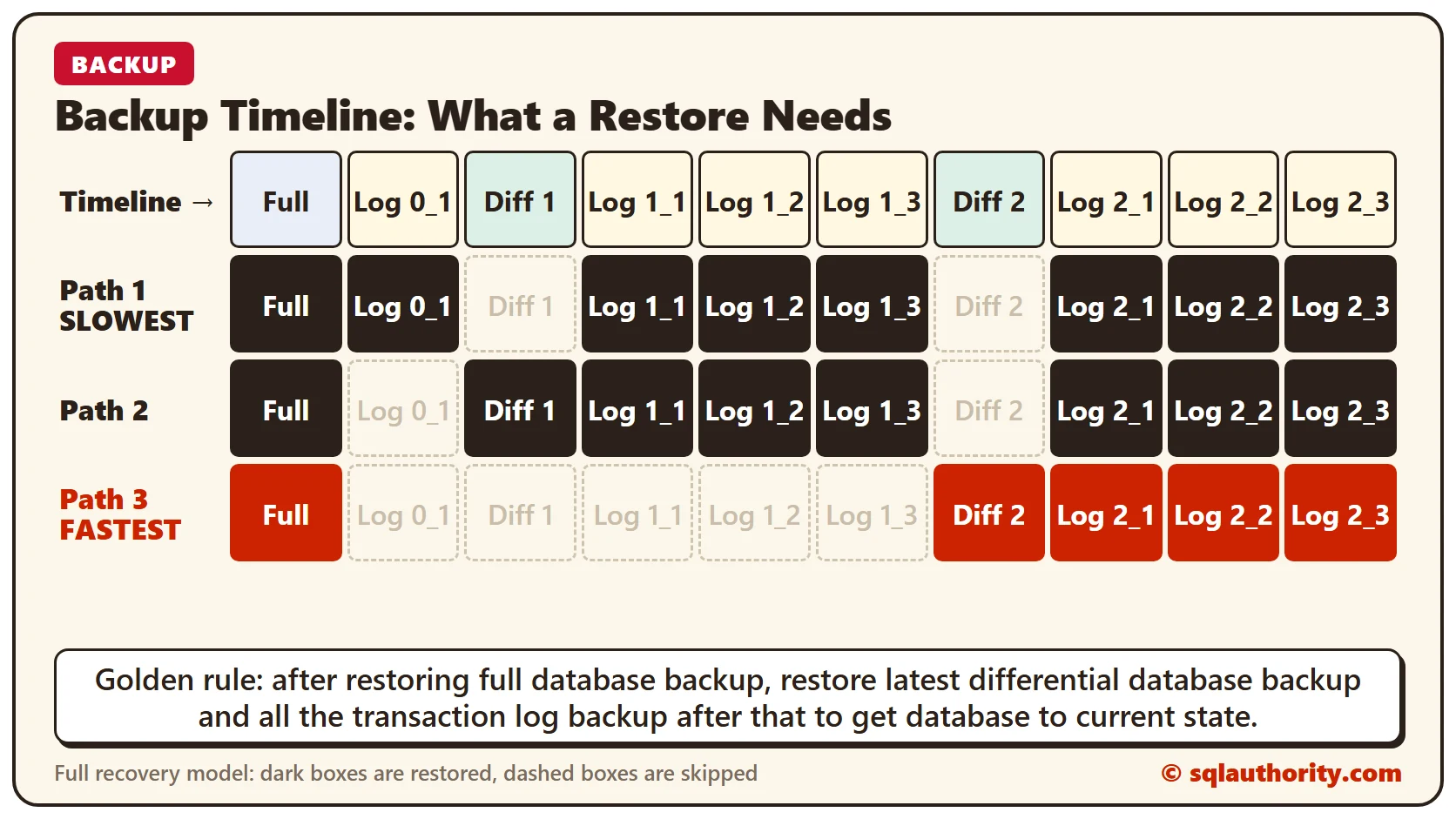
Backup Timeline: Which Backups a Full Recovery Restore Needs
A backup timeline for the full recovery model: full, differential and log backups, and how to restore them in the right order. The post also tells a real DBA story.

Updating a Large Table in Batches With a Moving Key Range
Walk the clustered key a slice at a time, log each batch, and learn why stopping at the first empty batch quietly leaves rows behind.

Choosing Where to Put Data and Log Files
Choosing where data and log files live means checking storage behavior, capacity, install defaults, and a tested move procedure.

SQL SERVER – Solution – Log File Very Large – Log Full
Is your log file too big, or is the log full? Fix it in three steps: back up the log file, truncate it, then shrink it. I link my two detailed posts too.

SQL SERVER – Shrinking Truncate Log File – Log Full – Part 2
About a year ago, I wrote SQL SERVER – Shrinking Truncate Log File – Log Full. I was just going through some of the earlier posts and comments.

Designing Tables for High Insert Rates
High insert rates depend on key choice, row width, index count, and retention design; learn a practical SQL Server table layout for sustained writes.