
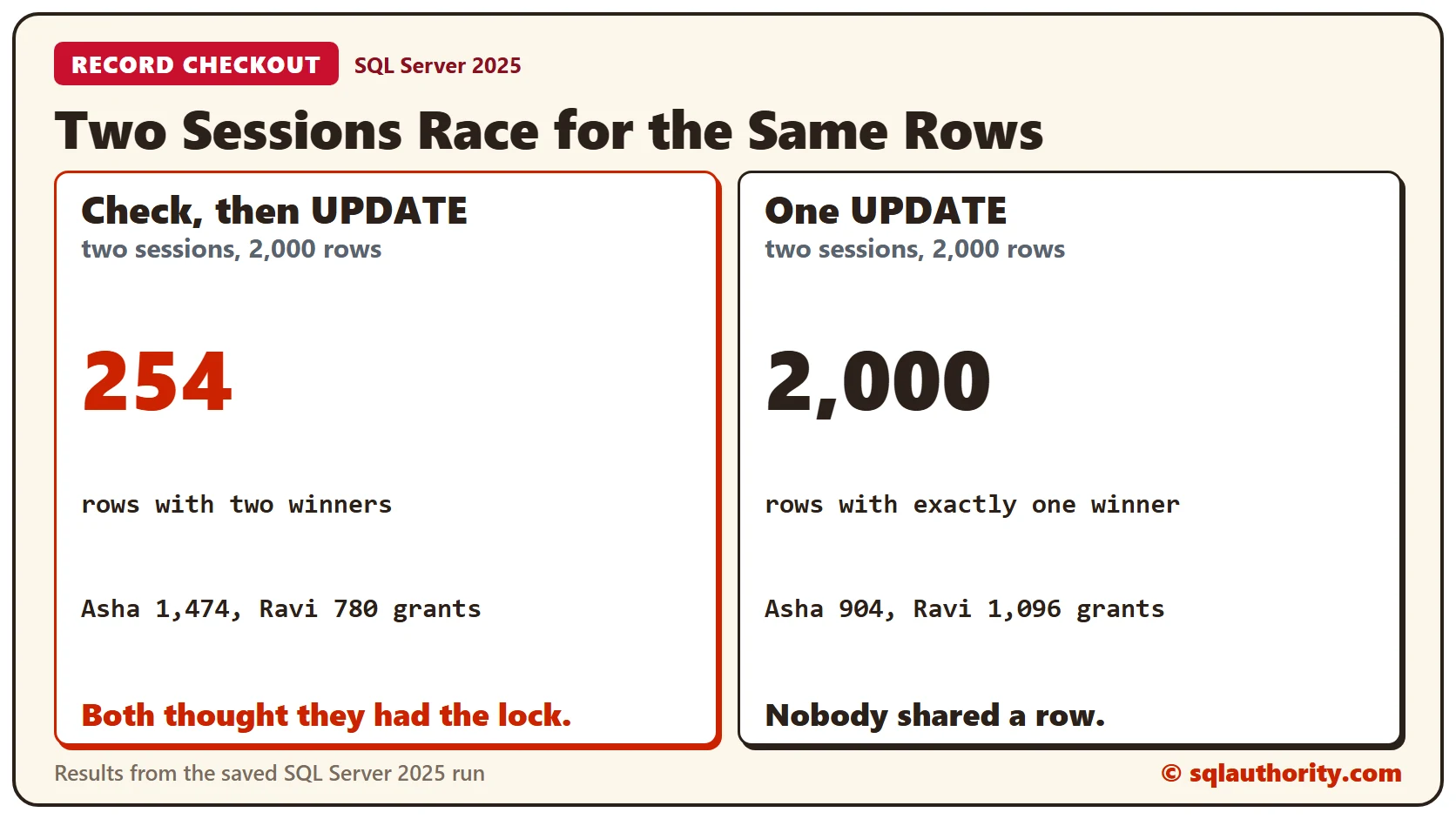
Record checkout puts the name of the editor and an expiry time on the row, so a screen can show who has it. This post builds it with one UPDATE and proves it with two sessions that race for 2,000 rows. A check-then-update version gives some rows two winners, and the one-statement version never does. It also covers expired locks, late saves and check-in. Every result comes from SQL Server 2025.


Optimized Locking in SQL Server 2025: What Changes for Blocking
Enable optimized locking in SQL Server 2025 with ADR and RCSI, then compare lock counts and blocking while checking LAQ limits.

ANSI Isolation Levels Quiz: Which Level Lets You Read Uncommitted Data?
This ANSI Isolation Levels Quiz asks which level lets one session read a price that another session has not committed. A two-window test on SQL Server 2025 shows what each level returns. It also shows how READ COMMITTED SNAPSHOT removes the wait.

Lost Updates: Optimistic Concurrency With a rowversion Column
Prevent lost updates with optimistic concurrency and a rowversion token, detect zero-row conflicts, and compare short locking transactions.

Dirty Records and Table Hints: Wait, Read Dirty, Skip or Fail
Dirty records and table hints decide what a SELECT does while another session has an uncommitted change. This post runs one update that rolls back and five readers against it: the default, READUNCOMMITTED, NOLOCK, READPAST and NOWAIT. It also shows how a database option changes the default.
SQL SERVER – Check the Isolation Level with DBCC useroptions
What isolation level is your session using? Run DBCC useroptions to see it, along with dateformat, datefirst, language and other SET options.