
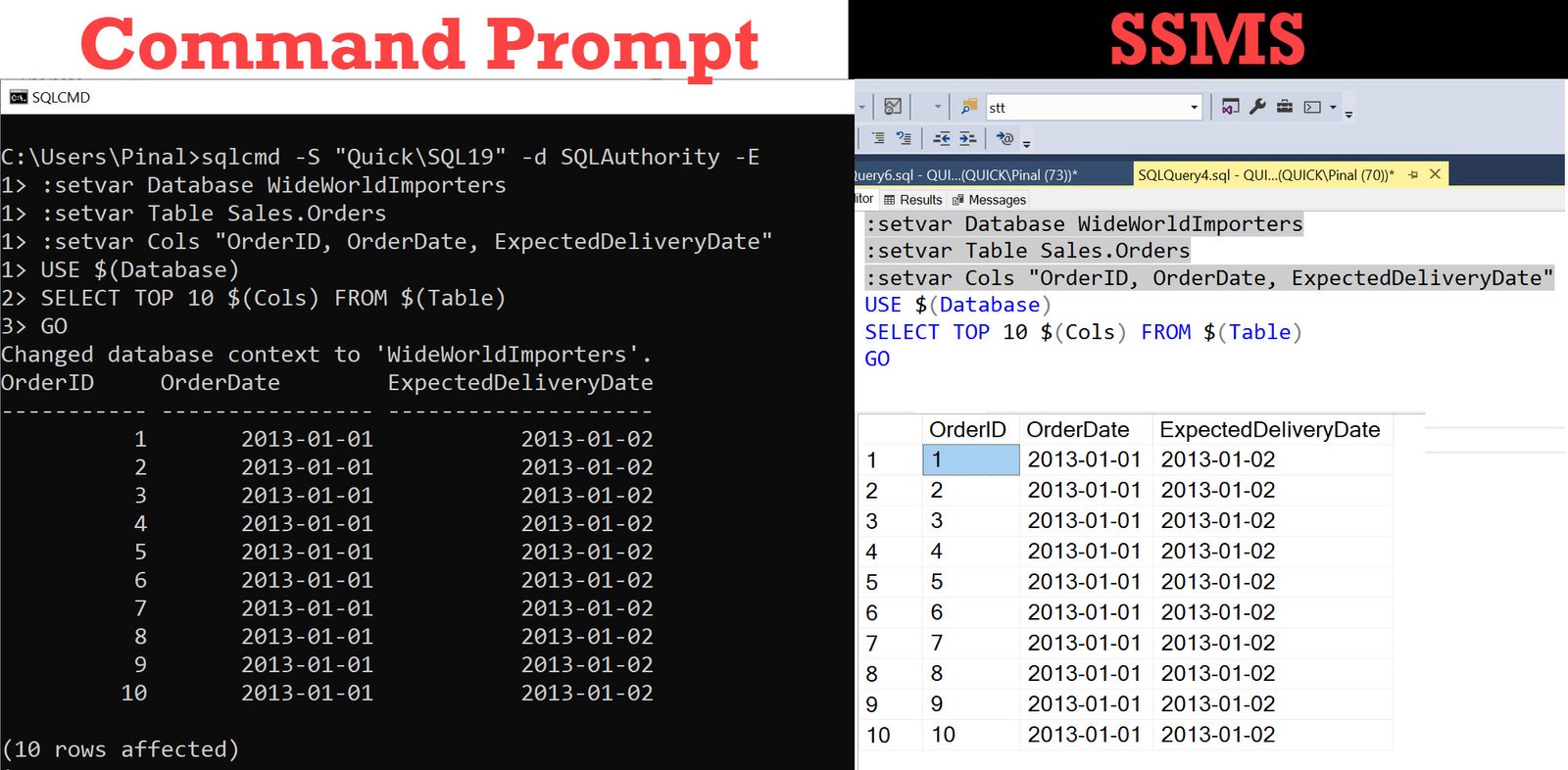
Honestly, there is an alternative way to quickly use SSMS SQLCMD mode as a development environment, let us learn about it today.

sqlcmd vs SSMS: How to Time the Same Loop Fairly
A sqlcmd vs SSMS timing is fair only when both tools run the same file. The clock must sit inside the script. This post times 10,000 inserts three ways with a log table, shows what changed and what didn’t, and lists the settings to match before you compare.

oStress vs SSMS: What Each Tool Is Built to Measure
oStress vs SSMS is not a race, because the tools measure different things. This post times 10,000 inserts in three ways with a clock inside the script, then shows how eight sessions finish the same work faster. It explains what a one-session loop really measures.

oStress Load Test: Run Many Sessions Against SQL Server
An oStress load test runs one query from many connections at once, so you can watch SQL Server under a crowd. This post explains the main switches and runs a small first test with five connections. It also builds the same test with sqlcmd workers, for machines without oStress.

SSMS Command Timeout: What the Execution Time-out Does
The SSMS command timeout is the number of seconds a query window waits before it cancels a batch. This post lists the four places a time-out can come from and reproduces a client time-out with sqlcmd and PowerShell. It also shows how an Extended Events session proves that the client gave up.

Building Demo Data With GENERATE_SERIES
Build demo data with GENERATE_SERIES, weighted categories, customer skew, random amounts, and validation that preserves repeatable tests.

Refreshing a Test Database From Production Safely
Plan refreshing a test database with isolated restores, safe paths, user repairs, data replacement, disabled outbound actions, and a log.