

A puzzle for you: auto update is on and I insert 10 times more rows, yet the statistics are not updated. Why, and how can they update automatically?

SELECT * in Production Code: The Hidden Costs
See the real costs of SELECT * in production code: lost covering indexes, lookups, stale view metadata, broken inserts and wider results.

SQL Server Execution Plan Quiz: One Table, Two Operators
One table reference can produce Nested Loops, a Key Lookup and parallel operators in an execution plan. A controlled SQL example makes the work visible and shows why MAXDOP is a ceiling rather than a promise of parallel execution.
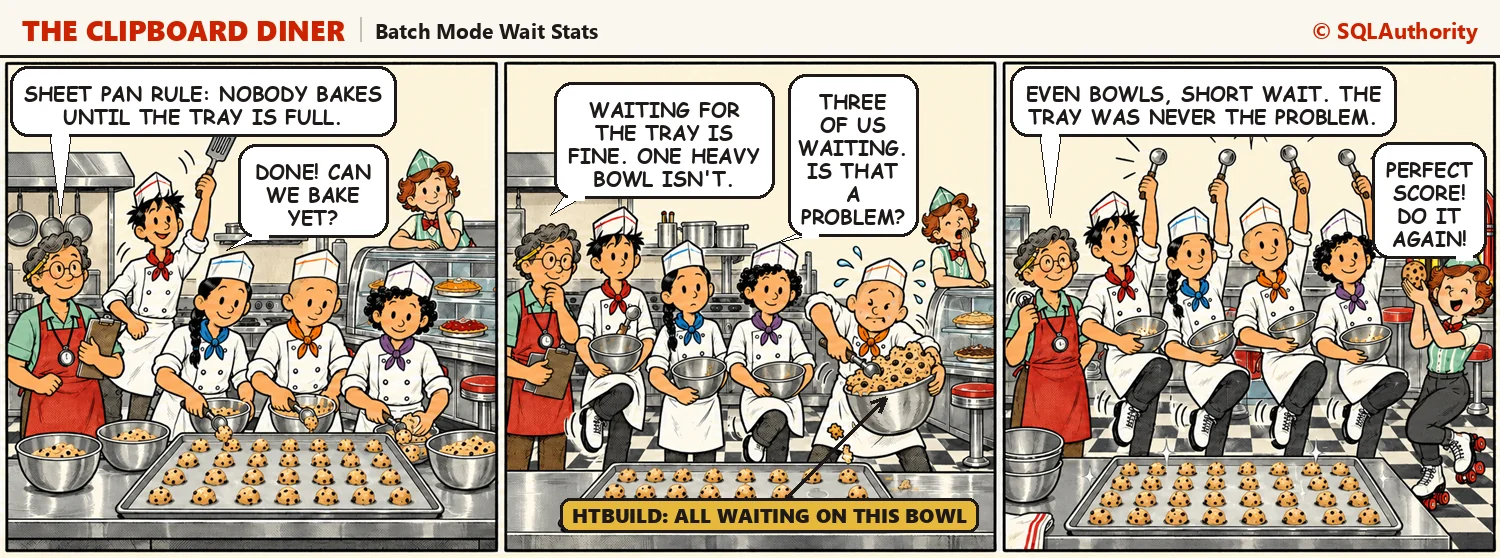
Batch Mode Wait Stats: HTBUILD and Columnstore Waits
Batch mode wait stats such as HTBUILD and BPSORT show threads waiting for each other inside a parallel batch mode plan. On Night 26 at the Clipboard Diner, four cooks wait for one giant shared tray before 900 cookies can bake. Then I show when these waits are normal, when skew or spills make them a problem, and how to check them.
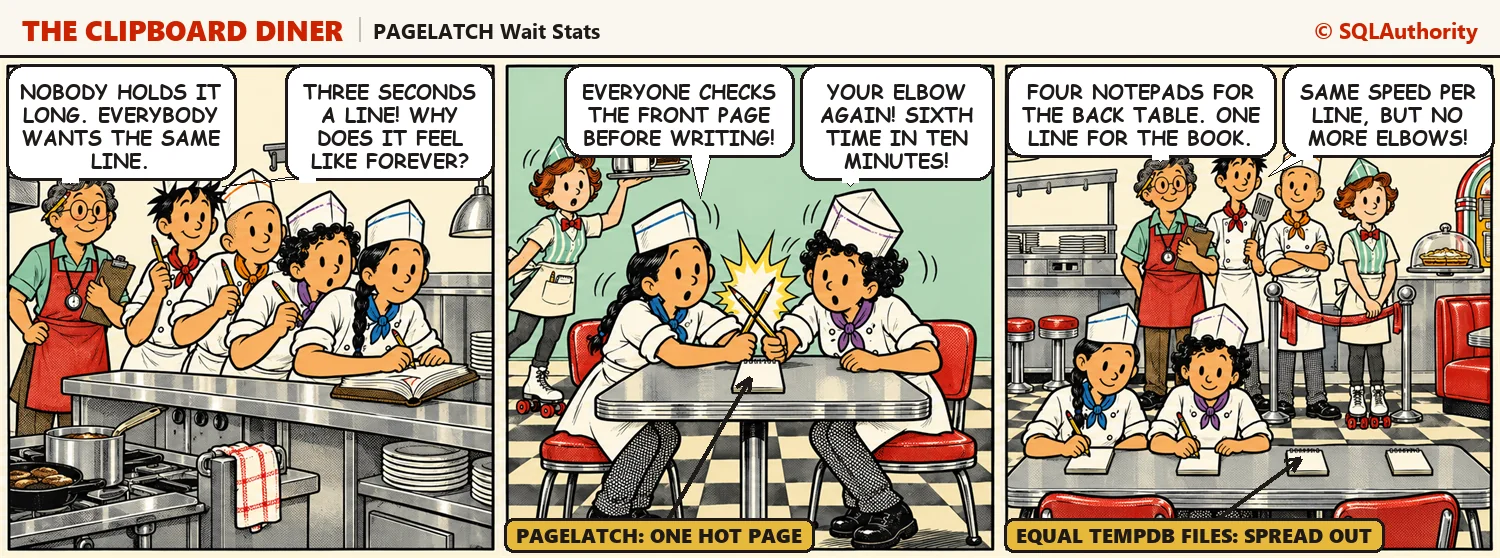
PAGELATCH Wait Stats: Hot Pages in Memory and tempdb
PAGELATCH wait stats show tasks queuing for a short grab on a page that is already in memory. On Night 12 at the Clipboard Diner, four cooks crowd one ticket book and one notepad. You’ll learn the difference between a latch and a lock, how to read a page like 2:1:1, and how to fix last page inserts and tempdb contention.
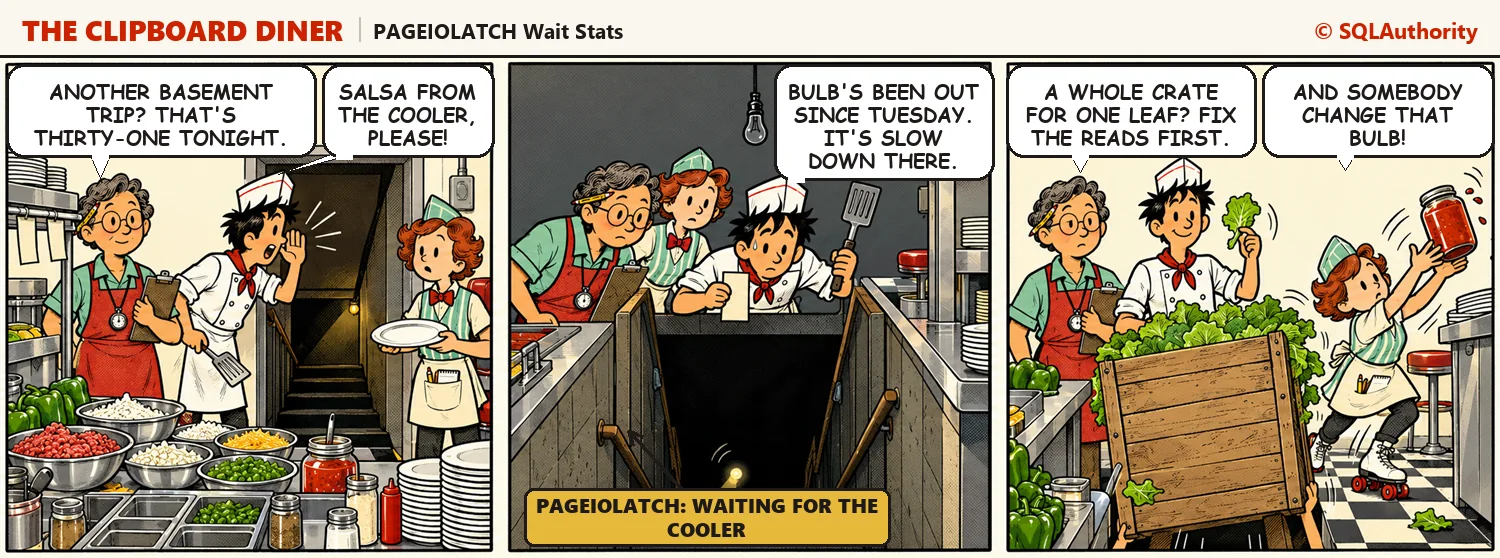
PAGEIOLATCH Wait Stats: Waiting for Data From Disk
PAGEIOLATCH wait stats measure queries waiting while data pages are read from disk into memory. On Night 9 at the Clipboard Diner, the prep counter is too small for the menu and the cooks keep sending for things from the basement. Learn the two causes, how to read file latency per file, and the fixes in order.

SQL SERVER – What is Fill Factor and What is the Best Value for Fill Factor
What is fill factor and what is the best value for fill factor? I explain how it controls the space used on leaf-level pages and why the default is 100.