This month's discount Comprehensive Database Performance Health Check · Testimonials
SQLAuthority with Pinal Dave
Home
  • Consulting
    • Health Check
  • Free Videos
  • All Articles
    • AI
    • SQL Performance
    • SQL Tips and Tricks
    • Interview Questions and Answers
    • SQL Puzzle
    • SQL Video
    • SQLAuthority News
    • Personal
  • Books
  • Consulting
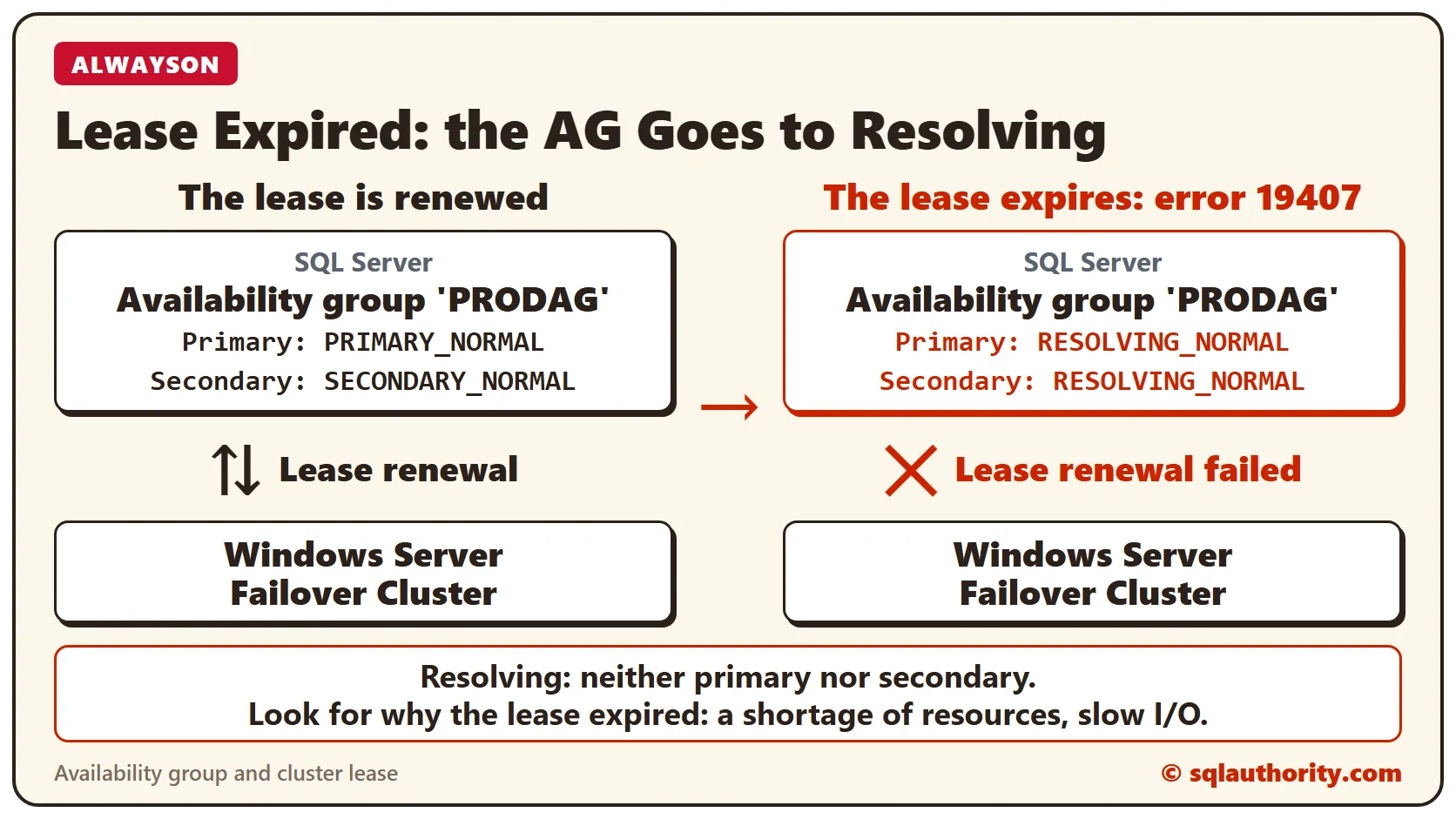
Diagram of an availability group and a Windows Server Failover Cluster: when the lease renewal fails, error 19407 appears and the group moves from PRIMARY_NORMAL and SECONDARY_NORMAL to RESOLVING_NORMAL

Error 19407: The Lease Between the Availability Group and the Cluster Expired

March 27, 2017
Pinal Dave
SQL Tips and Tricks
AlwaysOn, SQL Error Messages, SQL High Availability, SQL Server, SQL Server Cluster

Error 19407 means the lease between an availability group and the Windows Server Failover Cluster has expired, and the group goes to Resolving. Here is what each ERRORLOG line says and what to look at first.

Read More
Gouache painting of two server groups with one database card missing from the second group

SQL SERVER – Availability Group Missing or Deleted Automatically?

March 17, 2017
Pinal Dave
SQL Tips and Tricks
AlwaysOn, SQL Error Messages, SQL High Availability, SQL Server

Investigate an availability group missing from SSMS by comparing SQL metadata, replica state and cluster logs before choosing a recovery procedure.

Read More
Error 19456 SQL Server Management Studio.

SQL SERVER – FIX: Error 19456: None of the IP Addresses Configured for the Availability Group Listener can be Hosted by the Server

February 13, 2017
Pinal Dave
SQL Tips and Tricks
SQL Error Messages, SQL High Availability, SQL Server, SQL Server Cluster

Deploying a hybrid AlwaysOn availability group across on-premises and Azure, adding a replica failed with error 19456. Here is what fixed it.

Read More
A dress with a spare button sewn in its hem, hanging beside an entire identical spare dress never worn.

Do You Need an Availability Group? Matching RPO and RTO to a Feature

January 24, 2017
Pinal Dave
SQL Tips and Tricks
AlwaysOn, DBA, Log Shipping, SQL Backup and Restore, SQL High Availability

Match RPO and RTO to backups, log shipping, failover clusters, or availability groups, then test the full service recovery path.

Read More
A storm-ready cellar doorway with sandbags, lanterns on a shelf and a red first-aid box on the wall

Writing a Disaster Recovery Runbook: RPO, RTO and a Restore Test

August 31, 2016
Pinal Dave
SQL Tips and Tricks
Best Practices, DBA, SQL Backup and Restore, SQL High Availability

Build a disaster recovery runbook around agreed RPO and RTO, usable backup chains, instance dependencies, clear roles, and restore tests.
Read More
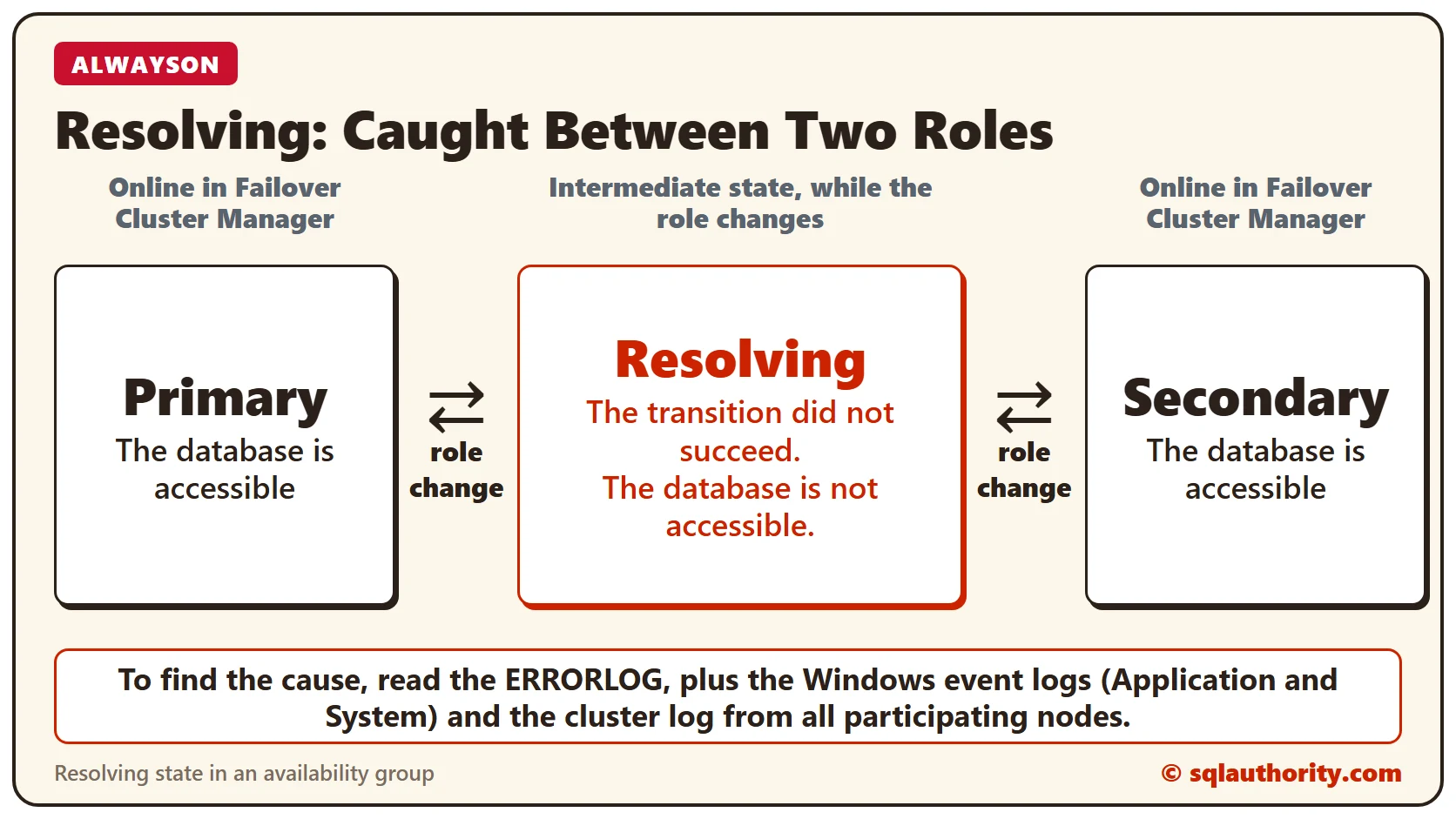
Diagram of an availability group replica moving between the Primary and Secondary states through the Resolving state, where the transition did not succeed and the database is not accessible

Resolving State: Why an AlwaysOn Availability Group Gets Stuck

February 27, 2016
Pinal Dave
SQL Tips and Tricks
AlwaysOn, SQL Error Messages, SQL High Availability, SQL Server

Resolving state is the intermediate state of an AlwaysOn availability group during a role change. If the transition fails, the group stays there and the database is not accessible. Here is what the ERRORLOG showed in one case.

Read More
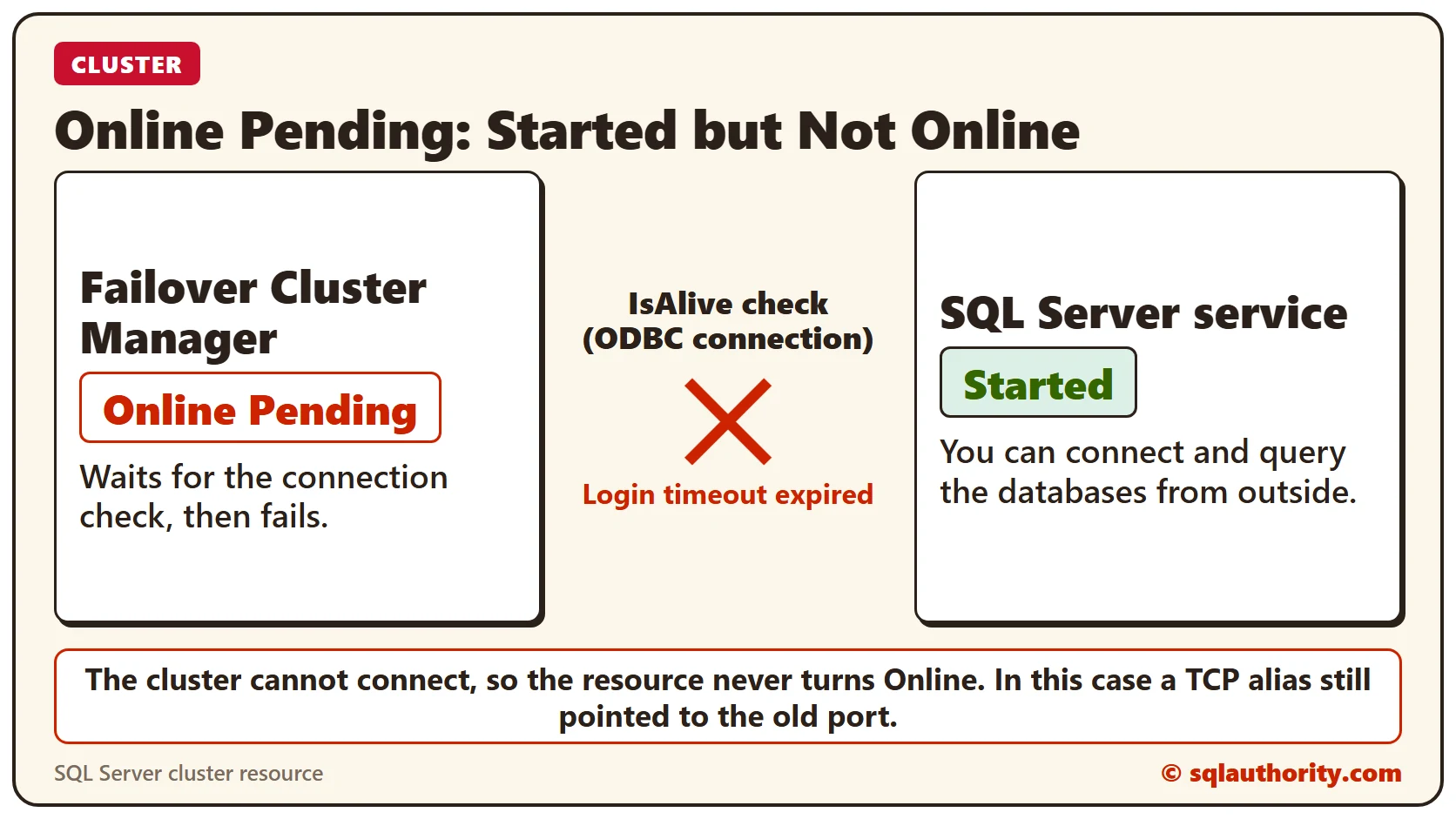
Diagram of Failover Cluster Manager showing Online Pending while the SQL Server service is started: the IsAlive connection check fails with login timeout expired, so the resource never turns Online

Bring SQL Cluster Resource Online When It Sits in Online Pending

August 14, 2015
Pinal Dave
SQL Tips and Tricks
SQL High Availability, SQL Server, SQL Server Cluster

A client could start a SQL Server instance from services.msc but could not bring SQL cluster resource online in Failover Cluster Manager. Here is how I checked the connection and found the cause: a TCP alias with an old port.

Read More
Previous 1 … 5 6 7 8 9 10 11 Next
  • Books
  • Testimonials
  • Privacy Policy

© 2006 – 2026 All rights reserved. pinal @ SQLAuthority.com