

However, I have a really good reason to use that. Today we are going to discuss Performance Troubles – Function on Date Variable.

IGNORE NULLS in SQL Server 2022: Carrying the Last Known Value Forward
Use IGNORE NULLS for forward-filled readings, find the next known value, and compare the older running-count grouping method carefully.

Unix Timestamp in SQL Server: Converting Seconds and Milliseconds Both Ways
A Unix Timestamp counts seconds or milliseconds since 1 January 1970 UTC. This post converts it to datetime2 and back on SQL Server 2025, shows why datetime2(3) keeps the milliseconds, how to pass the year 2038 limit and how time zones and dates before 1970 behave.

One Scan for 3 Count Sum – SQL in Sixty Seconds #178
Well, the answer is pretty straight forward and that is what we are going to see in today’s video of One Scan for 3 Count Sum.
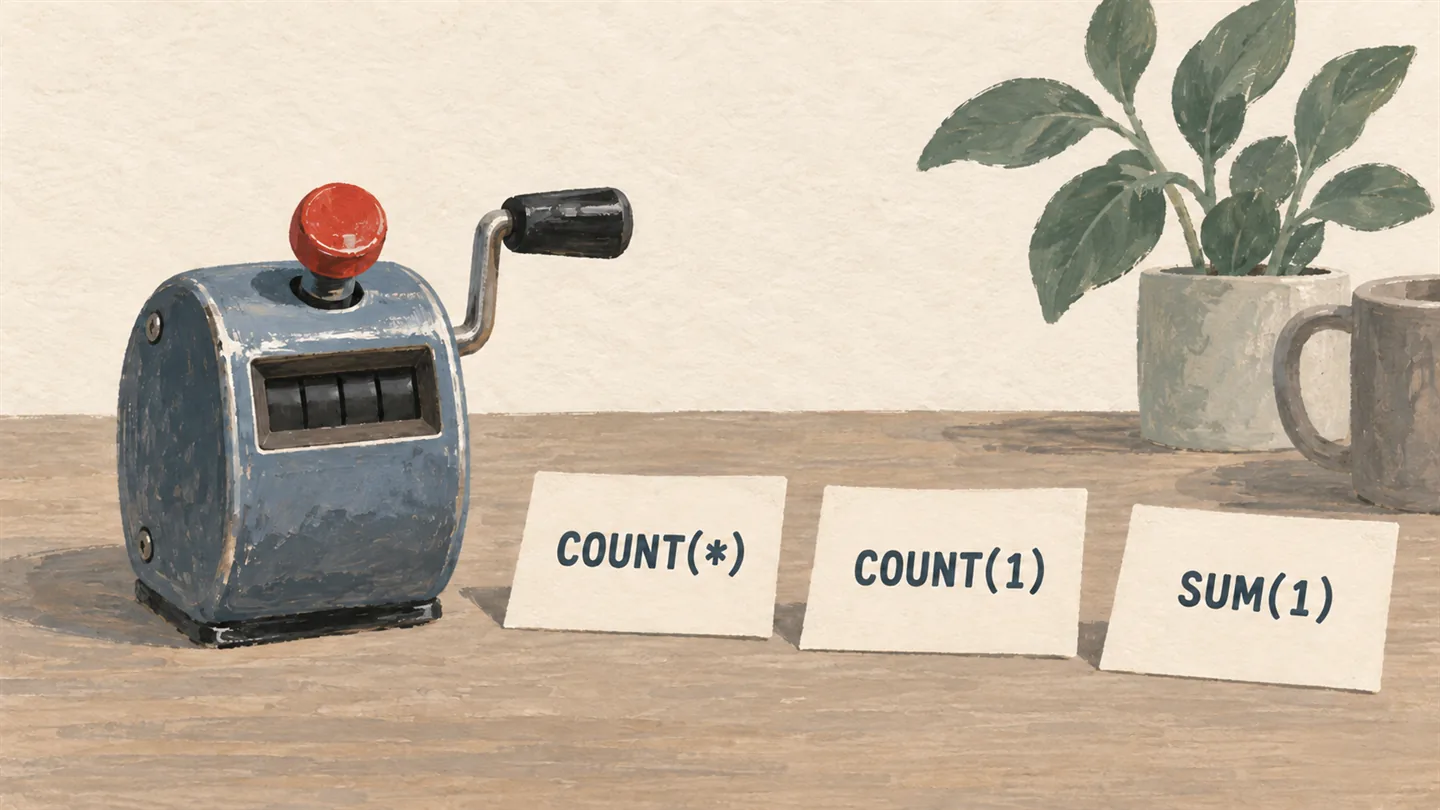
SQL Server – Single Scan for 3 Operations – COUNT(*) COUNT(1) SUM(1)
Today we will take the same conversation to the next level by discussing Single Scan for 3 Operations – COUNT(*) COUNT(1) SUM(1).

SUM(1) vs COUNT(1) Performance Battle – SQL in Sixty Seconds #177
Based on my recent two videos, I got lots of questions about SUM(1) vs COUNT(1) Performance Battle. Let us see that in today’s video.

EDIT_DISTANCE and JARO_WINKLER: Fuzzy String Matching in SQL Server 2025
EDIT_DISTANCE counts the single-character changes between two strings, and the JARO_WINKLER functions score how alike they look. This post tests the four preview functions on SQL Server 2025, shows the Windows collation error and its fix, and finds near-duplicate customer names.