

Build a restartable load with durable batch identity, transactional progress, repeatable input, and retries that do not duplicate business effects.
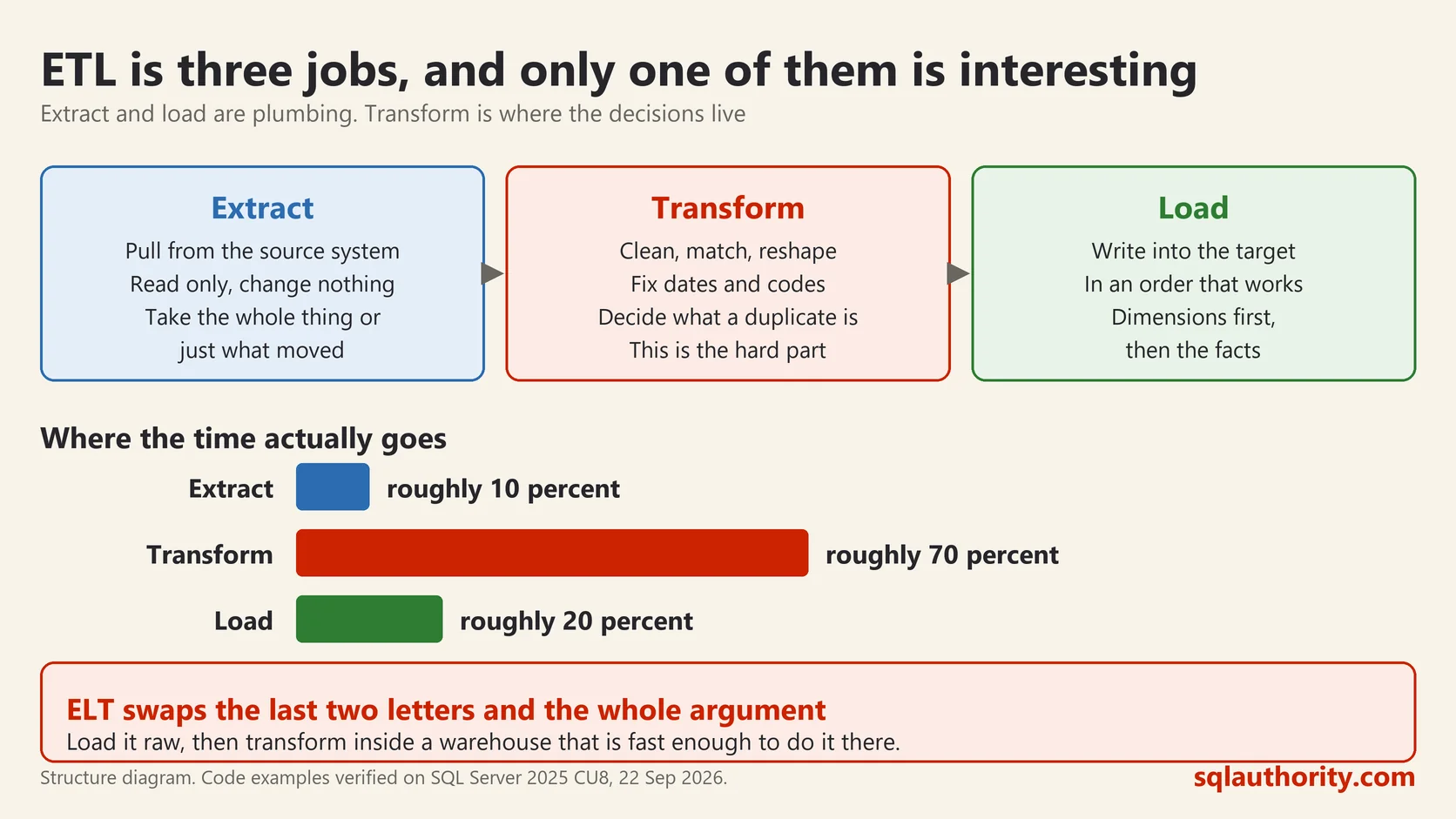
What Is ETL? Extract, Transform and Load Explained
ETL means extract, transform and load, and only the middle word is interesting. What each stage really does, why transform eats most of the schedule, and what changes when a team says ELT instead.

Late-Arriving Dimension Rows: Inferred Members in a Data Warehouse
Handle a late-arriving dimension with inferred members, preserve fact keys, fill attributes later, and report unresolved placeholders.

Slowly Changing Dimensions in Plain T-SQL
Slowly changing dimensions need explicit Type 1 and Type 2 rules; use T-SQL updates and inserts with tests for history and overlap.

Loading a Fact Table Without Blocking Reports
Loading a fact table without blocking reports calls for isolated staging, aligned partition switching, short locks, and a tested reader path.

Finding the One Row That Broke Your Data Load
Trace a data load error to its source row with raw staging, TRY_CONVERT, stable row identifiers, and a rejection report that supports a safe retry.

Where a Self-Service Report Actually Gets Its Data
Trace self-service BI numbers through source data, transformations, refresh schedules, credentials, gateways, and the owner of each step.