
I have previously written about Random Password before in the blog posts here, here and here. This blog is sent by James Curran, who has created the following generate random password stored procedure keeping the base of the original solution of Tim Cartwright. Thanks to both of this individual SQL Server Expert who has helped me to come up with a more robust solution for a random password.

SQL SERVER – COUNT, FROM and a Query – Interesting Observation
In this blog post today we will see an interesting observation which is related to COUNT and FROM clause in a single query. During my recent Comprehensive Database Performance Health Check, this was brought to my attention by one of the attendees.
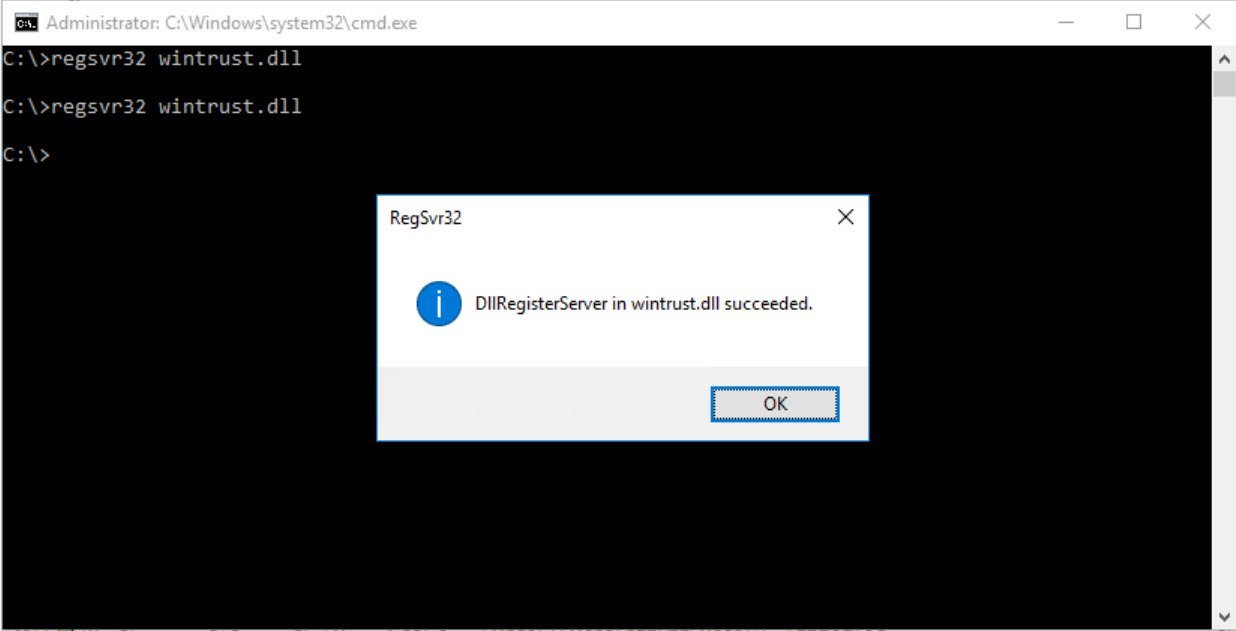

SQL SERVER – Script – Turn off Firewall Remotely (PowerShell, NetSh, PsExec)
I was working with a client to deploy an automated solution to install SQL Server. Since this involved scripting and running PowerShell remotely, we wanted to disable the firewall. Due to automation, we were not supposed to log in to the server and use UI. So, I search on the internet and found a few ways to do that. In this blog, I am going to share scripts which can turn off the firewall remotely.

SQL SERVER – How to Generate Random Password? – Enhanced Version
Earlier last month, I posted an interview question – How to Generate Random Passwords in SQL Server? – Interview Question of the Week #181. Though, my efforts were honest my answer was not complete in that blog post. Thankfully, SQL Server Expert Tim Cartwright noticed the error in the blog post and decided to send me to follow up email with the accurate script to generate a random password.

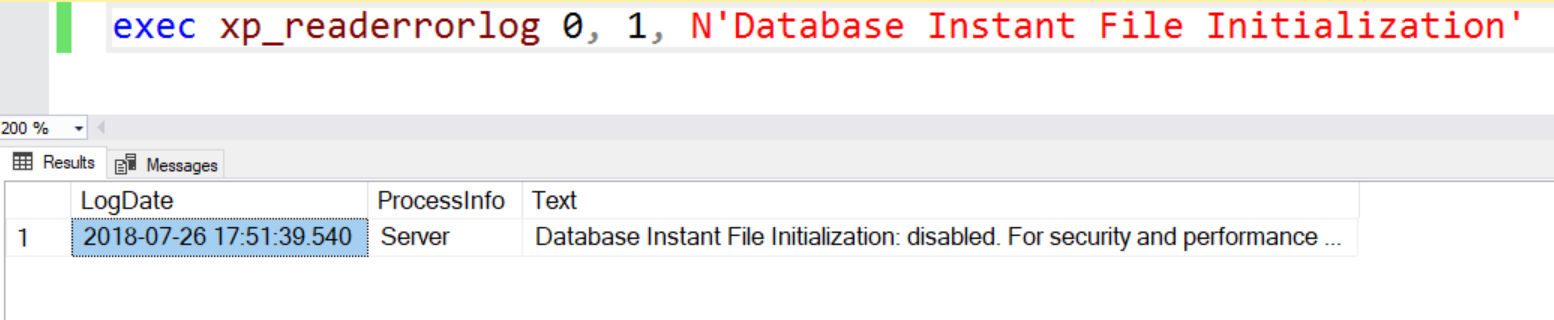
SQL SERVER – How to Check If Instant File Initialization Enabled or Not?
The question such as this makes my day during the Comprehensive Database Performance Health Check. One of the DBA asked if there is an easy way to know if they have Instant File Initialization Enabled or Not for their server. Honestly, this is a very simple question but there was no quick answer to this one before SQL Server 2016. However, if you are using SQL Server 2016 or later version of SQL Server, you can figure out the status of the instant file initialization pretty quickly.