
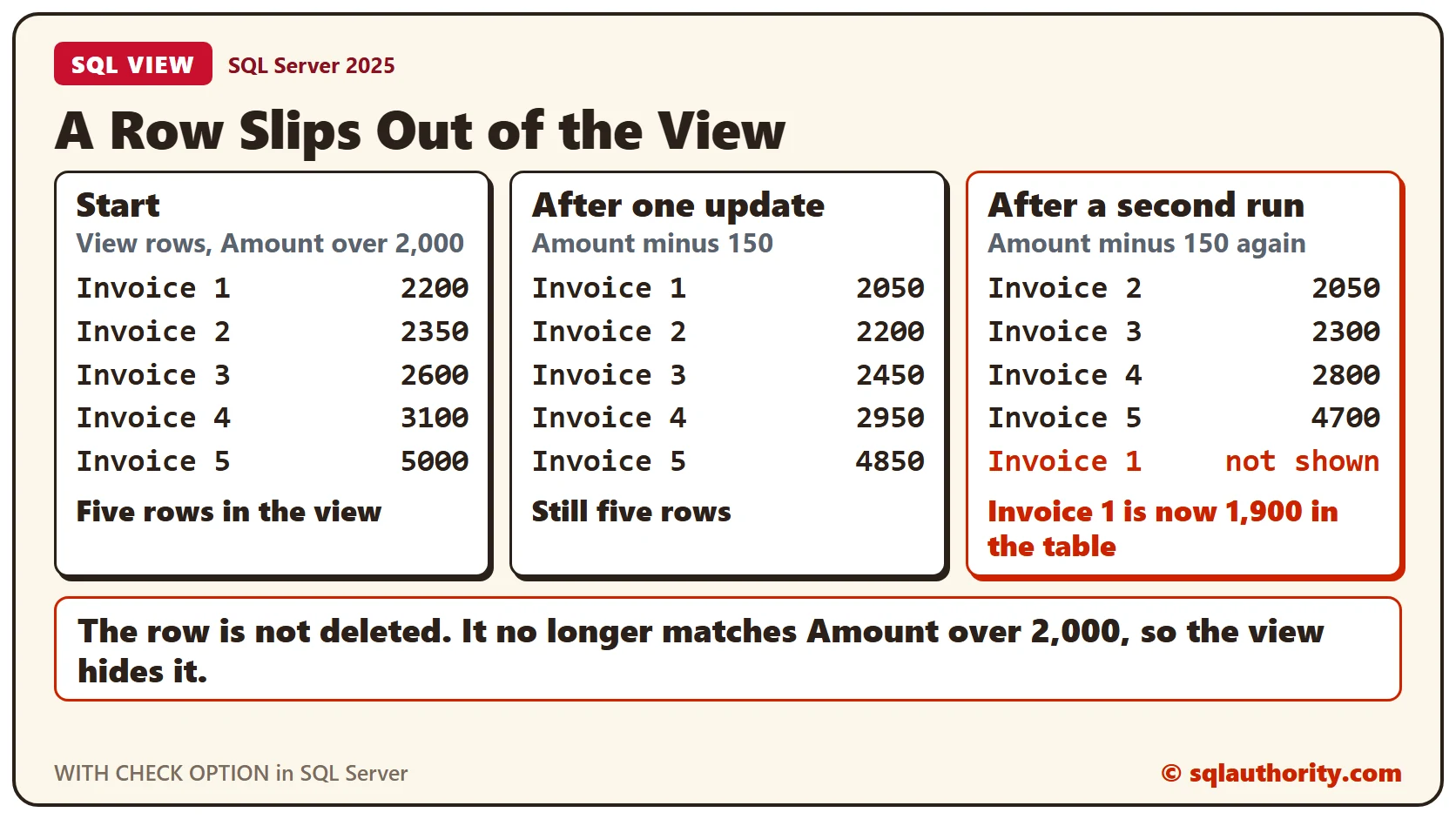
WITH CHECK OPTION stops a change made through a view from pushing a row out of that view. This post builds a view of large invoices, shows an update and an insert that make rows vanish, adds the option to block both with Msg 550, and compares it with a trigger. Every result comes from SQL Server 2025.

ANY and ALL: Comparing a Value to a Whole Subquery in T-SQL
One missing price is enough to make ALL return nothing while ANY returns rows. Here is how to see it, and how to ask the question more safely.
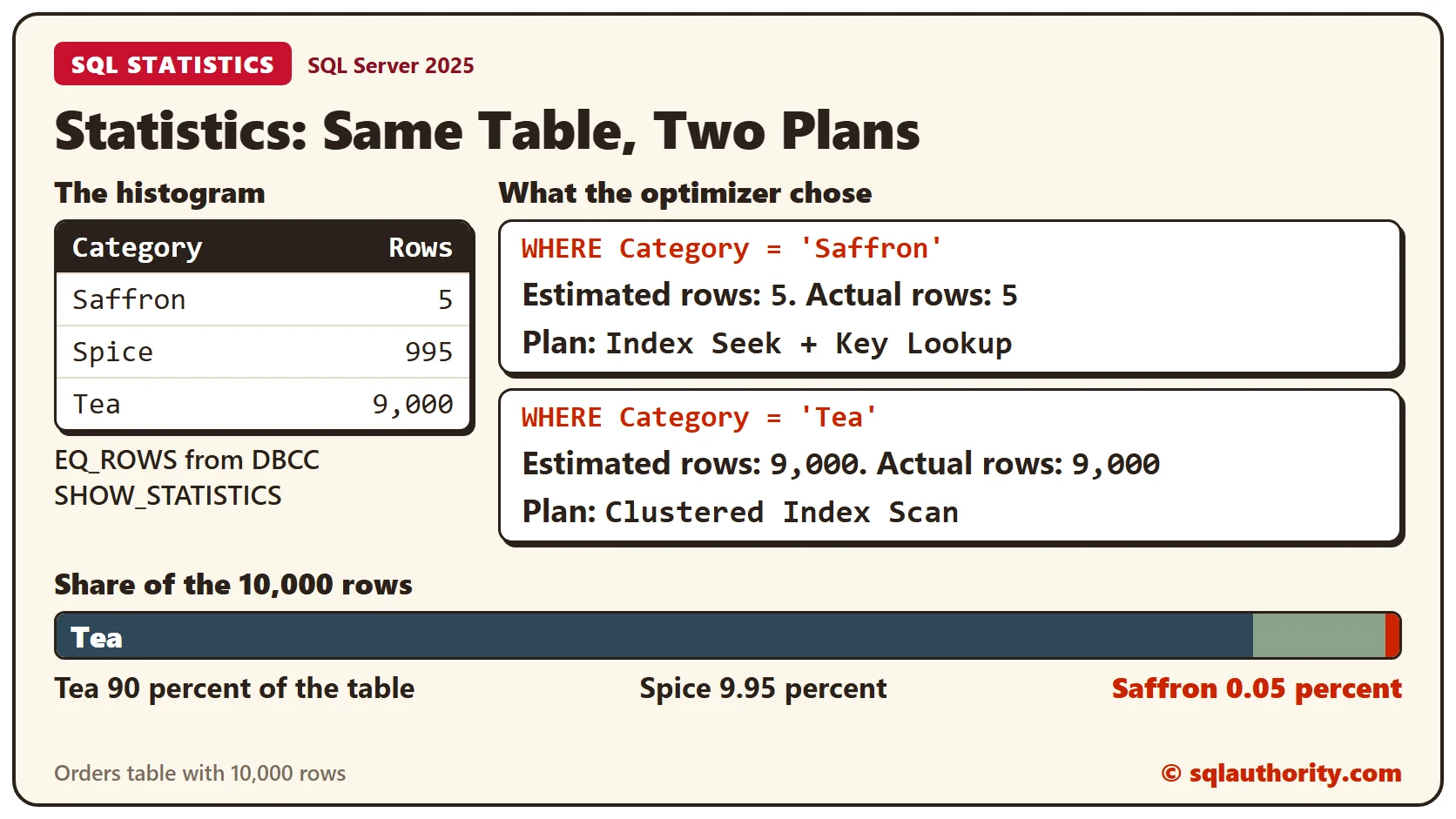
SQL Statistics: How SQL Server Estimates Row Counts
SQL statistics are small summaries of your data that tell the optimizer how many rows a query will return. This post builds an orders table with one rare value and one common value, reads the histogram, compares estimated and actual rows in the plans, and shows a stale statistic fixed with UPDATE STATISTICS. Every result comes from SQL Server 2025.

Page Split in SQL Server: What It Is and How to See One
A page split in SQL Server happens when a row belongs on a data page that is already full. This post builds a small visitor table, shows which page every row sits on before and after a split, counts the splits in the log, and uses fill factor to leave room. Every result comes from SQL Server 2025.

Physical Order of Rows: What a Clustered Index Does
Physical order of rows depends on one thing: whether the table has a clustered index. This post builds a heap and two clustered tables from the same twelve mall stores, shows the page and slot of every row, and counts pages and page splits. Every result comes from SQL Server 2025.