Invisible work is most of what a good DBA does, and the better it goes, the less anyone sees it. The outage that didn’t happen leaves no mark. Neither does the report that runs in two seconds now instead of two minutes.
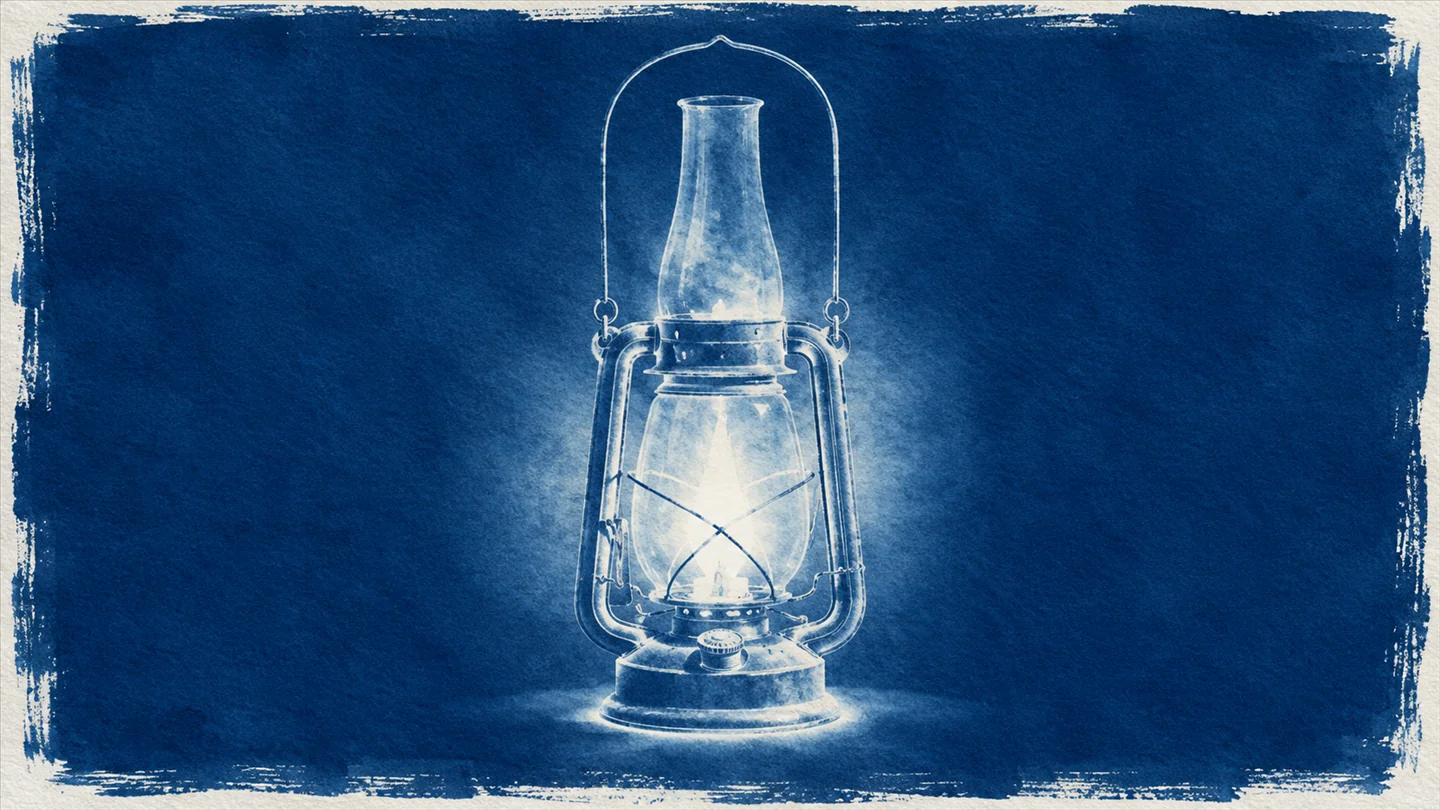
A Lighthouse on a Calm Night
Think about a lighthouse keeper on a calm night. The lamp burns, ships pass, and nobody on deck looks up at the tower. The keeper’s best night is the one where nothing happens at all.
Data work runs the same way: a backup restores cleanly on the first try. An index goes in before the month-end rush, so nobody waits. When it all works, people assume there was nothing to do, and I understand why. From a passing ship, a calm sea and a careful keeper look the same.
So the keeper has a sales problem. So does anyone whose job is keeping trouble away. The client pays for something they never see, and they have to decide each year whether it was worth it.
Polish Used to Be the Proof
For years, a clean report stood in for careful work. Someone had to gather the numbers and check every one before they went on the page. The effort showed, so clients learned to read polish as proof.
AI broke that link. Ask Claude for a performance review of a server, and you get neat headings and confident advice in seconds. It looks like the report a careful person spent two days writing. From the outside, the two are hard to tell apart.
This isn’t a complaint about the tool. It’s a change in what a client can learn from a document. A report used to say something about the person behind it, and now it says much less.
In lighthouse terms, anyone can now print a handsome logbook. Every page is tidy and every entry sounds right. The ship owner has a different question, though. Was anyone in the tower last night?
What the Client Is Buying
When the work can’t be seen, the client isn’t buying the work. They’re buying trust that it happened and that it was done well. Every invoice for invisible work is a bet on the person behind it.
Technical people don’t love hearing that, me included. We’d rather the work spoke for itself. Since it can’t, part of the job is explaining it in plain words, on a regular schedule.
AI raises the stakes here. When anyone can produce a polished document, polish stops counting. Clients start looking for something else. The best thing you can hand them is evidence tied to their own systems and dates.
Keep a Real Log
A keeper’s log isn’t decoration. It records the weather, the lamp hours, the fuel used and anything that passed close. Years later, it shows what the keeper did on a night nobody watched.

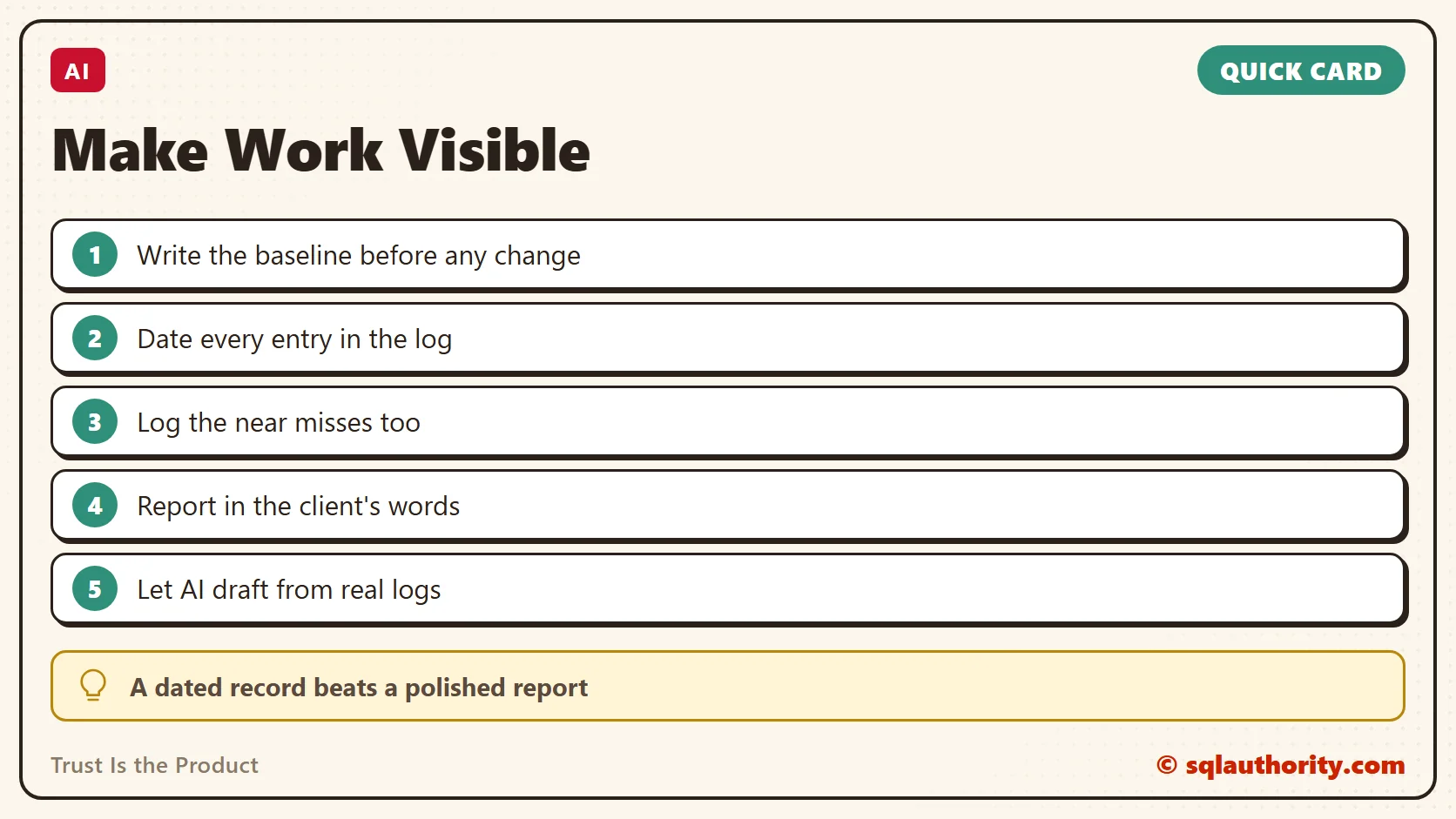
The data version is a plain record of what you checked and what you changed, with dates. Write the starting numbers down before any change, then measure again after. In my health checks, I read the waits first and note the slowest queries before I touch anything. That way the before and after are both on record.
A log pays you back too. When a client asks in March why the server needs more memory, the answer is already written down. You can show the growth month by month, instead of digging through old emails while the client waits.
Two habits make a log worth trusting. Every entry has a date, and every claim has a number someone else could check.
“Tuned the server” means little to a client. “Tuned the nightly sales report from 41 minutes to 6, measured on the 12th” means a lot. That example is made up, but the shape of it is what you’re after.
Write Down the Near Misses
A good keeper also logs the ship that came too close. Nothing hit the rocks, but the entry shows the danger was real and the lamp mattered.
Near misses are the hardest work to see. Picture a log drive that would have filled in nine days, fixed on day two. Or a blocking chain that would have frozen order entry on a busy Monday. Fixed in time, both leave nothing behind.
Near misses also make the clearest case at budget time. A client who sees three close calls caught in one quarter understands what the retainer pays for. Nobody has to give a speech about it.
Write each one down with the date you spotted it and what you did about it. Don’t dress them up. A client can tell a real near miss from a scary story told to justify the bill. Keep each entry to a line or two, and let the dates carry the weight.
Say It in the Client’s Words
The ship owner doesn’t care about wick length. They care whether the cargo arrived on time. A keeper who talks only about wicks will lose the owner’s attention fast.
We do this in data work all the time. We report wait types and index fragmentation, and the client nods politely.
Tie each finding to something the business can feel instead. The order screen now opens before a customer gives up. The month-end close finishes before the finance team logs in.
Keep the technical detail too, in a section the client’s DBA will read. Two audiences need two layers. A manager reads the first paragraph, and the DBA reads the rest.
Where AI Helps With the Log
None of this means keeping AI out of your reporting. Let Claude turn your log into a clean summary for the client. It’s good at that, and it saves an hour you’d rather spend on the server.

AI can write the prose, but it can’t supply the record underneath. If the summary says the backup was tested on the 3rd, someone had better have tested it on the 3rd. A polished summary with no log under it is the handsome logbook from an empty tower.
Claude can also read a month of entries and point out patterns, like the same job blocking every Tuesday. That’s useful work for a tool. Check each pattern against the raw entries before it goes in front of a client.
The Case Against All This Reporting
Let me argue the other side for a minute. Some people feel good work shouldn’t need a sales pitch. To them, logs and monthly summaries are vanity, time taken away from the work itself. I have some sympathy for that view.
A log full of busywork is worse than no log at all. Clients spot padding quickly, and once they do, they discount everything else in it. If a quiet month was quiet, say so in one line, and name what you checked to know it.
Where I part ways is the idea that silence is neutral. When the work is invisible, silence reads as nothing happening. Sooner or later, a budget meeting decides the work was never needed.
Trust Grows One Night at a Time
No keeper earns trust in one season. The owner comes to trust the tower after years of ships arriving and logs that match the weather. Data work runs on the same slow clock.
Start small. Keep the log for one client or one server for a month. Send a short summary that ties each entry to something the business felt. Then keep doing it, especially in the quiet months when it feels pointless.
AI can produce a beautiful report tonight. It can’t produce a year of honest entries. That year is what a client is buying, whatever the invoice calls it.
I wrote about the checking work nobody sees in Verification Is the New Bottleneck. It’s an essay about how AI made producing work easy and moved the hard part to checking it. It’s one of thirty essays in my book AI: Nobody’s in There. But we’re still in here. All of them are free to read online, and the paperback is on Amazon.
Invisible work is not a reason to stay quiet, it is a reason to keep a better log.
Published by Pinal Dave on SQLAuthority. More of my work at pinaldave.com.
Discover more from SQL Authority with Pinal Dave
Subscribe to get the latest posts sent to your email.