Question: Why can an execution plan display more actual rows than expected? The expected count is an estimate, not a limit on the real rows. “33 of 21” means actual versus estimated cardinality, not 33 rows arriving from an input containing only 21.

A health-check client asked about this display in an actual plan. The original WideWorldImporters query makes the distinction visible:
SELECT *
FROM WideWorldImporters.Sales.OrderLines
WHERE UnitPrice = 36.00;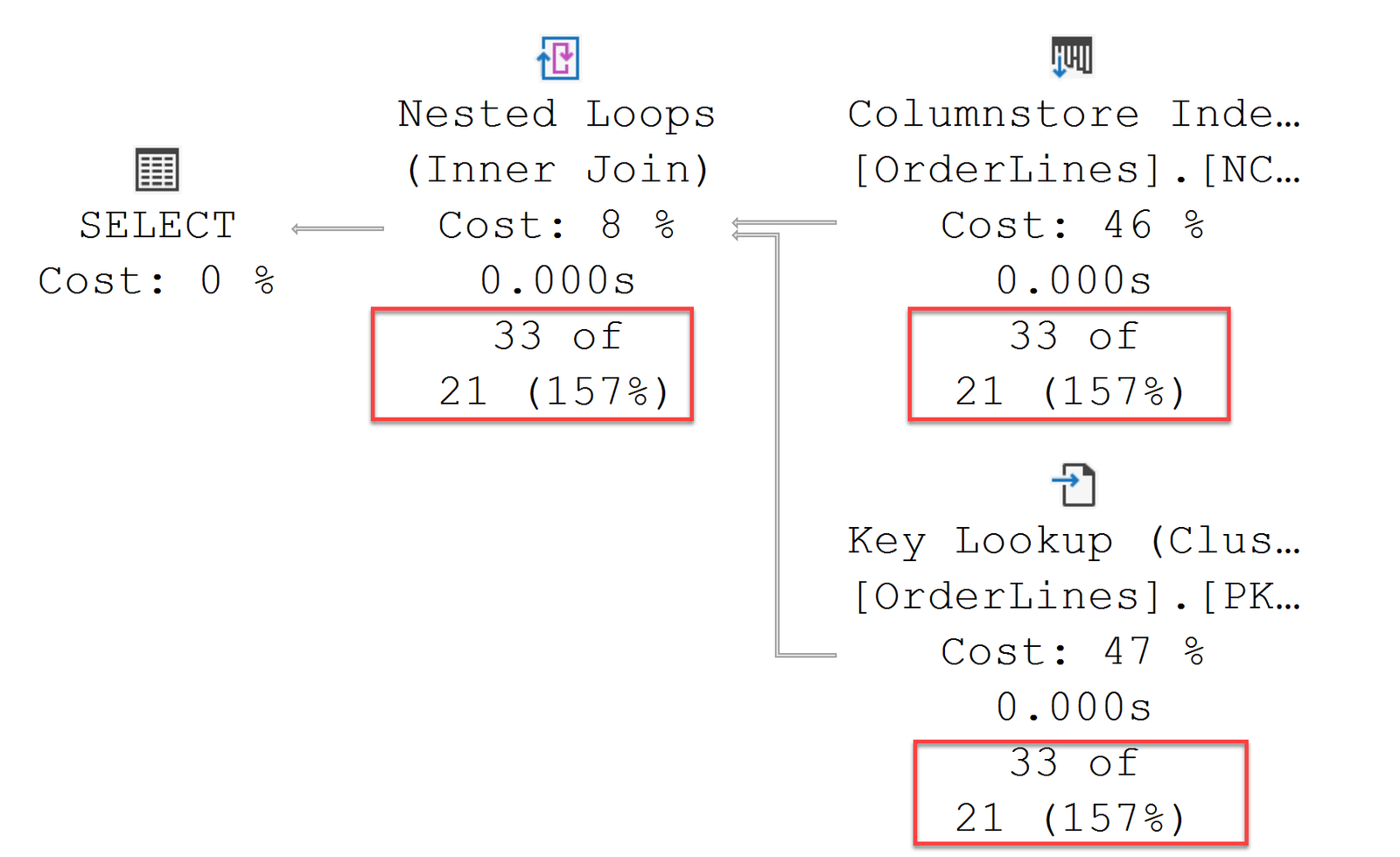
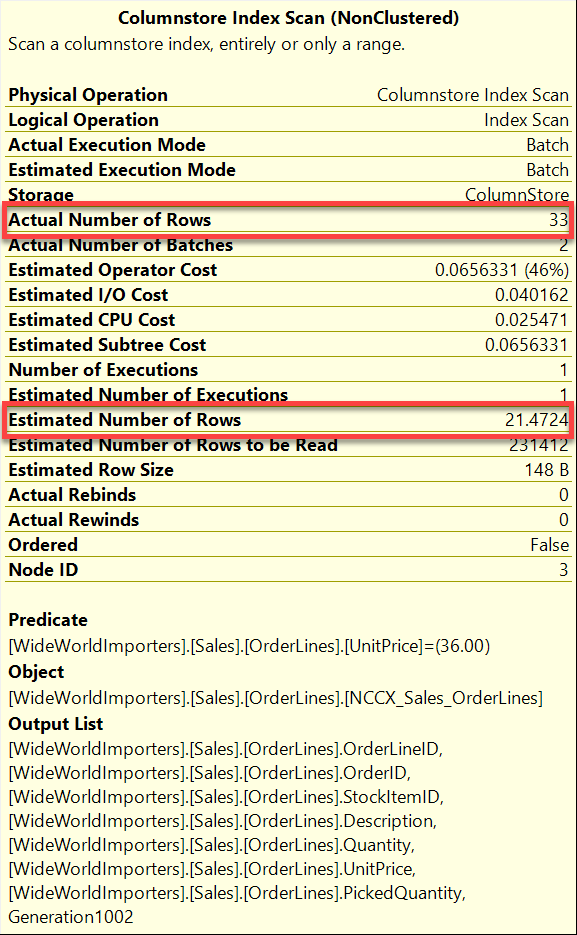
Statistics and the cardinality-estimation model help the optimizer predict how many rows will satisfy UnitPrice = 36.00. Execution still returns all qualifying rows; the estimate doesn’t tell SQL Server to stop at 21.
In this capture, 33 divided by approximately 21 explains the percentage. This isn’t necessarily a serious estimation error. Assess whether it led to a poor join choice, inadequate memory grant or other measurable cost.
A different property, Number of Rows Read, can exceed rows returned because an operator reads candidates and then applies a predicate. Repeated executions of an inner operator can also revisit rows. Those are different questions from the original actual-versus-estimated display.
Updating stale or poorly sampled statistics can help an estimate, but isn’t a universal fix. Data distribution, parameter values and the estimation model can also matter. Don’t update everything just because a percentage exceeds 100.
The two original captures are sharp and useful, so they remain beside their exact query. Your current sample database may produce different counts or plan shapes. Related: persisting the statistics sample percentage.
Published by Pinal Dave on SQLAuthority. More of my work at pinaldave.com.
Discover more from SQL Authority with Pinal Dave
Subscribe to get the latest posts sent to your email.