
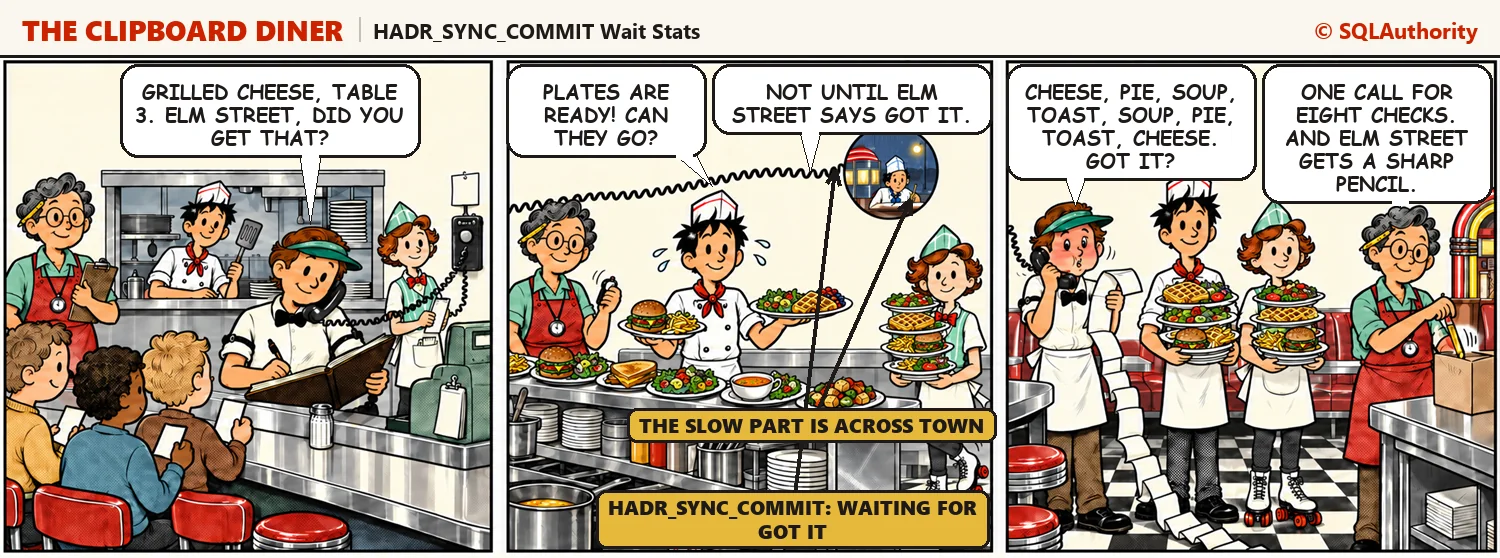
HADR_SYNC_COMMIT wait stats measure how long a commit waits for a synchronous secondary replica to harden the log. On Night 22 at the Clipboard Diner, every sale is phoned to a sister diner before the plate can leave. Learn what the wait includes, how to read the send and redo queues, and the fixes from the secondary’s log disk to asynchronous commit.
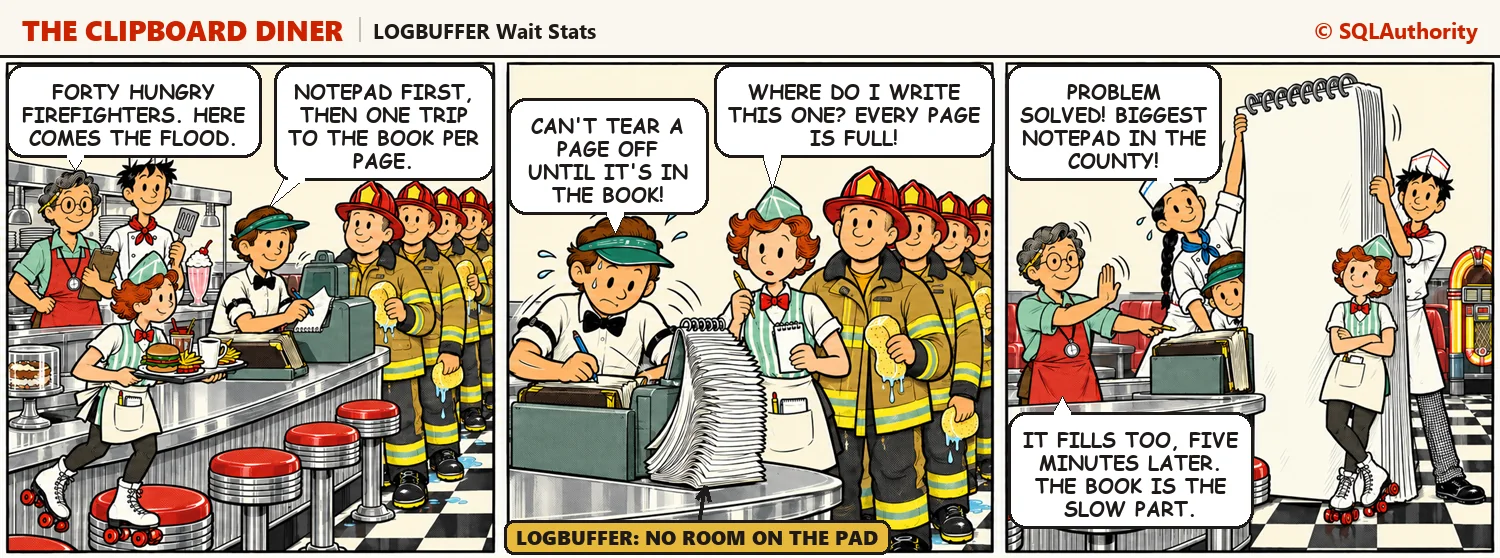
LOGBUFFER Wait Stats: When the Log Buffer Fills
LOGBUFFER wait stats mean a task is waiting for free space in the log buffer before it can write a log record. On Night 18 at the Clipboard Diner, Pat’s notepad fills up faster than Pat can copy it into the order book. Then two queries show whether your log can keep up, and the fixes in order.
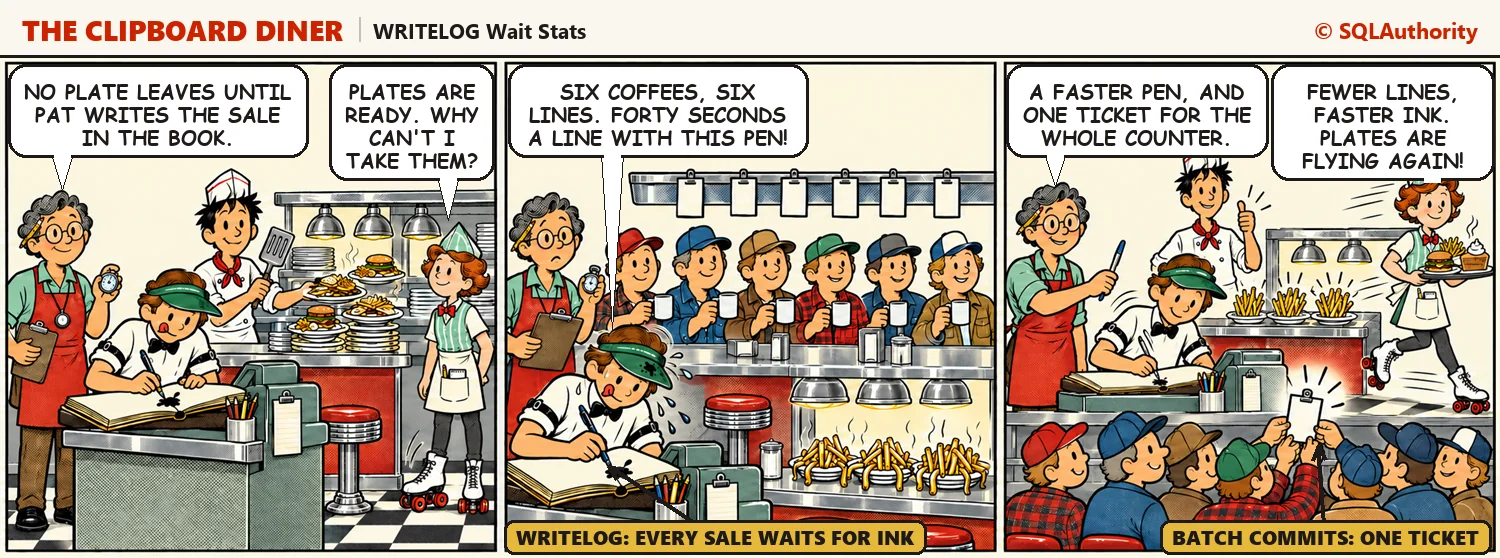
WRITELOG Wait Stats: Transaction Log Flush Waits
WRITELOG wait stats measure the time a commit waits for its log records to reach the disk. On Night 17 at the Clipboard Diner, Pat’s pen slows down and plates pile up at the pass. Then two queries show your log write latency, and a short script shows why many tiny commits hurt.
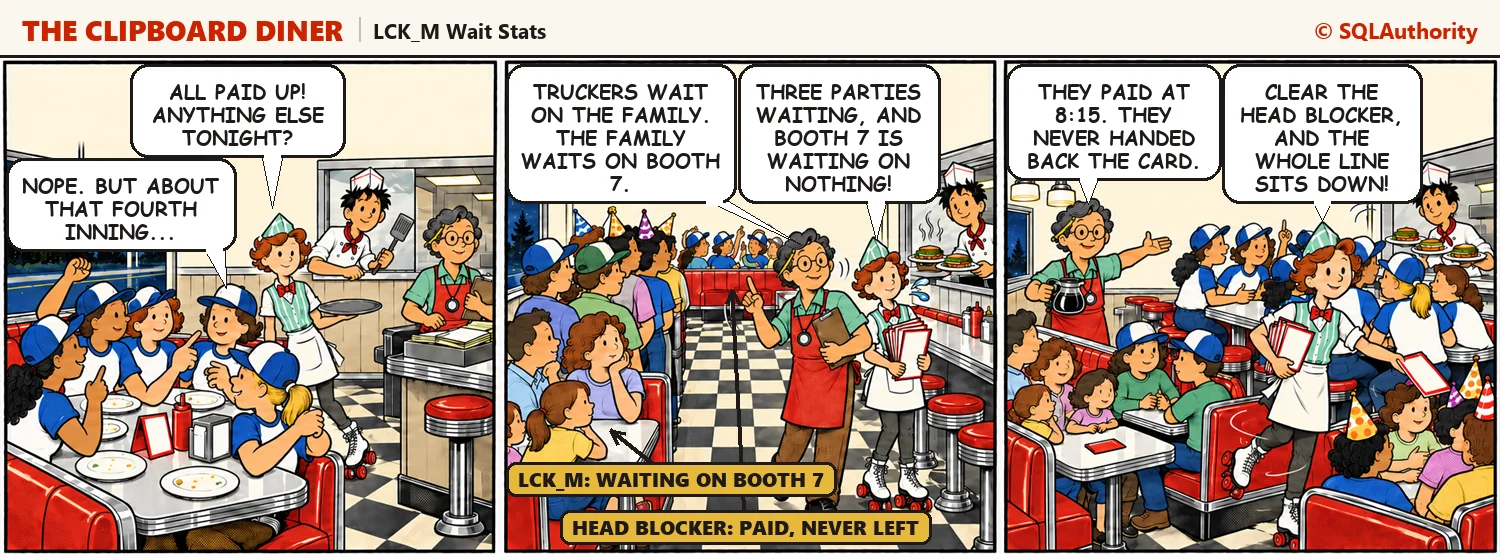
LCK_M Wait Stats: Lock Waits and Blocking
LCK_M wait stats show how long queries wait for a lock that another session holds. On Night 15 at the Clipboard Diner, a party in booth 7 pays and then won’t leave, and three parties wait behind it. Then two queries find the blocking chain and its head blocker on your own server.

Synchronizing Data Between Two Databases
Synchronizing data between two SQL Server databases requires a latency target, change source, conflict rule, and recovery plan before tool selection.

SQL SERVER – TRANSACTION, DML and Schema Locks
Most candidates in a senior developer interview could not create a scenario that shows schema locks. Here is a simple demo with a TRANSACTION and DML.

Sequence Gaps: Why NEXT VALUE FOR Skips Numbers
Explain sequence gaps, inspect cached values, test rollback behavior, and separate SQL Server identifiers from gapless numbering.