

The CONCAT_NULL_YIELDS_NULL setting decides whether a string plus NULL returns NULL. The CONCAT function never looks at it and treats NULL as an empty string. This post tests both on a customer table, shows the errors the OFF setting causes, and gives safe patterns for names and numbers.

GO Is Not T-SQL: Batches, Variable Scope and GO With a Count
Learn why GO is not T-SQL, how batches reset variable scope, what GO 3 repeats, and how applications should send scripts safely.

SQL SERVER – Adding Column Defaulting to Current Datetime in Table
How do you add a column that fills in the current datetime when a row is inserted? A sample table and a column with a default value that does it for you.
SQL SERVER – RESEED Identity Column in Database Table – Rest Table Identity Value – SQL in Sixty Seconds #051
Episode 51 of SQL in Sixty Seconds shows how to RESEED identity column values to a number higher, or even lower, than the current one.

Weekday Logic That Works Under Any DATEFIRST Setting
Make weekday logic independent of DATEFIRST with a normalized offset or a known Monday, then test every date in a full year.

UNION vs UNION ALL in SQL Server: What Each One Does
UNION vs UNION ALL comes down to duplicates: UNION removes them and UNION ALL keeps every row. This post tests both on two small store tables. It also covers sorting, a total row at the bottom, mixed operators and data type rules.
SQL SERVER – Return Specific Row to at the Bottom of the Resultset – T-SQL Script – Part 2
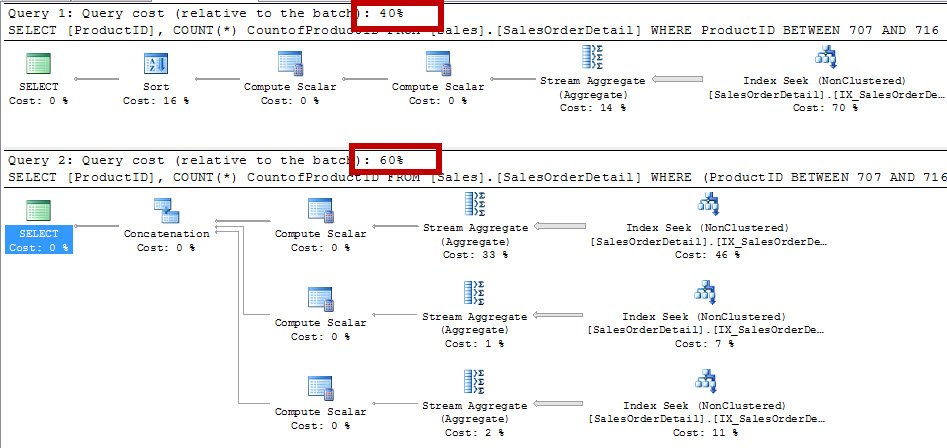
Part 2 on how to return a specific row at the bottom of the resultset. Earlier I used CASE in ORDER BY, and this time I show the UNION ALL method.