

The CHECKPOINT duration argument sets a target time in seconds. This post times a manual checkpoint on a database with 130 MB of dirty pages, and shows that a long duration slows it badly while a short one does not make it faster. It also shows that a backup flushes dirty pages by itself.
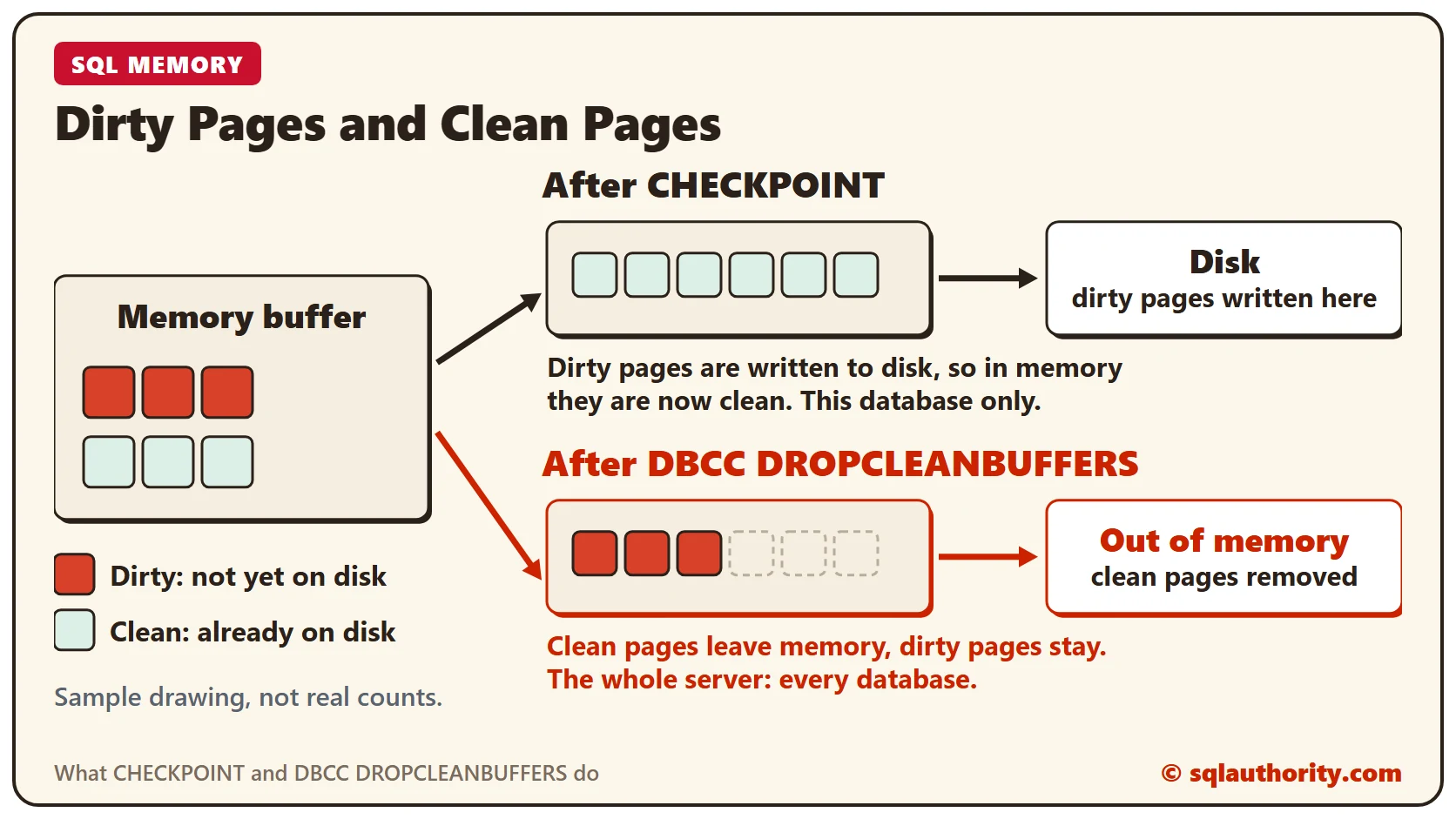
CHECKPOINT vs DBCC DROPCLEANBUFFERS: Impact on Memory
CHECKPOINT vs DBCC DROPCLEANBUFFERS comes down to which pages leave memory. CHECKPOINT writes dirty pages to disk, and DBCC DROPCLEANBUFFERS removes clean pages from the buffer pool. Here is the effect on memory, with results.

Dirty Pages and Clean Pages in the SQL Server Buffer Pool
Dirty pages are pages in memory that SQL Server has changed but not yet written to the data file. This post counts dirty pages and clean pages per database and per object, then watches a CHECKPOINT bring the dirty count to zero. It also explains why you should not try to clean the buffer pool on a production server.

SQL SERVER – Natively Compiled Stored Procedures and Location of Compiler
I recently implemented a Memory Optimized Table solution at one of the large financial organizations while working on Natively Compiled Stored Procedures.

How Much Memory is in Locked Pages? – Interview Question of the Week #228
Question: How Much Memory is in Locked Pages? Answer: Before we see the answer to this question, I suggest you read the blog post here first.

MEMORY_OPTIMIZED_ELEVATE_TO_SNAPSHOT: How to Check It Is On
MEMORY_OPTIMIZED_ELEVATE_TO_SNAPSHOT is a database option, so DBCC USEROPTIONS never shows it. This post reads the option from sys.databases and from DATABASEPROPERTYEX, turns it on in a demo database and finds every database that has it. It also shows a guarded script you can reuse in deployments.

How to List All Memory Optimized Tables in SQL Server? – Interview Question of the Week #227
Question: How to List All Memory Optimized Tables in SQL Server? We will see two different scripts here: One for Database and Second for Tables.