

Place the business rules database applications depend on in constraints, procedures, triggers, or application code according to their guarantees.

Temporal Tables: Keeping History Without a Trigger
Use temporal tables to retain earlier row versions, query a past state, and plan history storage without confusing version history with user auditing.
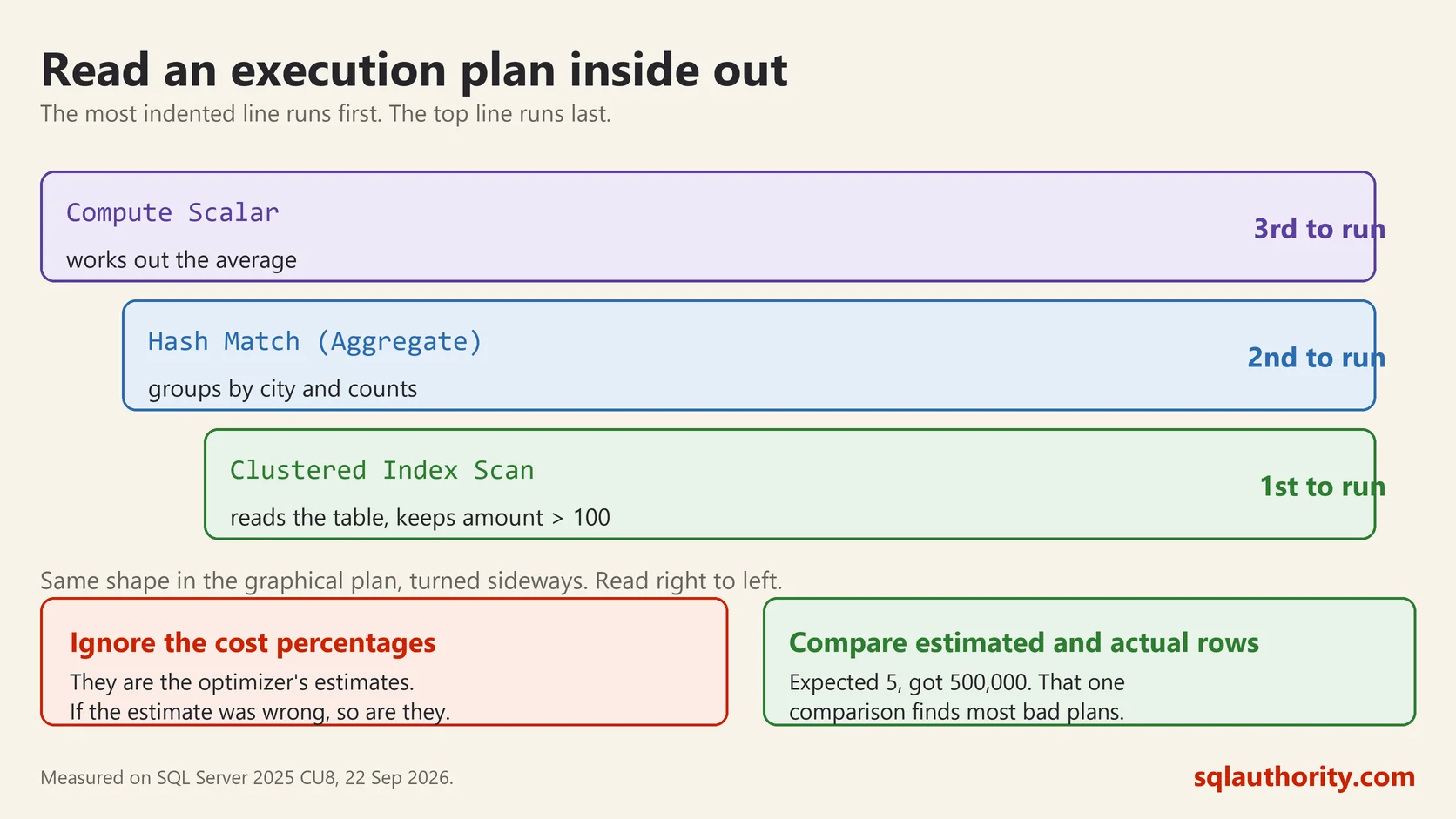
How to Read a SQL Server Execution Plan
An execution plan is SQL Server showing its working. Read it inside out, learn the six operators you actually meet, ignore the cost percentages, and compare estimated rows with actual rows instead.

FULL JOIN: Preserve Unmatched Rows on Both Sides
FULL JOIN preserves both source sides. Keep identifiers visible while reviewing ordinary equality, unmatched rows and later filters.

Running SQL Server in a Container for Testing
Create a SQL Server container for testing from Windows PowerShell, keep data in a named volume, and separate disposable runtime from backups.

Lookups in a Data Load: Cached, Uncached and Wrong
Review lookup data load behavior for cache freshness, comparison rules, duplicate reference keys, and unmatched rows before trusting the output.

What a Preview Build Is For, and What It Is Not
Use a SQL Server preview to test specific features and report reproducible issues while keeping production data and recovery paths separate.