

A CSV import crashed on the date 30/2/2007. Use the ISDATE() function to validate a VARCHAR column in a staging table before moving rows to a DATETIME field.
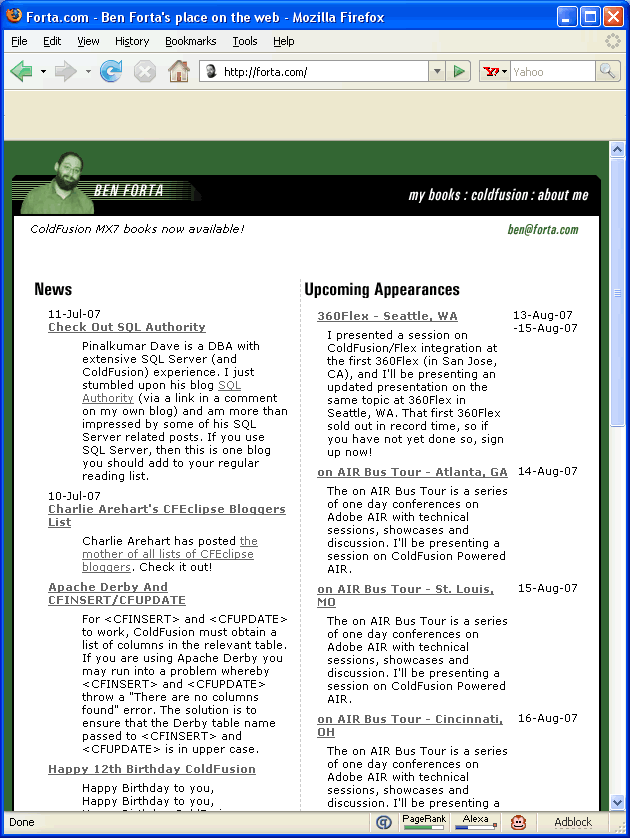
SQLAuthority News – SQL Blog SQLAuthority.com Comment by Mr. Ben Forta
Ben Forta, author of Sams Teach Yourself SQL Server T-SQL in 10 Minutes, wrote about SQLAuthority.com on his blog. Here is what he said and why it means a lot to me.

TRY_CONVERT Integer Validation: Check the Target Type
TRY_CONVERT integer validation starts with the destination type and a separate input policy. This example compares blank, signed, decimal and overflowing text without writing data.

Keeping an Inventory of Every SQL Server You Own
Build an Inventory of Every SQL Server you own, including hidden instances, owners, versions, recovery details, and a process to keep it current.
SQL SERVER – Count Duplicate Records – Rows
A simple query to count duplicate records in a table using GROUP BY, HAVING COUNT(*) and ORDER BY, with the most repeated values first. A video is included.

SQL SERVER – 2005 – List All Stored Procedure Modified in Last N Days
A query on sys.objects to list every stored procedure modified in last N days, or ones created lately. I use 7 days; change it to what you need.
SQL SERVER – Result of EXP (Exponential) to the POWER of PI – Functions Explained
Quick examples of PI(), POWER() and EXP() in SQL Server, and the answer to the title: EXP to the POWER of PI returns 23.1406926327793.