

SQL Server Express limits depend on the version you install. This guide lists the database size limits for 2008, 2022 and 2025, and gives tested queries to check the edition, the allocated data space, the free headroom and a verified backup.

ISO Week Numbers vs DATEPART(week): Grouping Sales by Week
Group sales by ISO week and ISO year, compare DATEPART week behavior, and avoid New Year errors caused by session settings.
SQL SERVER – Index Seek vs. Index Scan – Difference and Usage – A Simple Note
Index seek vs. index scan: the two ways SQL Server reads data through an index, how they differ, and when each one is used. A simple note.

Raising a Database Compatibility Level Safely
Raise a compatibility level safely by capturing a Query Store baseline, changing one database, comparing plans, and keeping a tested reversal.

sys.objects, sys.all_objects and sys.system_objects
Compare sys.objects, sys.all_objects and sys.system_objects to find SQL Server user objects, system objects, and metadata visibility gaps.
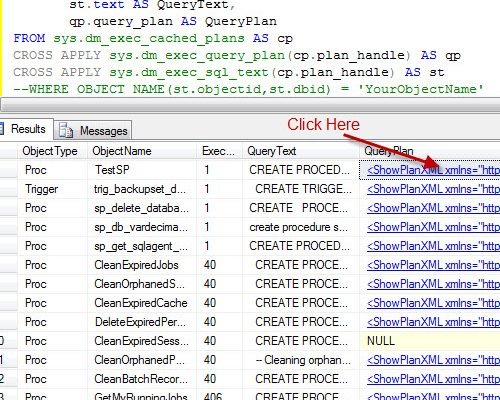
SQL SERVER – Get Query Plan Along with Query Text and Execution Count
A handy script that shows each query’s text, its execution count and its query plan, so you can see what runs most often on your server.

Joining Two History Tables at a Point in Time With FOR SYSTEM_TIME AS OF
Use FOR SYSTEM_TIME AS OF to join temporal tables at one UTC instant, compare range forms, and index the history lookup correctly.

SQLAuthority News – Beyond Relational Interview on SQL Server 2008 Beyond Relational
Jacob Sebastian interviewed me on Beyond Relational: what the term means, and why it builds on relational databases instead of moving away from them.

Measure CPU Pressure in SQL Server with Waits and Schedulers
CPU Pressure means tasks are ready to run but every scheduler is busy, so they wait in a queue. This post reads that queue from the schedulers, compares signal waits with resource waits, checks recent CPU history and finds the queries that use the most CPU. It ends with a plain way to decide between a faster CPU, more cores and better queries.